
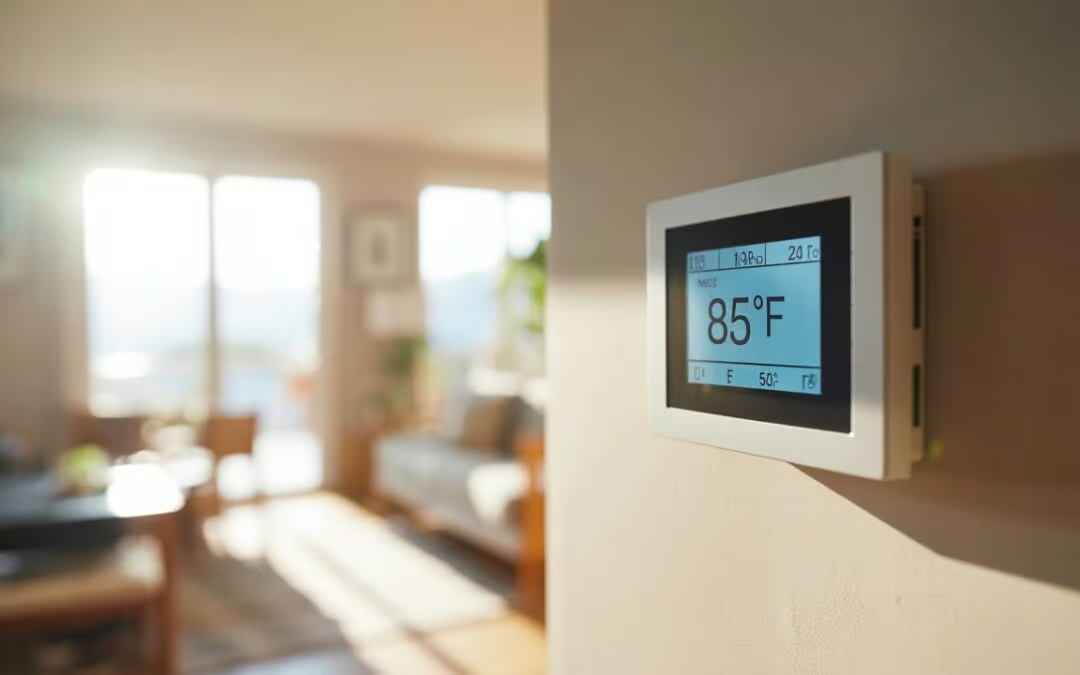
Your AC is blowing ice cold one hour and lukewarm the next, and there’s no pattern you can find. Not a full breakdown. Not warm air all the time. Just… inconsistent. That’s a different animal than a system that’s flat out not cooling, and it trips up a lot of Danville homeowners because it doesn’t feel like an emergency, until it does.
Here’s the good news. AC blowing warm and cold air off and on almost always traces back to one of a handful of specific issues, not some mystery gremlin in your ductwork. Let’s get into what’s actually causing it.
Why Does My AC Blow Warm Air Sometimes?
Warm-then-cold cycling almost never comes out of nowhere. It’s usually one of a small set of mechanical or airflow problems, and most of them get worse the longer they sit.
The most common culprits:
- Low refrigerant — your system loses cooling capacity in bursts instead of all at once
- A failing capacitor or compressor — cycles that start strong and lose steam
- Airflow restrictions — a dirty filter, blocked vents, or ductwork that’s seen better days
- Thermostat placement or calibration — a sensor reading heat that isn’t actually in the room
We’ll walk through each one, plus what makes this so common in Danville’s older homes specifically.
Common Causes of AC Temperature Swings in Danville Homes
Refrigerant Level Issues
Your AC needs a full charge of refrigerant to pull heat out of the air consistently. When the level drops, even a little, your system can’t keep up the same cooling power on every cycle. That’s why you’ll feel cold air, then a stretch where it’s just… not as cold. A slow leak causes this kind of gradual, uneven performance rather than a sudden total loss of cooling.
Airflow Restrictions
A dirty filter, closed or blocked vents, or ductwork that’s cracked or disconnected all choke off the air your system needs to move. When airflow drops, your AC struggles to push cool air evenly through the house. We see this a lot in Danville, especially in homes where the ductwork hasn’t been inspected in years.
Thermostat Placement or Miscalibration
If your thermostat sits near a window, a lamp, or a heat-producing appliance, it can read the room wrong. It thinks the house is warmer than it is, so it tells your system to keep running past the point it needs to. That shows up as cycles that feel random, because the thermostat’s the one making the call, and it’s working off bad information.
Failing Mechanical Components
A capacitor that’s on its way out, or a compressor that’s struggling to cycle properly, won’t always fail all at once. Sometimes it starts strong and loses steam partway through a cycle. That’s often the difference between air that’s cold for ten minutes and then slowly creeps warm.
Why This Is Common in Danville’s Older Homes
Aging Ductwork and Insulation Gaps
A lot of homes in Danville and around Southside Virginia are older, and that means ductwork that’s been in place for decades. Modern air conditioning itself only goes back to 1902, when an engineer named Willis Carrier built the first system to fix a humidity problem at a Brooklyn printing plant, not to cool people off. [1] Seams loosen. Insulation settles or gets torn during other repairs. Small gaps let cool air escape before it ever reaches your vents, so one room gets plenty of airflow and another barely gets any. That unevenness is what a lot of homeowners describe as their AC “acting up” for no reason.
Regional Humidity and Climate Strain
Southside Virginia summers bring heat and humidity that push your system hard, day after day. [2] An AC that’s already dealing with a small refrigerant leak or a worn capacitor has less room to compensate when the outside air is working against it too. That’s often why the warm-cold cycling shows up more in the middle of summer than any other time of year, the system’s just got less margin for error.
An aging system carrying any of these issues into a Danville summer is running with less room to recover, which is exactly when a minor issue turns into a bigger one.
When Warm/Cold Cycling Signals a Bigger Problem
Simple Fix or Mechanical Failure? Here’s How to Tell
| Signs of a Simple Fix | Signs of Mechanical Failure |
| Warm air only during the hottest part of the day | Cycling happens randomly, any time, any weather |
| Vents blowing weaker than usual in one or two rooms | Unusual buzzing, clicking, or humming from the outdoor unit |
| Thermostat sits near a sunny window or a lamp | System runs longer but cools less each time |
| Filter hasn’t been changed in a few months | Warm air paired with rising energy bills |
The Cost of Waiting It Out
A system that’s cycling between warm and cold is already working harder than it should. The average home spends nearly $1,900 a year on energy bills, and nearly half of that goes to heating and cooling costs. Half of U.S. homeowners are already skipping HVAC maintenance to save money, which tends to backfire, since deferred problems get more expensive, not less. [3] An AC compensating for a refrigerant leak or a weak capacitor pulls more power to do less cooling, and that shows up on your bill before it shows up as a full breakdown. Left alone long enough, that strain on the compressor turns a $300 repair into a $2,000 one.
What a Professional Diagnosis Looks Like
What Our Technicians Check During a Diagnostic Visit
When we come out for warm-and-cold cycling, we’re not just glancing at the thermostat. We check refrigerant levels and pressure, test the capacitor and compressor’s electrical performance, inspect the filter and airflow path, and look at duct connections for leaks or gaps. Most of the time, the cause is a combination of two or three of these, not just one, which is part of why the cycling feels so random from the homeowner’s side.
If your Danville AC has been running hot and cold with no clear pattern, our technicians can get to the bottom of it. Give Solutions Heating & Cooling a call at (434) 425-8775 to get a diagnostic visit scheduled.
Why DIY Troubleshooting Has Limits Here
Changing a filter or checking your vents is fine to handle yourself. Refrigerant and electrical work is a different story. EPA regulations under Section 608 of the Clean Air Act require that technicians who maintain, service, repair, or dispose of equipment that could release refrigerants into the atmosphere be certified, and for good reason. Refrigerant is pressurized and hazardous to handle without the right training and equipment, and guessing wrong on an electrical component can turn a small issue into a much bigger repair bill.

The Bottom Line on AC Temperature Swings
Warm-then-cold cycling isn’t something to just live with, and it isn’t something you have to guess at either. We’ve been serving Southside Virginia homeowners for over a decade, and Danville customers get that same experience backed by over a thousand positive Google reviews. If your AC’s been acting up, give us a call at (434) 425-8775 and we’ll get a technician out to find the actual cause, not just patch a symptom.
Solutions Heating & Cooling 300 Ringgold Industrial Pkwy Suite A5, Danville, VA 24540
Frequently Asked Questions About AC Temperature Swings
How do I know if my AC issue is a quick fix or something serious?
Whether your AC issue is a quick fix or something serious depends on the pattern. Warm air only during peak heat, weak airflow in a room or two, or a thermostat near a sunny window usually points to a simple fix. Random cycling, odd noises, or rising energy bills point to mechanical failure. (53 words)
What happens if I ignore inconsistent AC cooling?
Ignoring inconsistent AC cooling costs you twice, first on your energy bill, then on the repair bill. A struggling system pulls more power to cool less, and a small refrigerant leak or weak capacitor left alone can turn a $300 repair into a $2,000 one.
Can I fix refrigerant or electrical AC problems myself?
Refrigerant and electrical AC problems are not a DIY job. EPA Section 608 rules require certified technicians to handle refrigerant, since it’s pressurized and hazardous without proper training. Guessing wrong on an electrical part can turn a small issue into a big repair bill. Call us at (434) 425-8775 for a diagnostic visit.
Resources
- https://www.williscarrier.com/timeline/
- https://cardinalnews.org/2024/07/10/summer-doldrum-conundrum-humid-air-parched-ground/
- https://www.achrnews.com/articles/166301-report-50-of-homeowners-avoiding-hvac-maintenance