

Lynchburg summers push AC systems hard, and your July or August bill knows it. If a stretch of 90-plus days sent your bill up $75 or more, that’s not just bad luck. It’s your system working overtime, and there’s a lot you can do about it before the next bill lands. Small changes to your thermostat habits, airflow, and basic upkeep can bring cooling costs down without turning your house into a sauna. None of what’s below costs much, and most of it starts working the same day.
What runs your electric bill up the most?
In most Lynchburg homes, these are the biggest factors behind a high summer electric bill:
- Heating and cooling — the single biggest piece of most home energy bills and in summer your AC runs the longest to keep up
- Thermostat set too low — the harder your system has to work, the more it costs
- Dirty air filters — block airflow and force the system to run longer for the same result
- Poor insulation or air leaks — let cool air escape, so the system never gets a break
- An aging or oversized system — cycles inefficiently burning more energy than necessary
What’s Really Driving Up Your Summer Electric Bill
The Quick-Fix Causes
Some causes are sitting right in front of you: a thermostat set lower than it needs to be, a filter that hasn’t been changed in months, furniture or curtains blocking a vent. Small stuff, but it adds up fast over a Lynchburg summer. HVAC professionals point to these exact habits, thermostat settings and filter neglect, as the two most common reasons a bill creeps up. [1]
The Bigger-Picture Causes
Poor insulation, leaky ductwork, or a system that’s aging out or was never sized right for your home take more digging. None of that is a weekend project, and it’s not something you should feel bad about not catching on your own. It’s worth a professional look if your bill keeps climbing no matter what you adjust at the thermostat.
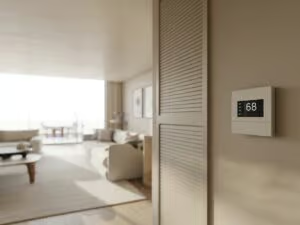
Thermostat Strategies That Actually Save Money
The Rule of a Few Degrees
The instinct in July is to crank the AC down and forget about it. The problem is, every degree lower means your system runs longer to get there and stays running longer to hold it. Department of Energy guidance is putting 78°F as the target for cost efficiency, and notes you can save roughly 3% on cooling costs for every degree you raise above 72°F.
You don’t have to jump straight to 78° if that feels like a big change. Start with a degree or two higher than your instinct tells you and adjust from there.
Smart Thermostats vs. Manual Habits
A programmable or smart thermostat handles the adjustment automatically, so you’re not the one who has to remember to bump it up before work and back down before you’re home. According to American Standard, scheduling a 7 to 10-degree increase while you’re out can save around 10% on your monthly energy costs. That’s not a sales pitch, just a fair look at what a small habit change is worth over a season. [2]
Not sure if your current thermostat settings are actually saving you money? We can check your system’s efficiency — call (434) 771-0977.
Simple Maintenance That Improves Efficiency
Air Filter Changes
A dirty filter is one of the most common reasons a system works harder than it should. A clogged filter can force the system to use more energy just to push air through, and a professional we spoke with pointed to filter changes as one of the simplest, most overlooked maintenance steps homeowners skip.
Keeping the Outdoor Unit Clear
Your condenser unit needs room to breathe. Grass clippings, mulch, and overgrown plants around the unit restrict airflow the same way a dirty filter does. Keeping a couple feet of clearance around it goes a long way.
When to Consider a Professional Tune-Up
Some issues won’t show up until a technician looks at the system directly, things like refrigerant levels or worn components that catch a bigger bill or a breakdown before it happens. We’re NATE-certified and have served Lynchburg-area homeowners as part of Solutions Heating & Cooling’s broader Virginia service history for over a decade, backed by over a thousand positive Google reviews.

Quick Wins Beyond the Thermostat
Ceiling Fans and Airflow Habits
A ceiling fan doesn’t cool a room, but it moves air across your skin, which creates what fan manufacturers call the wind-chill effect: you feel cooler even though the room temperature hasn’t changed. [3] That means you can bump your thermostat up a few degrees, roughly 4°F according to Hunter Fan, and still feel just as comfortable in rooms where people actually spend time. Just remember to turn the fan off when the room’s empty. It cools people, not rooms, so running it in an empty space just wastes energy.
Blocking Heat Before It Gets In
Closing blinds or curtains during peak sun hours, especially on west-facing windows, keeps direct sunlight from turning a room into a greenhouse. It’s a small habit, but in a lot of Lynchburg’s older and newer neighborhoods alike, those west-facing windows are exactly where rooms run hottest.

Small changes add up, but sometimes a high bill points to a system that’s working harder than it should be. If your AC runs constantly, your bill keeps climbing no matter what you adjust, or one room in your house never quite cools down, it might be time for a second opinion rather than another guess.
We’ve served Lynchburg-area homeowners as part of Solutions Heating & Cooling’s broader Virginia service history for over a decade, and a quick call to (434) 771-0977 can tell you whether your system needs a tune-up or if it’s already running the way it should.
Solutions Heating & Cooling 403 Fifth St, Unit 105, Lynchburg, VA 24504
Your Questions About Cutting Cooling Costs
What’s the best thermostat setting to save money on cooling in Lynchburg?
The best thermostat setting for cooling in Lynchburg is 78 degrees, based on Department of Energy guidance for cost efficiency. Raising your temperature one degree above 72°F saves about 3% on cooling costs. If 78 feels like a big jump, start a degree or two higher than usual and adjust from there.
Can a ceiling fan actually lower my energy bill, or is that a myth?
A ceiling fan can lower your energy bill because of what’s called the wind-chill effect, moving air across your skin so you feel cooler even though the room temperature hasn’t changed. Hunter Fan notes this lets you raise your thermostat about 4 degrees and still feel comfortable. Just switch it off when you leave the room. (56 words)
Besides the heat, what’s driving up my summer electric bill?
Several things besides outdoor heat drive up your summer electric bill: a thermostat set too low, a dirty air filter forcing your system to run longer, poor insulation or air leaks letting cool air escape, and an aging or oversized system that cycles inefficiently. Any one of these can add real dollars to your bill.
Resources
- https://www.nbcnews.com/select/shopping/how-to-lower-your-air-conditioning-bill-rcna588042
- https://www.americanstandardair.com/resources/blog/whats-the-best-temperature-to-set-your-thermostat-to-in-the-summer/
- https://www.hunterfan.com/blogs/hunter-blog/do-ceiling-fans-help-air-conditioning-efficiency