

Lynchburg summers don’t just feel muggy. [1] They put your air conditioner to work overtime. Every bit of humidity your AC pulls out of the air adds strain most homeowners never even see, and that strain adds up, year after year, until it’s shortened your system’s life without you noticing. If your unit’s already 10, 15, or 20 years old, that wear and tear catches up faster than you’d think. Once you understand how humidity actually wears down an AC system, you’ll know what warning signs to watch for, and how to protect the money you’ve already put into your home’s comfort.
Does high humidity make AC run longer?
Yes, high humidity does make your AC run longer, because the system has to pull moisture out of the air on top of cooling it. That extra workload wears down the compressor and other parts faster, which is a big reason homes in humid climates like Lynchburg often see shorter AC lifespans than homes in drier regions.
How Humidity Forces Your AC to Work Harder
Your AC actually has two jobs every time it kicks on. The first is cooling the air, which is the part everyone thinks about. The second is pulling moisture out of that air, and that second job is where humidity starts costing you.
In a dry climate, your system spends most of its runtime just cooling. In Lynchburg, it’s doing both at once, all summer long. That combination means longer run times and more frequent cycling, and both of those things add up to more wear on the parts that keep your system running.
Why Humid Air Makes Your AC Cycle More Often
Every time your AC cycles on and off, the compressor and capacitor take on a little bit of stress, kind of like starting a car engine over and over instead of letting it run. More humidity means more cycling, and more cycling means those components are working harder, more often, for more of the year.

What Counts as “Too Humid” Inside a Lynchburg Home
Most homes feel comfortable somewhere between 30% and 50% indoor humidity. The CDC recommends keeping humidity no higher than 50%, and says your air conditioner is one of the main tools for keeping it there. [2]
So what happens if your home creeps up to 70%? That’s a real problem. It usually means one of two things: either your AC is losing the battle against Lynchburg’s outdoor humidity, or there’s a sizing or maintenance issue keeping your system from doing its job. Either way, that extra 20 percentage points above the ideal range puts even more strain on a system that’s already working overtime.
Signs Your Home’s Humidity Is Too High
- Condensation building up on windows, even when it’s not particularly cold outside
- A musty smell that lingers in certain rooms, especially basements or closets
- That “clammy” feeling on your skin even when the thermostat reads a comfortable 72 degrees
How Much Does Humidity Actually Shorten an AC’s Lifespan?
Here’s a number worth knowing: most residential AC units last somewhere in the range of 15 to 20 years, even under ideal conditions. The U.S. Department of Energy’s own equipment data puts the average life of a central air conditioner right around 18 years. [3] That’s the baseline, not a guarantee, and it definitely isn’t 40 years, no matter what an old rumor or a neighbor’s story might suggest.
In a climate like Lynchburg’s, where the AC is fighting both heat and humidity for months at a time, systems often land on the shorter end of that range, or fail early, if maintenance gets skipped along the way.
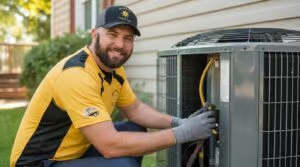
Signs Your System Is Aging Faster Than It Should
- Energy bills that keep climbing even though your habits haven’t changed
- More frequent repair calls than you remember needing in past summers
- Uneven cooling, with some rooms noticeably warmer than others
- Unusual noises: rattling, buzzing, or a hum that wasn’t there before
These signs show up especially often in homes that were recently purchased. If you’re a new owner, there’s no way to know how well the last person kept up with maintenance, which means your system could be further along in its lifespan than you’d expect.
If your AC is already showing these signs, call Solutions Heating & Cooling at (434) 771-0977 to talk through whether a repair or a full replacement makes more sense for your system.
Protecting Your AC’s Lifespan in a Humid Climate
Once you know your AC’s fighting humidity as well as heat, protecting it comes down to a handful of habits that actually reduce the extra strain.
Maintenance Habits That Reduce Strain
- Change your air filter regularly, since a clogged filter restricts the airflow your system needs to remove moisture efficiently
- Schedule annual tune-ups with a NATE-certified technician who understands the specific mechanical strain humidity puts on a system, not just general wear and tear
- Keep the outdoor unit clear of leaves, grass clippings, and other debris so it can release heat properly
Repair or Replace?
If your system’s already showing multiple signs of aging faster than it should, and it’s getting up there in years, a repair might only buy you a season or two before you’re right back here. That’s worth weighing against the cost of a new, properly sized system built for Lynchburg’s climate from the start.
One quick note on efficiency: your AC will naturally run less efficiently in humid conditions than in dry ones, and that’s normal. What’s not normal is a system that’s consistently underperforming no matter how well it’s maintained. That’s usually a sign of a bigger issue, not just the humidity doing what humidity does.

Protecting Your Lynchburg Home’s Comfort for the Long Haul
Lynchburg’s humidity isn’t going away, and neither is the extra strain it puts on your AC every summer. If your system is already showing its age, waiting rarely makes the decision easier. Solutions Heating & Cooling has spent over a decade helping Lynchburg-area homeowners get ahead of these issues, and you can reach the team directly at (434) 771-0977 to talk through what your system needs.
Solutions Heating & Cooling 403 Fifth St, Unit 105, Lynchburg, VA 24504
Lynchburg AC & Humidity: Your Questions Answered
Is 70% humidity too high for a house?
Seventy percent humidity is too high for a house, since most homes feel comfortable between 30% and 50%. That extra 20 points usually means your AC is losing the battle against outdoor humidity, or there’s a sizing or maintenance issue keeping your system from doing its job.
Can an AC unit last 40 years?
An AC unit can’t realistically last 40 years, despite what an old rumor or a neighbor’s story might suggest. Most residential systems last 15 to 20 years, with the Department of Energy putting the average around 18 years, and Lynchburg’s humidity often pushes systems toward the shorter end of that range.
How do I know if my AC is aging faster than it should?
Your AC is aging faster than it should if you notice climbing energy bills, more frequent repair calls, uneven cooling between rooms, or new rattling and buzzing noises. If any of these sound familiar, call Solutions Heating & Cooling at (434) 771-0977 to find out whether repair or replacement makes more sense.
Resources
- https://weatherspark.com/y/19617/Average-Weather-in-Lynchburg-Virginia-United-States-Year-Round#google_vignette
- https://www.cdc.gov/mold-health/about/index.html#cdc_environmental_basics_before-preventing
- https://www.energy.gov/cmei/femp/purchasing-energy-efficient-residential-central-air-conditioners