
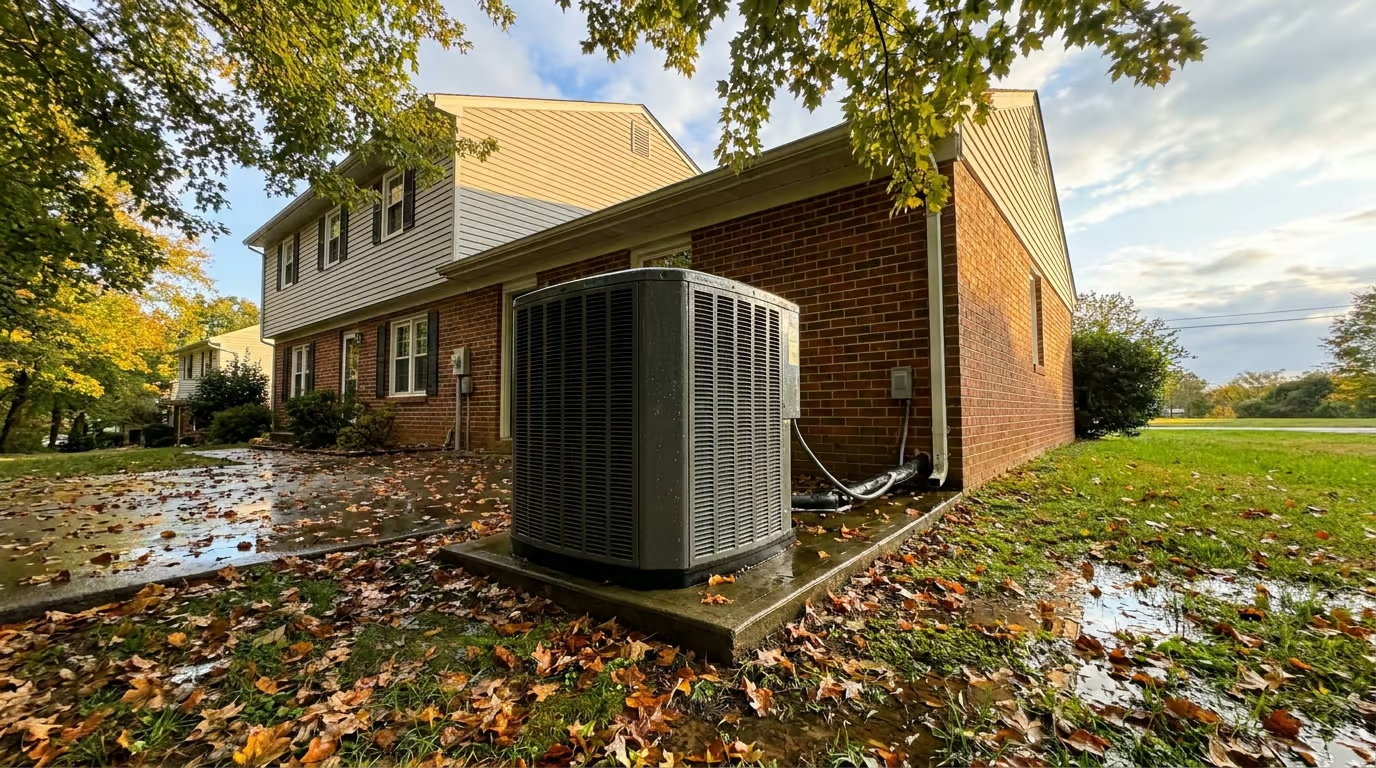
When the power flickers back on after a Lynchburg thunderstorm and the house stays warm, it’s easy to fear the worst. But a central air conditioning unit not working after an outage is usually a simple fix, not a dead system. Knowing which checks are safe to try yourself (and which point to a deeper problem) can save you a service call and a sweaty night.
This guide walks you through the common causes, the safe steps to try at home, and the warning signs that mean it’s time to call a pro.
Why Your Central Air Conditioning Unit Stops Working After a Power Outage
The thunderstorms that roll across Lynchburg in July have a way of flipping a working AC into a silent one by the time the power comes back. If your central air conditioning unit is not working after a power outage, it usually comes down to one of three things. First, most modern systems have a built-in time-delay feature that stops the compressor from restarting right away, it protects the equipment and can last several minutes. [1] Second, the outage or surge may have tripped a breaker on either the indoor air handler or the outdoor condenser. Third, your thermostat may have lost its programmed schedule or drained its backup batteries during the outage.
None of these mean your system is broken. Each is a normal response to power loss, and working through them in order will tell you fast whether you’re looking at a quick reset or a real repair.
Lynchburg Storms and Appalachian Power Outages: Why This Happens so Often Here
Lynchburg sits in a part of Virginia that sees plenty of strong storms well into fall. Warm, humid afternoons build fast-moving thunderstorms that roll through with high winds, lightning, and heavy rain, and those storms drag down limbs and whole trees onto power lines across the region. Even in early October, mid-day heat and humidity linger here, so a dead AC after an outage can still mean an uncomfortable house well into the afternoon.
Appalachian Power serves most of the Lynchburg area, and outages here climb during storm season. When a line goes down or a transformer blows, the power doesn’t just stop, it often surges when it comes back on, and that return jolt is typically harder on your AC than the outage itself.
So it’s no mystery why so many Lynchburg homeowners find their cooling dead the morning after a storm, even when the house itself looks untouched. The damage, if there is any, happened in the electrical path, not the roof.
Have a Question About Your Home?
Talk to a real person on our Lynchburg team. We'll give you a straight answer and an upfront price.
The Safe Checks to Run Before Calling for Help
Before you pick up the phone, there are a few things you can safely check yourself. Go through them in order.
- Check the thermostat first. Make sure it’s set to cool and the temperature is below the room reading. If the screen is blank or acting strange, replace the batteries. A thermostat that lost power may have wiped its schedule, so double-check your settings.
- Find and reset the breakers. Your system usually has two: one for the indoor air handler and one for the outdoor condenser. Open your main panel and look for any breaker that’s flipped to the middle or off position. To reset it, push it fully off, then firmly back on.
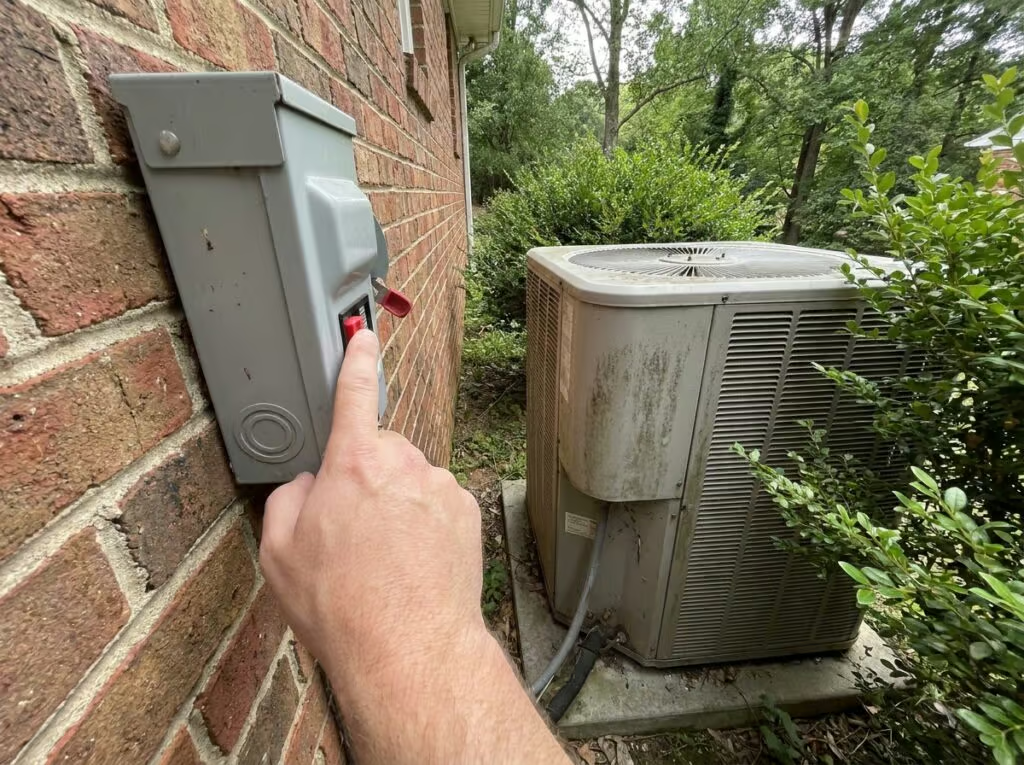
- Look for a separate outdoor disconnect. Many homes have a small shutoff box on the exterior wall near the condenser. Make sure it’s switched on.
- Wait before you judge. Once power is back, give the system roughly 30 minutes. The compressor’s internal time delay keeps it from kicking on immediately, and that wait is normal.
If cool air returns after these steps, you’re done. These aren’t stalling tactics, they’re the same first checks a technician runs on arrival, and doing them yourself can turn a service call into a five-minute fix. [2]
When It’s More Than a Reset: Capacitors, Compressors, and Older Electrical Panels
Stop troubleshooting and call for help when the resets don’t hold. A handful of signs point to real electrical damage from the surge.
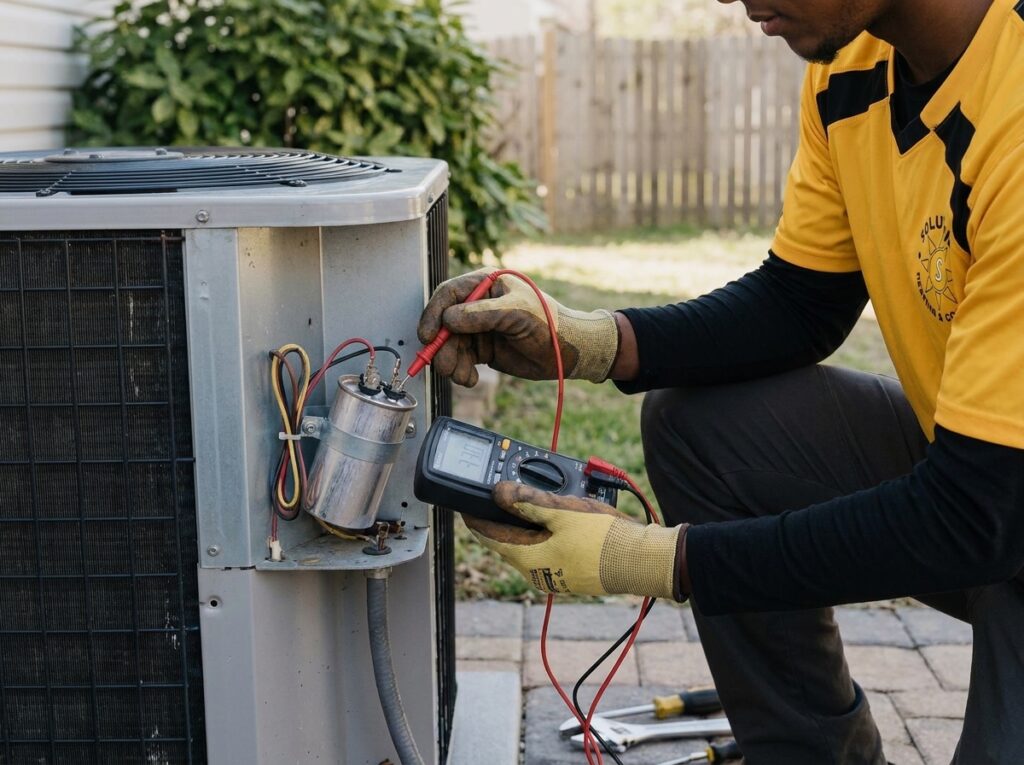
If a breaker trips again the moment you reset it, don’t keep flipping it, that repeating trip means something is drawing too much current. A unit that hums or buzzes outside while the fan sits still usually points to a failed capacitor, the most common surge casualty, since it stores the jolt of energy needed to start the motor. No response at all after the full waiting period suggests the compressor took the hit, a bigger, costlier problem that’s exactly why these calls can’t wait once the heat sets back in.
Older Lynchburg homes raise the odds here. Aging electrical panels don’t regulate voltage as cleanly, and marginal HVAC components already near the end of their life often give out after each outage. If your system seems to fail every storm season, the hardware may be too worn to take another surge. This is where emergency AC repair makes sense, getting a technician out before the heat becomes dangerous.
If This Keeps Happening, the Real Problem Might Be Bigger Than the Outage
When post-storm failures become a pattern, the outage is the trigger, not the cause. A system that’s already strained will quit at the first excuse, and storms just happen to provide it.
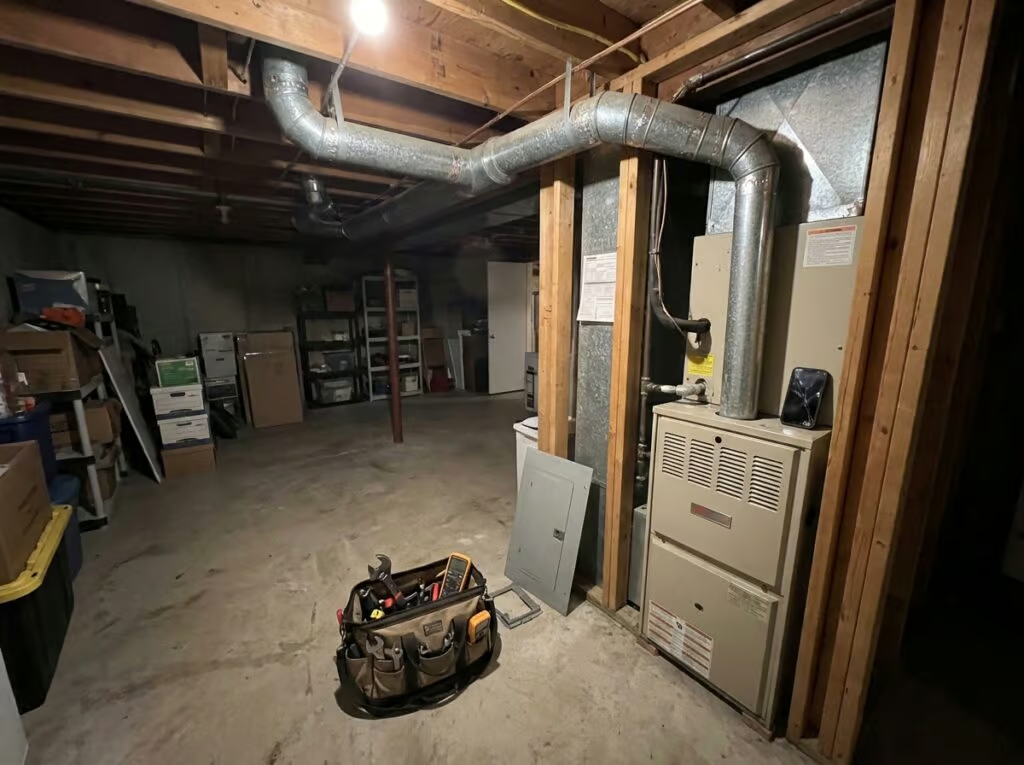
Older housing stock across the Lynchburg area often carries overlapping problems. Leaky or undersized ductwork forces the system to run longer and harder. Thin attic insulation or an unsealed crawl space lets conditioned air escape and heat pour in. Add equipment near the end of its service life, and every summer becomes a fight the system slowly loses.
Resetting the breaker treats the symptom. It doesn’t touch the reason your AC is running on the edge in the first place.
A System Evaluation finds that root cause. We look at the whole picture (ductwork, insulation, airflow, and equipment condition) instead of chasing one failure at a time. Because our team handles HVAC, ductwork, insulation, and crawl space moisture under one roof, we can trace the real weak point and fix it, rather than send you to three separate contractors.
Getting Your Cooling Back on Track, Storm Season or Not
If you’ve worked through the safe checks and your AC still won’t run, call us for emergency AC repair. We provide professional repair services throughout Lynchburg and the surrounding Southside Virginia area, and the same local team that diagnoses the problem is the one that fixes it, no subcontractors passing you off down the line.
And if every storm season seems to knock out your cooling, that pattern is worth a closer look. A storm shouldn’t be the thing that ends your system’s life. Schedule a System Evaluation and let us trace the weak point (a surge-vulnerable breaker, a tired contactor, a thermostat on its last battery) so the next outage is just a flicker on the clock, not a long, hot night. Contact us to get started.
AC still dead after the storm? Don’t sweat it out. Call (434) 771-0977 →
Common Questions About AC Failure After a Storm
How long should I wait before resetting my AC after a power outage?
Wait about 30 minutes after power returns before deciding something is wrong. Most central systems have a built-in compressor time delay that stops the unit from restarting right away, which protects the equipment. If cool air still isn’t flowing after that wait, check your thermostat and breakers next.
Can a power outage damage a central air conditioning unit?
Yes, a power outage can damage your AC, usually from the surge when power returns rather than the shutoff itself. Sudden voltage swings strain the capacitor, compressor, and control board, and capacitors are the most common casualty. A surge protector for your HVAC system helps guard against this damage.
What does it mean if my AC breaker keeps tripping after a storm?
A breaker that trips again the moment you reset it means something is drawing too much current. Stop flipping it. This often points to a failed capacitor, a damaged compressor, or a wiring problem from the surge. Call an HVAC technician before the heat becomes a real issue.
How do I know if my AC capacitor or compressor was damaged by a surge?
A humming or buzzing outdoor unit with a fan that won’t spin usually points to a failed capacitor. No response at all after the full waiting period suggests the compressor took the hit. Both need a technician, and guessing or repeated resets can make the damage worse.
Sources
- familyhandyman.com/list/how-to-fix-the-most-common-air-conditioning-repairs-yourself
- bobvila.com/articles/air-conditioner-troubleshooting
Keep Your Cool When the Power Comes Back
Storms are part of life in Southside Virginia, but losing your cooling every time one rolls through doesn’t have to be. Let our team check your system and keep it running through the next one. Call (434) 771-0977 →