
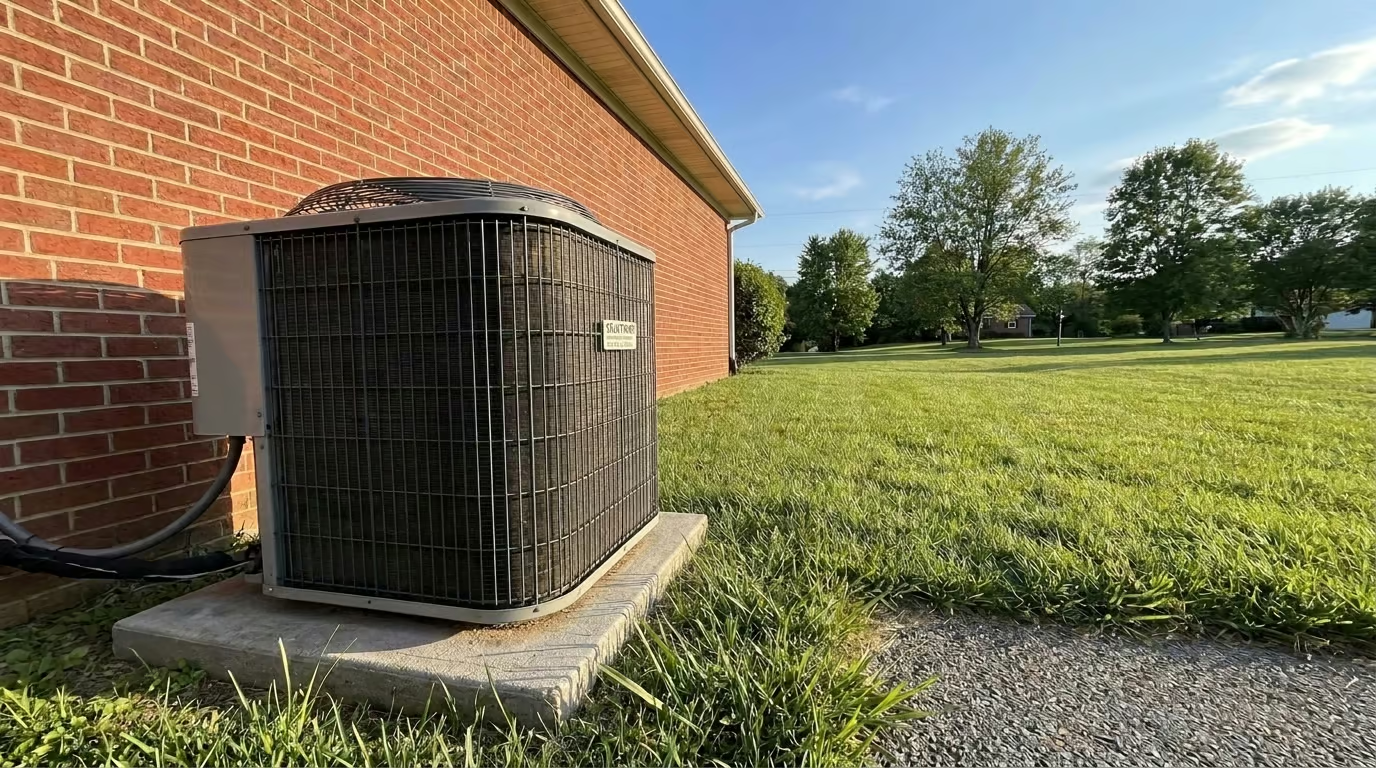
Homes near College Park, Vista Acres, Tavern Grove, and the Timberlake/Wyndhurst corridor already live with the rhythm of overhead traffic from Lynchburg Regional Airport. When the HVAC system outside your window adds its own hum to that mix, the combined noise can turn a quiet evening into a frustrating one.
That’s before we even get to a separate question: is every room in your house actually comfortable? This piece walks through how equipment noise stacks on top of flyover noise, what Lynchburg’s noise rules mean for you, how quieter systems compare, and how comfort zoning fixes hot-and-cold-room problems in older homes nearby.
Quick Answer: Does HVAC Equipment Noise Matter More Near the Airport?
Yes. HVAC equipment noise matters more for homes near Lynchburg Regional Airport because the background sound level is already raised by aircraft activity, leaving less quiet to spare before an outdoor unit becomes a real annoyance.
- Local rules: Lynchburg’s noise ordinance sets different decibel limits for residential and noise-sensitive zones.
- Older condensers: roughly 68–76 dBA under AHRI 270 sound ratings.
- Modern inverter and mini-split systems: closer to 45–60 dBA.
- Why it matters: that gap is the difference between a unit you notice and one you forget is there.
How Lynchburg’s Noise Ordinance Affects Homeowners Near the Airport
Lynchburg regulates sound through a city noise ordinance that sets decibel limits based on zone type. Residential areas and designated noise-sensitive zones carry different thresholds, and those limits tighten further during nighttime hours. Enforcement runs through the Lynchburg Police Department, which can respond to complaints when sound crosses the allowed level at a property line.
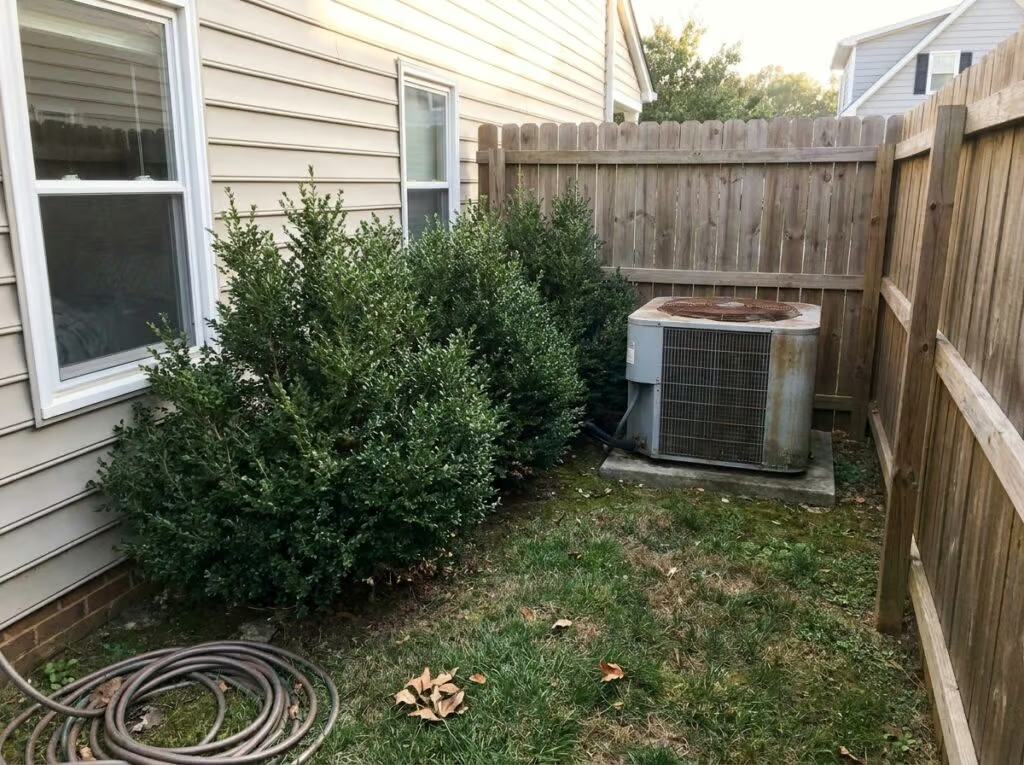
Here’s why this hits airport-area homes harder. A flyover doesn’t just add noise, it raises the baseline a loud condenser then piles onto. A home in a quiet rural pocket might never notice an older unit, but a home under or near an LYH approach path has far less acoustic room to work with. If your condenser is a decade or two old and sits close to a neighbor’s bedroom wall, you’re nearer the complaint line than you’d think. Choosing quieter equipment and smarter placement keeps you comfortably inside the rules.
Comparing HVAC Equipment Noise: Central Air vs. Mini-Splits
The clearest way to compare equipment is by AHRI 270 sound ratings, the standard measurement manufacturers publish for outdoor units. Older single-stage central air condensers typically fall in the 68–76 dBA range. They run at one speed, so when they start, they start loud.
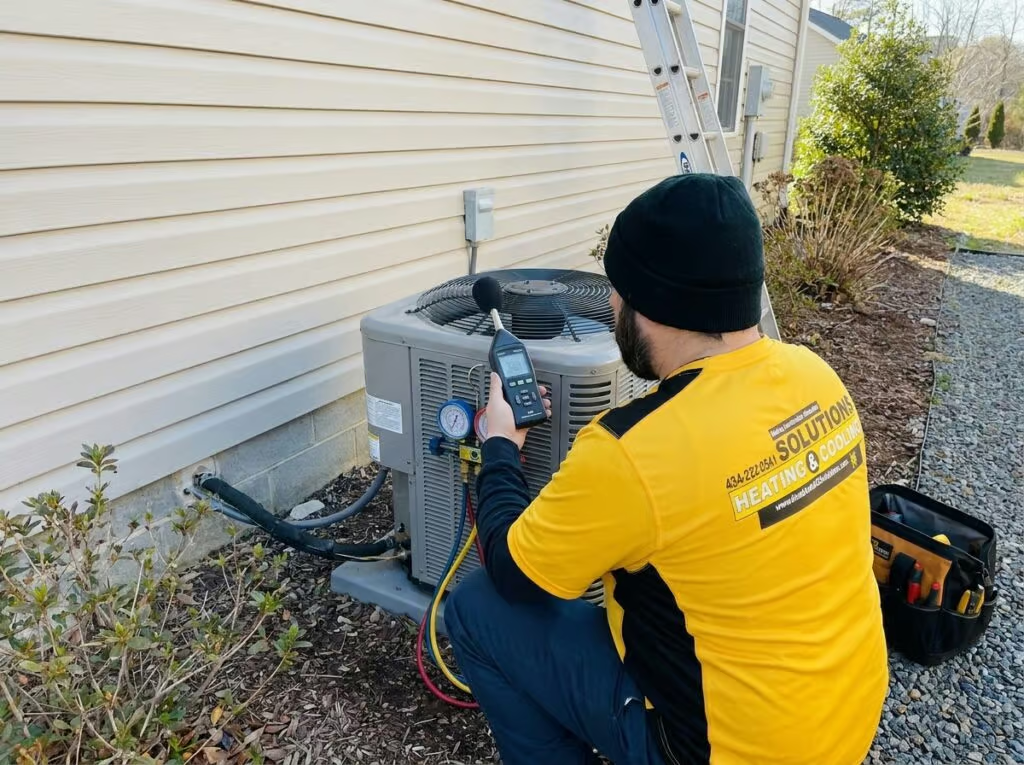
Modern inverter-driven central systems and ductless mini-splits tell a different story. Many land between 45 and 60 dBA because they ramp up and down to match demand instead of slamming on at full power, which keeps the compressor quieter for most of its run time. [1] Inverter technology adjusts compressor speed continuously rather than cycling fully on and off, which is also part of why these units tend to use less energy over a full season. [2]
For scale, 70 dBA is close to a vacuum cleaner across the room. Fifty dBA sits nearer a quiet refrigerator hum. That’s a real, audible difference when you’re sitting on the porch and a plane is passing overhead.
We install mini-split systems for exactly this reason. For airport-adjacent homes, a quieter inverter system or a ductless setup can lower the noise your family hears without giving up cooling power on the hottest Southside days.
Have a Question About Your Home?
Talk to a real person on our Lynchburg team. We'll give you a straight answer and an upfront price.
Where You Place Your Outdoor Unit Changes What You Hear Indoors
Even the quietest unit can sound loud in the wrong spot, and placement is one thing you can control even when the planes overhead are not.
Distance from bedroom and living-room windows is the first factor. A condenser tucked under a bedroom window will always feel louder than one set along a blank exterior wall. Reflection matters too: sound bounces off hard surfaces like vinyl siding, brick, concrete pads, and patios, so a unit boxed into a tight corner between two walls can echo and magnify its own hum.
Giving the unit breathing room, adding a fence or shrub buffer, and avoiding hard corners all pay off every day the system runs.
The Other Kind of Zoning: Getting Even Comfort Room to Room
Zoning has a second meaning that has nothing to do with the airport or city land use. In HVAC, zoning means dividing your home into areas that heat and cool independently, the fix for that classic hot-upstairs, cold-downstairs complaint.
Many older homes near these neighborhoods were built with a single-zone duct system, so one thermostat controls the whole house while the other floor runs too warm or too cold. Original ductwork in these homes is often undersized or leaky, which makes the problem worse.
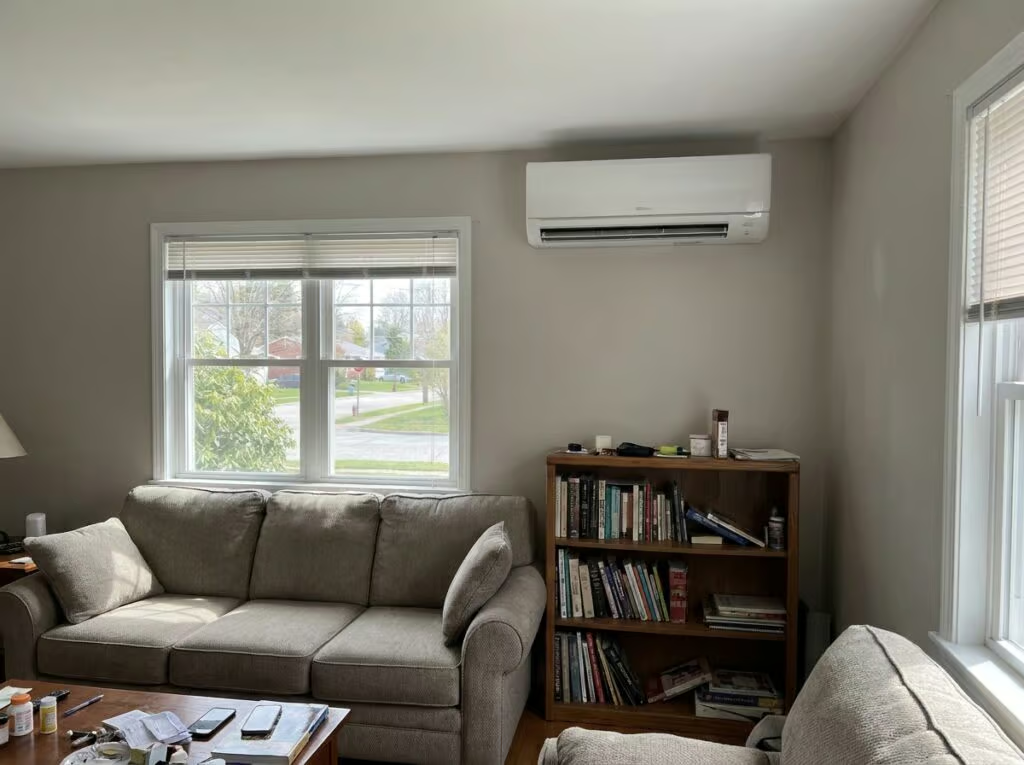
There are two main fixes. A zoned ducted system uses motorized dampers and multiple thermostats to send the right amount of air to each area. [3] A multi-zone ductless mini-split puts a separate indoor head in each room or level with its own control. Both deliver even temperatures without you fighting one thermostat all season, and for a bonus room or addition with no ductwork, a mini-split often makes the most sense.
Why This Matters More in These Specific Lynchburg Neighborhoods
College Park, Vista Acres, Tavern Grove, and the Timberlake/Wyndhurst corridor along Route 460 sit close to the flight paths serving Lynchburg Regional Airport, so residents already carry a higher baseline of overhead noise than homes farther out. Many of these same homes are older single-family builds with their original ductwork still in place, which means elevated ambient noise and aging single-zone duct systems often show up in the same house at once.
A family here might wrestle with a loud, aging condenser stacking onto flyover noise and uneven temperatures between floors under one roof. We can’t do anything about the planes, but a quieter unit means less equipment noise added to that background, and airflow zoning answers the uneven-temperature problem separately.
Getting a Straight Answer for Your Own Home
A home a few streets over from the flight path can have an entirely different noise and airflow picture than yours, and older Southside Virginia ductwork rarely behaves the way a spec sheet predicts.
At Solutions Heating & Cooling, we start with a System Evaluation and, where it helps, an Energy Audit, so you know where your home is losing comfort before anyone talks about equipment. Shad Dortch has run this shop from the same Halifax Road location since 2015, and that same team serves Lynchburg homeowners directly, including College Park, Vista Acres, Tavern Grove, and the Timberlake/Wyndhurst corridor near the airport, no out-of-town subcontractors.
If an older condenser is competing with the planes overhead, or one floor never feels right no matter where you set the thermostat, reach out to schedule an evaluation. Contact us for exact pricing on any work we recommend.
Noisy condenser or a floor that never feels right? Call (434) 771-0977 → to schedule your evaluation.
Common Questions About HVAC Noise and Zoning Near Lynchburg Regional Airport
How loud is a mini-split or central air condenser compared to aircraft noise?
Modern inverter and ductless mini-split units run about 45–60 dBA, while older single-stage central air condensers reach 68–76 dBA under AHRI 270 ratings. Aircraft overhead can spike far higher during a flyover. The point near the airport is that a quieter unit adds less to an already elevated background sound level.
What does ‘zoning’ mean in HVAC versus city or airport land-use zoning?
In HVAC, zoning means dividing a home into areas that heat and cool independently, each with its own control. That’s different from city or airport land-use zoning, which governs how property can be used. HVAC zoning fixes the hot-upstairs, cold-downstairs problem common in older homes near these neighborhoods.
Can outdoor unit placement reduce HVAC noise for homes near the airport?
Yes. Setting the condenser away from bedroom and living-room windows cuts the noise you hear indoors. Avoid tight corners between two walls, since hard surfaces bounce and amplify the hum. Giving the unit breathing room and adding a fence or shrub buffer helps on every run.
Are ductless mini-splits quieter than central air for homes near flight paths?
Usually, yes. Ductless mini-splits and inverter systems ramp up and down to match demand instead of starting at full power, so they run closer to 45–60 dBA. For airport-adjacent homes with less quiet to spare, that lower sound level makes a real difference on the porch.
Sources
- bobvila.com/articles/best-ductless-air-conditioner
- consumerreports.org/appliances/air-conditioners/inverter-air-conditioner-can-keep-you-cool-save-money-a2573323852
- thisoldhouse.com/heating-cooling/how-to-zone-a-forced-air-furnace-and-air-conditioner
Quiet, Even Comfort Starts With a Walk-Through
The only way to know what’s driving the noise and uneven airflow in your airport-area home is to measure it in person. Let our Halifax team take a look and lay out your real options. Call (434) 771-0977 →