
For AC repair near the NC border in southern Halifax County, start with the thermostat, filter and breaker, then call a licensed HVAC contractor if the air stays warm. Many failures start small, like a clogged filter or a worn electrical part.
Summers in southern Halifax County don’t give much warning, and one humid week can push a tired system past its limit.
This guide covers AC repair on the Virginia–North Carolina border in plain terms, so you can get cool air back without paying for work you don’t need. You’ll find what to try first, the warning signs, what a fair diagnosis looks like, and how older homes and humid summers affect cooling.
AC Running but Blowing Warm Air? Start Here
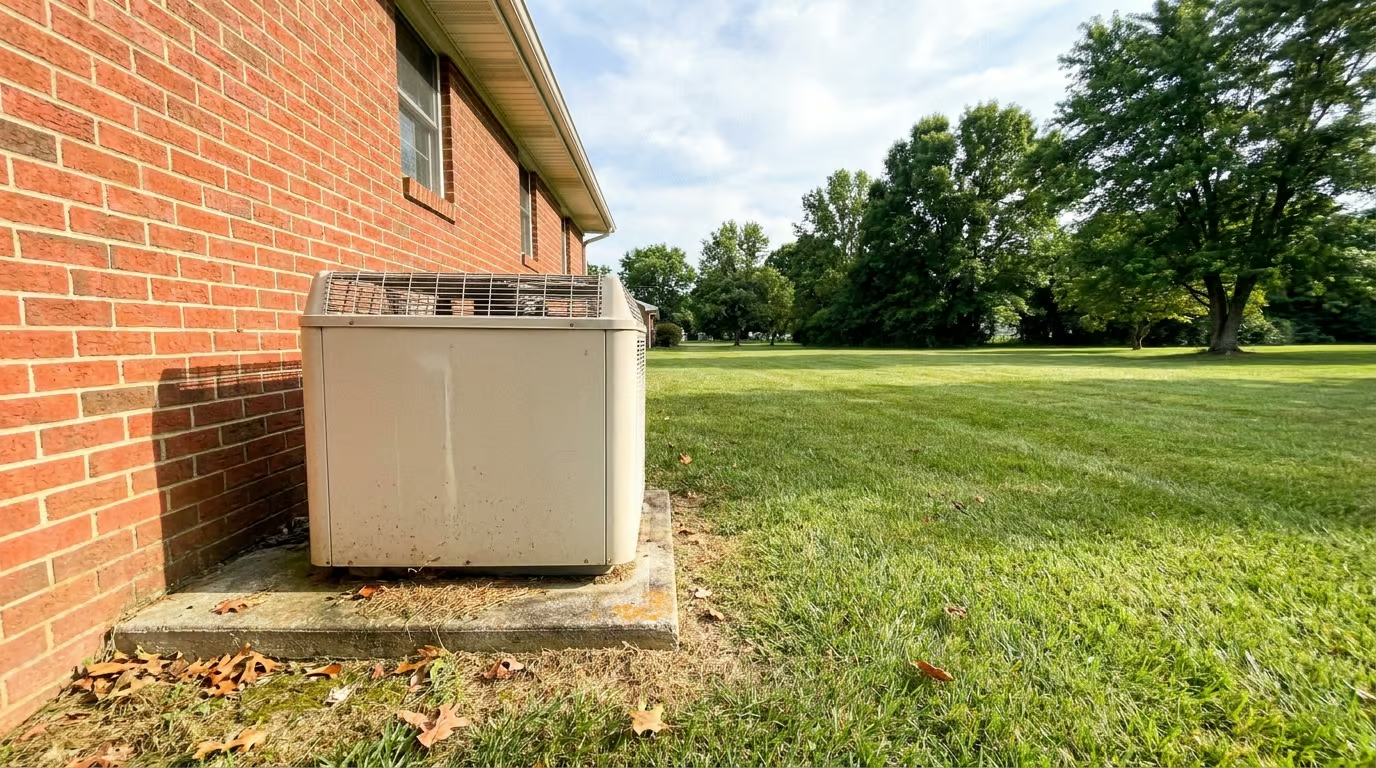
If your AC is running but blowing warm air on a sticky Southside Virginia afternoon, check the thermostat before you pick up the phone. Make sure it’s set to Cool and a few degrees below the current indoor temperature. Then look at the filter, the breaker, and the outdoor unit, where leaves or cut grass can choke off airflow.
Give the system about 15 minutes after any fix. If the vents are still pushing warm air, it’s time for a licensed HVAC technician.
Warm air while the outdoor fan keeps spinning often points to an airflow problem, a failed electrical part or a refrigerant leak. None of those are safe do-it-yourself jobs. If you heat and cool with a heat pump, the same steps apply, since heat pumps cool the same way central air conditioners do.
Five-Minute Checks Before You Call for AC Repair
None of these needs tools, and any one of them might spare you a service call.
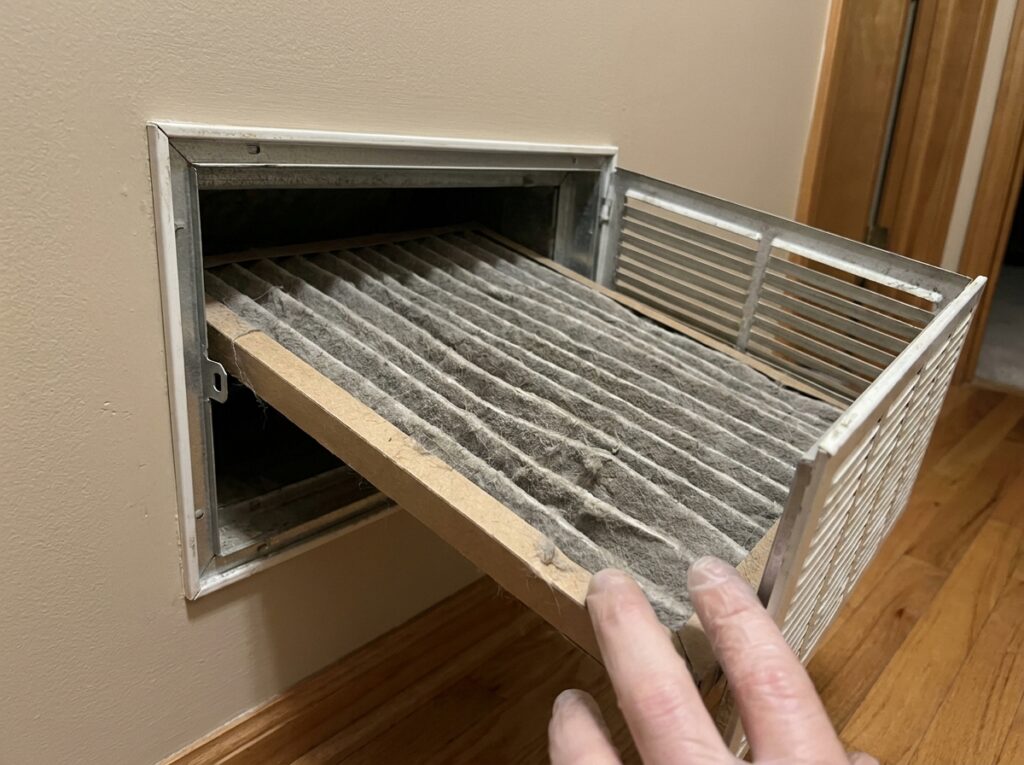
- Thermostat. Set it to Cool, not Heat or Fan, and a few degrees lower than the room. A blank or dim screen usually means dead batteries.
- Air filter. Pull it out and hold it up to the light. ENERGY STAR advises checking your filter monthly in heavy-use seasons, replacing it when it looks dirty, and swapping it at least every three months. [1]
- Breaker. Find the breaker for the AC, heat pump or air handler, and if it’s tripped, reset it once.
- Outdoor unit. Clear leaves, grass clippings and vines from around it so air can move freely.
- The 3-minute wait. After a power flicker or breaker reset, leave the system off for about 3 minutes before restarting. That pause lets pressures settle, so the compressor doesn’t start under strain.
The list works for heat pumps in cooling mode, too.
This is where homeowner work stops. Don’t open panels on the outdoor unit or the indoor air handler, and leave refrigerant lines alone. Some parts inside can hold an electrical charge even with the power off.
Have a Question About Your Home?
Talk to a real person on our Halifax team. We'll give you a straight answer and an upfront price.
Signs Your AC Needs a Technician, and When a Heat Wave Makes It Urgent
If none of that worked, any of these is your cue to pick up the phone:
- Warm air from the vents with the thermostat set correctly
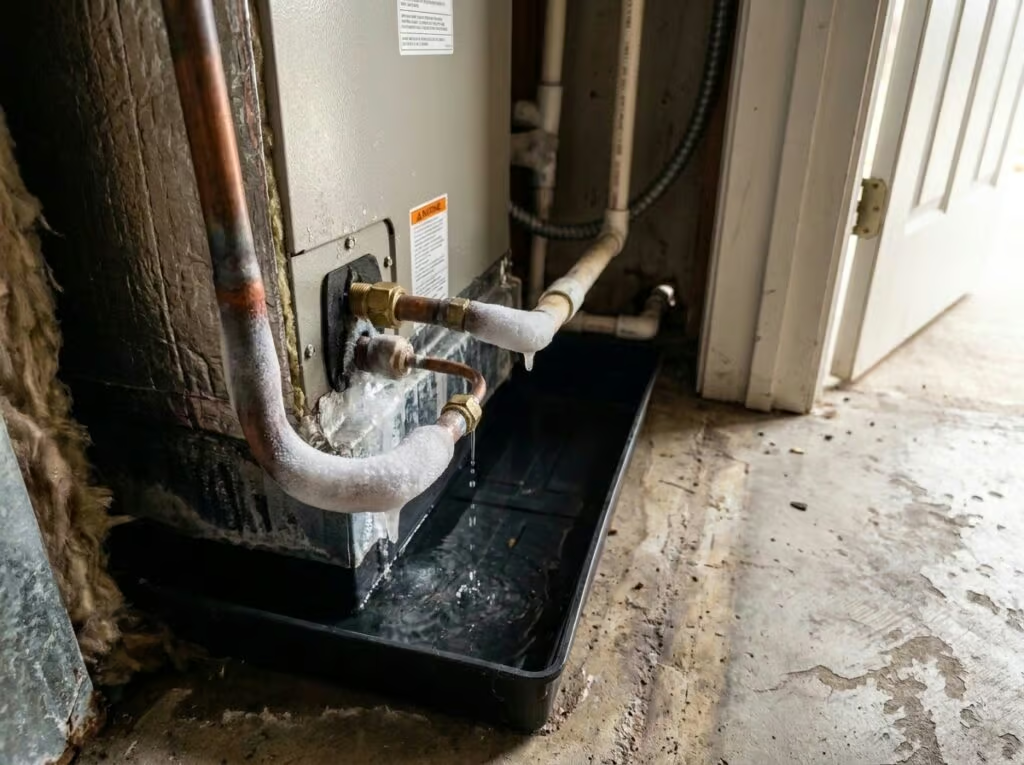
- Ice on the copper lines or the indoor coil
- Hissing or bubbling near the refrigerant lines
- A breaker that trips again after you reset it
- A system that runs almost nonstop and never reaches the set temperature
If you see ice, switch the cooling off and let it thaw while you wait.
A common question is whether the AC just needs a recharge. It doesn’t work like a car burning gas: low refrigerant means a leak, and finding and repairing it is a technician’s job.
Timing matters, too, because heat waves bring a rush of breakdowns. During a record July 2026 heat wave, WSET reported a surge in failures across Central Virginia, with failed capacitors the most common problem. That was regional coverage, not Halifax County alone.
Treat a failure as urgent if someone at home is elderly, an infant or has a health condition, or if an extreme heat advisory is in effect. At the time of writing, YourGV had reported that during a July 2026 heat advisory, Halifax County volunteer fire departments and churches opened as daytime cooling stations.
On a mild day, with cool air still in the house, next-day service is usually fine. If it’s urgent, call right away instead of waiting for an open slot.
What a Diagnosis Visit Should Show You Before Any Repair-or-Replace Call
A breakdown in a heat wave leaves little time to compare options. That’s when the fear of being upsold runs highest, and a clear diagnosis is your best protection.
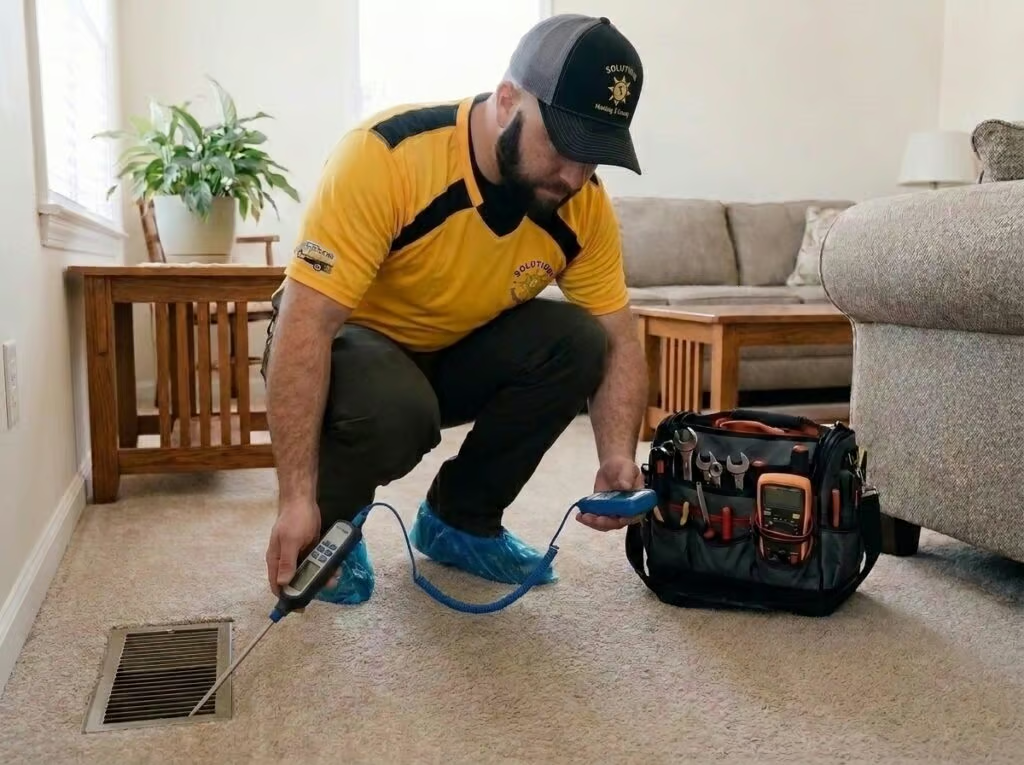
A diagnostic visit should cover the thermostat, electrical parts like capacitors and contactors, airflow, refrigerant pressures, signs of a leak, and both coils. By the end, you deserve to know what failed, what your options are, and what each one costs, in writing.
At Solutions Heating & Cooling, a system evaluation comes before any repair-or-replace recommendation. You see the why before you decide.
Four things drive most repair decisions:
- System age
- Refrigerant type. The EPA ended new production of R-22 in 2020, so older systems built for it can cost more to service.
- Parts availability
- Repair history. Is this likely the first of several?
The decision gets hardest with systems around 12 to 15 years old, when a repair can still pay off but the next failure may be close behind.
How Older Homes and Humid Southside Summers Wear on Cooling Systems
A cooling system can feel weak without being broken. Part of its job is pulling moisture from the air, and in a damp Southside summer that work rarely lets up. [2]
NOAA’s 1991–2020 climate normals show July as the warmest month of the year across this part of Virginia. That’s when every weakness in an older house shows up at once. Original ductwork, thin attic insulation and a damp crawl space all add to the load, so an AC that seems to be failing is sometimes just outmatched.
That’s why we treat A/C system repair as more than an outdoor-unit check. Heat or moisture from the attic or crawl space can add to the load, so we look there before calling a system worn out.
If your system is struggling anywhere from Halifax down to the Virginia–North Carolina border, give us a call. Contact us for an evaluation and exact pricing.
AC running but the house won’t cool down? Talk to a local technician serving Halifax down to the NC line. Call (434) 404-4461 →
AC Repair Questions From Homeowners Near the Virginia–North Carolina Line
Who handles AC repair for homes on the Virginia side of the NC border?
Solutions Heating & Cooling handles AC repair for homes across Halifax County, including the southern end on the Virginia side of the state line. We work on Virginia homes only, so if your address is in North Carolina, you’ll need a contractor licensed there. If your home is on the Virginia side and the AC has stopped cooling, call us to schedule a repair visit.
How can I tell a refrigerant leak from a dirty filter or coil?
Change the filter first; if cooling stays weak afterward, a leak becomes more likely. Hissing near the copper lines, oily spots on fittings, and long run times with little cooling all point toward a leak. Ice is trickier. It can come from a leak or from blocked airflow, so a technician with gauges should confirm the cause.
How often should an AC be serviced in Southside Virginia’s humid climate?
Service a central air conditioner once a year, ideally in spring before the heat sets in. Heat pumps run year-round, so they do better with two visits, one in spring and one in fall. Long, muggy summers keep systems working hard, and a yearly visit can catch a worn part before the hottest week does.
Sources
- energystar.gov/products/spring_savings
- nahb.org/-/media/NAHB/advocacy/docs/top-priorities/codes/technotes/tn07-humidity-control-201705.pdf?rev=c6131a26814e4031a121ea9d1e1a6aff&hash=6F30B9C42E6CBC5BAE3EF3EDD1D7FC19
Schedule Your AC Repair With a Local Team
Whether you’re in town, out in the county or close to the North Carolina line, one call gets a Solutions Heating & Cooling technician on your schedule. Call (434) 404-4461 →