
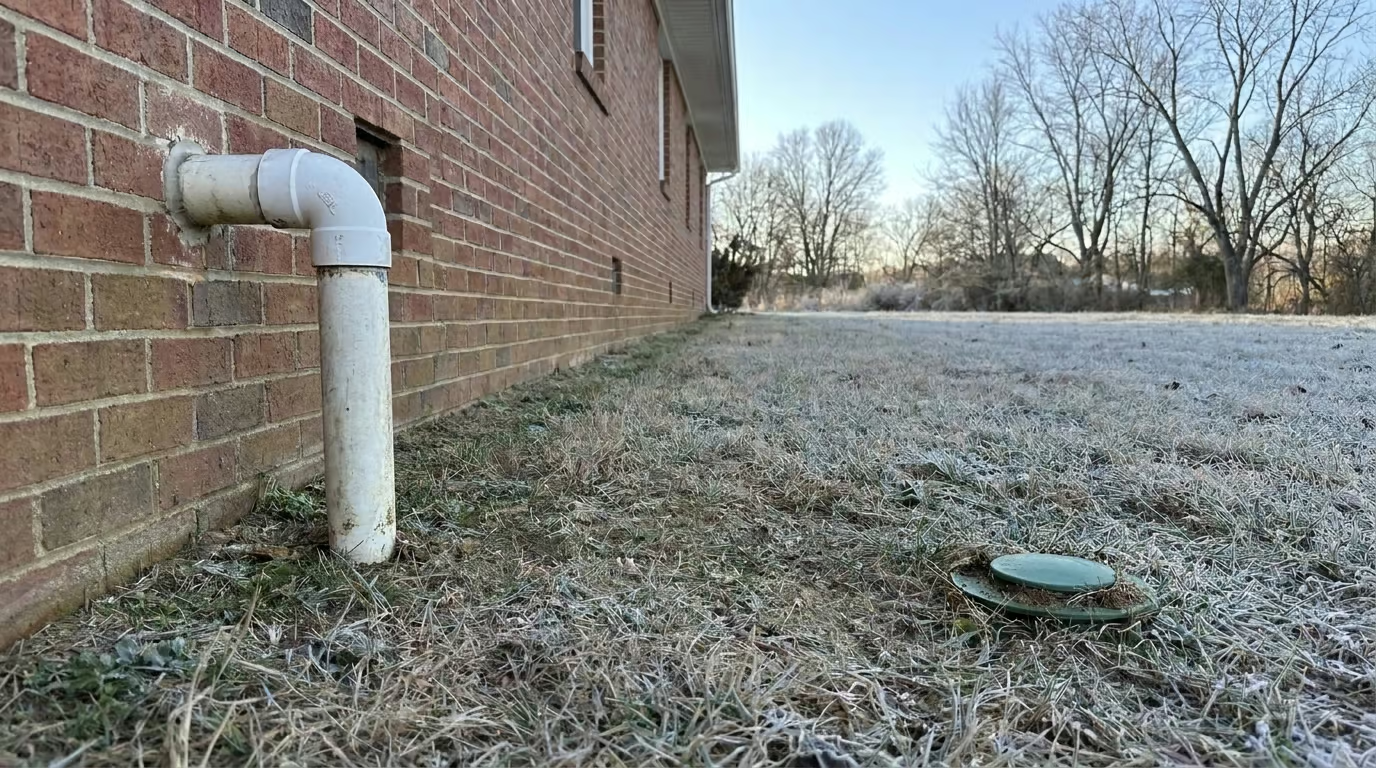
Halifax nights dip below freezing again and again each winter. By afternoon, temperatures often climb back above freezing, and cold rain can follow. That swing is what plugs a sump pump discharge line with ice, and the fix is to keep water from sitting in the pipe so there’s nothing left to freeze.
A sump pump that hums while the pit stays full is often fine. It’s the pipe outside that’s iced shut. Here’s how to keep a sump pump discharge line from freezing, and most of the checks take one dry October afternoon and a walk along the pipe.
If it does freeze, the pump keeps running with nowhere to send water. The motor overheats, and the next thaw can push the pit over its rim and into your basement or crawlspace.
We’ll cover why lines freeze here, how the fixes compare, how to thaw one safely, and when it’s time to call someone.
The Short Answer: Keep Water From Sitting in the Line
To keep a sump pump discharge line from freezing in a Halifax winter, don’t let water sit in it between cycles:
- Slope it downhill from the house so the pipe empties fully each time the pump shuts off.
- Give it an open exit that snow, ice, or leaves can’t block.
- Protect exposed sections along the wall with insulation or heat cable.
- Keep any buried run below local frost depth, with its slope intact.
Already frozen? Unplug the pump, then thaw the line slowly from the exit end with hot (not boiling) water or a hair dryer.
Why Halifax Discharge Lines Freeze Even in Mild Winters
Southside Virginia winters seesaw rather than stay frozen. Water left in a sag or at the exit freezes overnight, and each round adds a layer until the pipe is nearly shut.
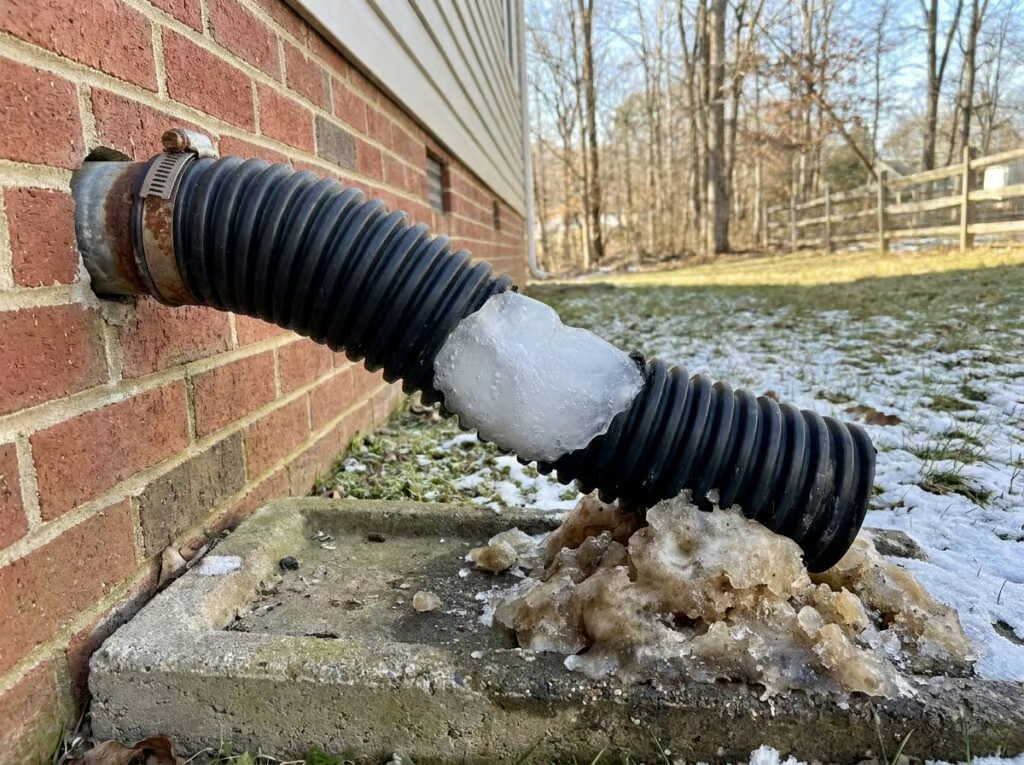
Then comes a thaw or a cold rain. Groundwater rises, the float lifts, and the pump works against a plug of ice.
Have a Question About Your Home?
Talk to a real person on our Halifax team. We'll give you a straight answer and an upfront price.
Prevention Fixes Compared: Slope, Exit Point, Insulation, and Burial Depth
Most homes do best pairing two or three of these measures.
- Rigid pipe with a steady slope. Smooth PVC pitched downhill drains dry after each run. Corrugated flexible hose holds water in its ridges and sags between supports, where ice usually starts.
- A freeze relief fitting or pop-up emitter. A freeze relief fitting, or freeze guard, where the line leaves the house lets water spill out if the pipe beyond it freezes, rather than backing up. It’s a fallback, and it drops water near your foundation. A pop-up emitter at the end of a buried line lets the pipe drain, but snow or ice can seal it shut.
- Insulation or heat cable on exposed runs. Both help on short sections along the wall. Use cable rated for outdoor use and your pipe material, plugged into a GFCI-protected outlet; thermostat-controlled cable only draws power near freezing.
- Burying the line. A buried run stays warmer, but only below the frost line with continuous slope. Confirm local frost depth with the Halifax County building office before you dig.
Long Yard Runs on Rural and Well-Water Lots
Many homes around Halifax sit on acreage, and every extra foot of yard run is another chance for a sag. Aim the outlet at open ground that falls away from the house, well clear of the foundation, septic field, and wellhead. Extra water can saturate a drain field, and runoff near a wellhead can carry surface contaminants toward your water supply.
Walk the line in mid-October to catch sags, cracked fittings, a crushed exit, or piled leaves before the first frost.
What Happens When the Line Freezes and What to Do Right Now
A frozen line doesn’t stop the pump from trying. The float rises, the motor starts, and no water leaves. Left that way, the motor can overheat, the float can stick, and pressure behind the ice can crack a fitting or the check valve.
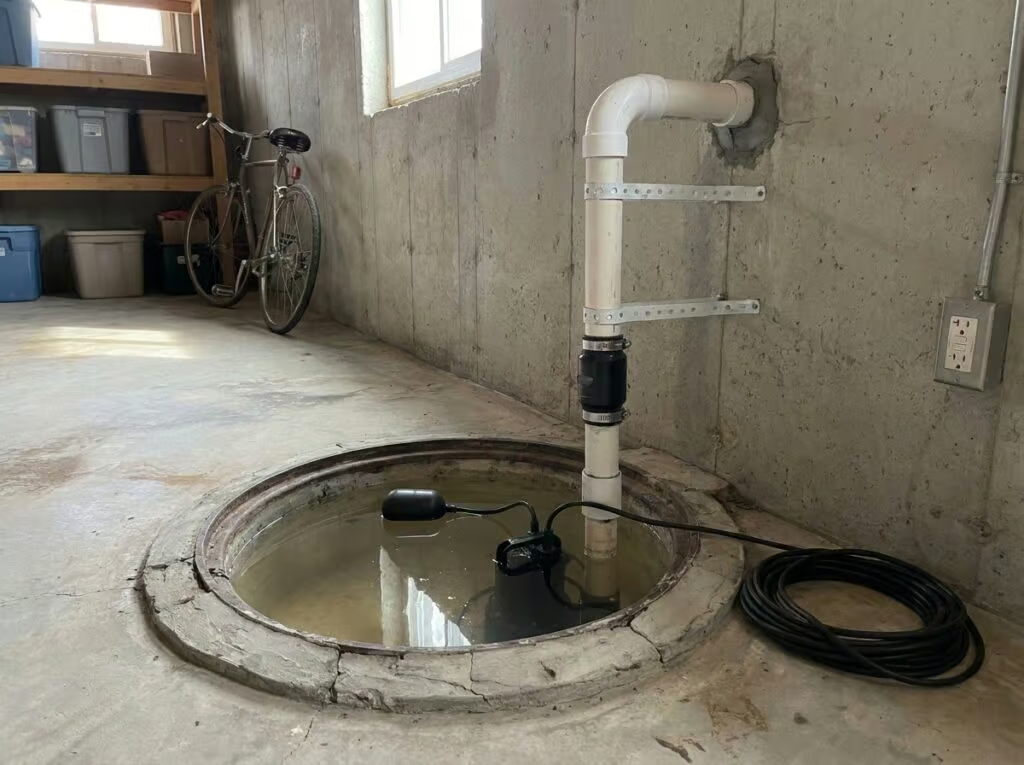
Unplugging protects the motor, but the pit keeps filling, so check it every hour or two and bail it down with a bucket or wet/dry vacuum if it nears the rim.
To thaw the line safely:
- Unplug the pump first.
- Find the frozen spot, usually at the exit or in a low sag.
- Work from the open end back toward the house so meltwater can escape.
- Use hot tap water or a hair dryer on a GFCI-protected outlet. Skip boiling water, which can stress plastic joints, and never use a torch.
- Once water flows, plug the pump back in and watch a full cycle.
Checks After the Thaw
Pour a bucket of water into the pit. The pump should start, empty it, and shut off on its own, with no drips at the joints. If it spent hours grinding against a blocked line, it may be worn, and with an older unit, replacement can make more sense than repair.
When to Call a Pro, and What It Costs Compared to a Flooded Basement
Call a professional if you notice:
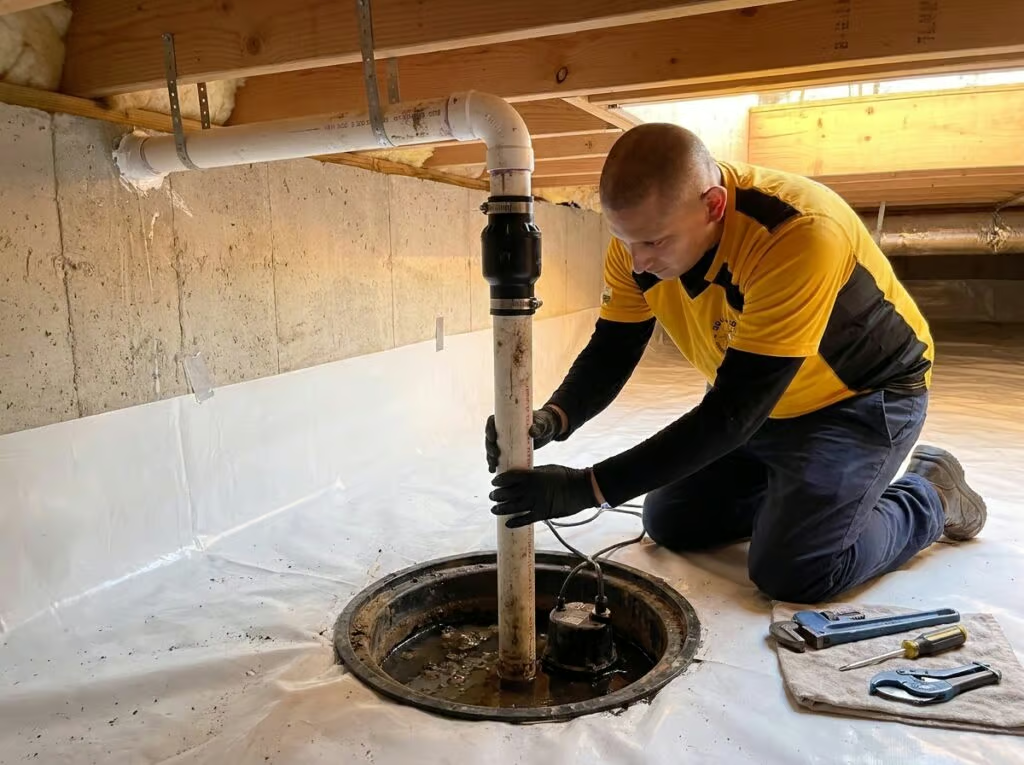
- Cracked or separated joints on the discharge line
- A pump that won’t shut off, or won’t restart after thawing
- Ice you can’t reach, such as inside a buried run
- Standing water in the crawlspace or basement, or a pit that stays full
Along with sump pump repair and sump pump replacement, we handle crawlspace waterproofing and moisture mitigation, so a wet crawlspace and a struggling pump don’t need two different contractors.
Thawing a line around a healthy pump is a small job. A burned-out motor or soaked crawlspace costs more, but usually less than cleaning up a flooded basement. Contact us for exact pricing.
Get the Line Sorted Before the Next Freeze
A discharge line that drains clean is your basement’s best defense in a Halifax winter. Check the slope, clear the exit, and protect anything exposed before the first hard freeze settles over Southside Virginia.
If your pump hums without moving water after a cold snap, or struggles to keep up afterward, call Solutions Heating & Cooling. We’ll check the pump and the line together, tell you plainly whether repairing the pump you already have will do or sump pump replacement is the better fit.
Water rising in the sump pit during a Halifax cold snap? Don’t wait for the thaw to find out why. Call (434) 404-4461 →
Frozen Sump Pump Discharge Lines: Quick Answers for Halifax Homeowners
Can a frozen discharge line burn out my sump pump?
A frozen discharge line can burn out your sump pump if the motor keeps running against the ice. [1] With nowhere for water to go, the motor runs long and heats up, and hours of that can wear it out or stick the float. Unplug the pump as soon as you spot the problem, then thaw the line.
How does a sump pump freeze guard work?
A sump pump freeze guard works as an overflow point where the discharge line leaves the house. If the pipe beyond it freezes, water spills out of the fitting instead of backing up into the pump. It buys time, but it doesn’t solve the freeze. The water lands near your foundation, so you still need a line that drains fully between cycles.
Where should I run my sump pump discharge?
Run your sump pump discharge onto open ground that slopes away from the house, well clear of the foundation. [2] On many Halifax lots, that also means keeping it away from the septic field and wellhead, since added runoff can waterlog a drain field. Hold a steady downhill pitch the entire length so no water lingers after the pump shuts off. [3]
Sources
- en.wikipedia.org/wiki/Sump_pump
- familyhandyman.com/article/how-to-install-a-sump-pump
- thisoldhouse.com/landscaping/how-to-install-a-sump-pump-drywell
Protect Your Basement Before Winter Sets In
Whether your sump pump is due for a look before cold weather or is already showing its age, Solutions Heating & Cooling handles sump pump repair and replacement for homes around Halifax. Book a visit while the weather’s still mild: Call (434) 404-4461 →