
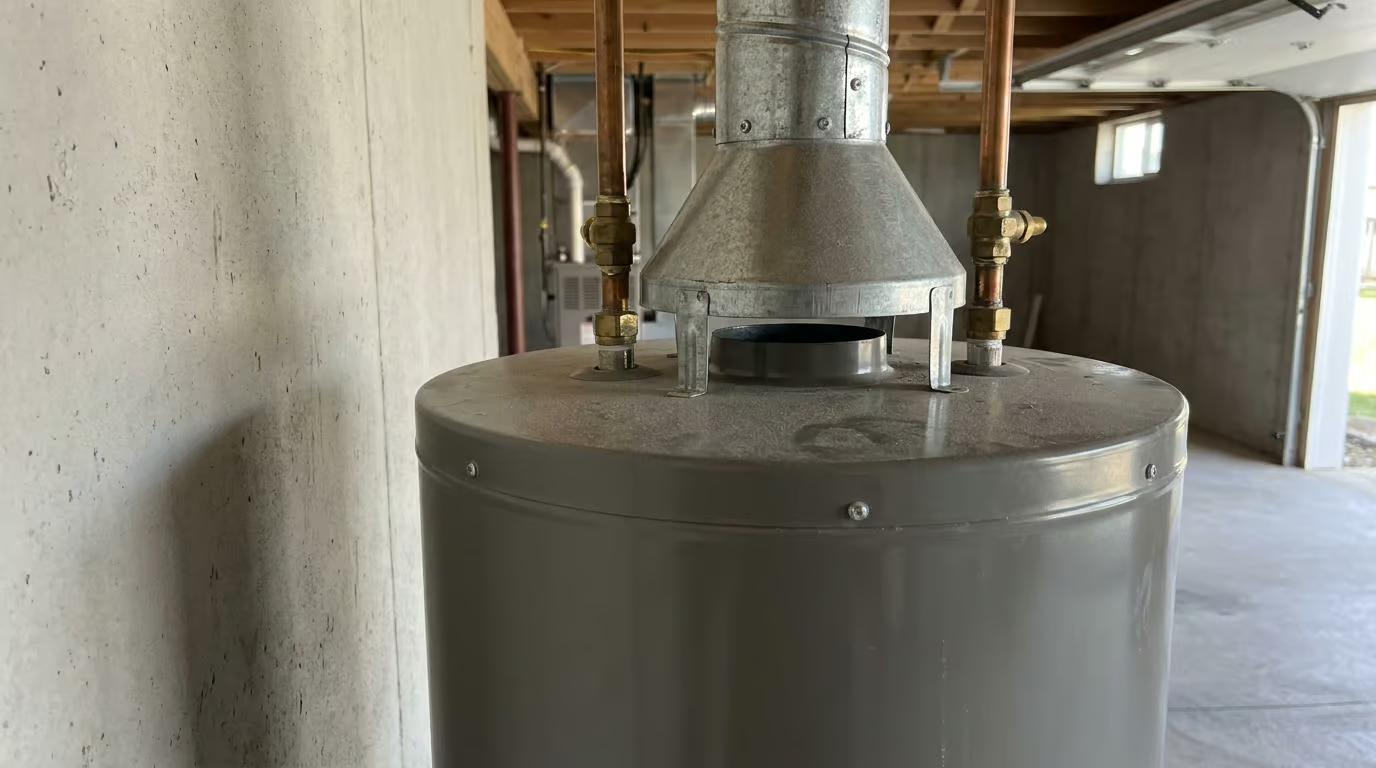
In plenty of Halifax homes, the first real sign of winter isn’t frost on the windshield. It’s whoever showers last getting a cold rinse. Hot water runs out faster in winter because the water feeding your tank is colder. The heater has a bigger gap to close, so reheating takes longer.
Usually that’s normal, but sometimes it’s the first hint a water heater is wearing out. If you’ve been asking why does my hot water run out faster in winter, this guide shows you how to tell the two apart.
We’ll cover the cold-water physics, warning signs, how gas and electric units fail, what you can safely check, and repair versus replacement.
The Short Answer: Colder Water in, Less Hot Water Out
If your hot water in Halifax runs out sooner in January than it did in July, the main reason is colder water entering your tank. Well water and town water both come in colder in winter. Your heater has to warm each gallon more to reach the set temperature, so it takes longer to catch up. That’s why back-to-back showers can empty the tank before it recovers.
Winter habits also pile on:
- longer, hotter showers
- more hot water mixed in at the faucet
- pipes cooling in chilly crawlspaces.
A gradual seasonal shortening is normal as long as the water still comes out hot. But a sudden drop, lukewarm water, rumbling or popping from the tank, or hot water that still runs short after the weather warms up suggests the heater itself needs checking.
What Your Tank’s First-Hour Rating Doesn’t Tell You About Winter
Your tank’s label lists a first-hour rating, and it’s the number to check when a heater feels too small. In winter, though, it only tells part of the story.
The U.S. Department of Energy describes a heater’s first-hour rating as how much hot water it can supply in one hour, starting with a full tank. [1] That rating comes from fixed test conditions, so it doesn’t show how a tank performs when the incoming water is much colder than the test assumes. A heater that handled summer mornings can feel a size too small once the supply turns cold. [2]
In a Halifax winter, incoming water can run colder than that test assumes. Cold nights are routine from late fall into early spring, which pulls incoming water temperatures down.
Well water is no exception. It passes through a pressure tank and supply lines, often in an unheated crawlspace or well house, that chill with the weather. Your heater then runs longer than its rating suggests to catch up.
Have a Question About Your Home?
Talk to a real person on our Halifax team. We'll give you a straight answer and an upfront price.
Normal Winter Dip or Failing Heater? How to Tell
It comes down to pattern: a normal dip creeps in as the weather cools, while a failing heater changes fast or acts strangely.
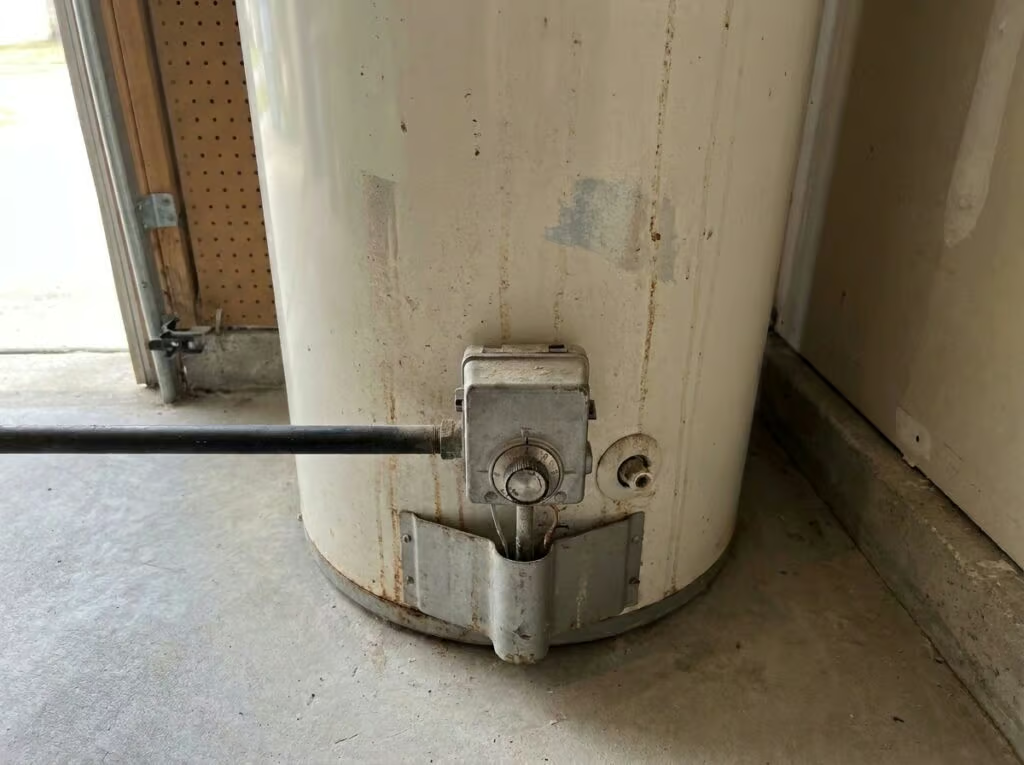
Usually a normal seasonal dip:
- Hot water runs out sooner, but it’s fully hot while it lasts
- The change came on gradually as temperatures dropped
- It eased last spring and came back this fall
Often a sign the heater needs attention:
- The supply dropped suddenly, almost overnight
- Water is lukewarm instead of just short-lived
- The tank rumbles, pops or crackles while heating
- Hot water looks rusty or discolored
- The unit is around 10 to 15 years old
- Hot water still runs short after the weather warms up
Well water can also add sediment: minerals and iron settle on the tank bottom, take up space and make the heater work harder.
Gas and Electric Heaters Fail in Different Ways
Fuel type shapes where trouble usually starts. Each item below is a possible cause, not a diagnosis.
- Electric: Most units have an upper and a lower heating element, each with its own temperature control. If the lower element or its control fails, only the top of the tank heats and hot water runs out quickly.
- Gas: A dirty or weak burner, or a draft or flue problem, can cut how much heat reaches the water.
- Both: Sediment buildup slows heating. A worn or broken dip tube lets incoming cold water mix near the top of the tank, so hot water turns lukewarm fast.
These look alike from the outside, so a technician tests the parts before anything gets replaced.
What You Can Safely Check Yourself, and What to Leave Alone
A few checks are safe for any homeowner:
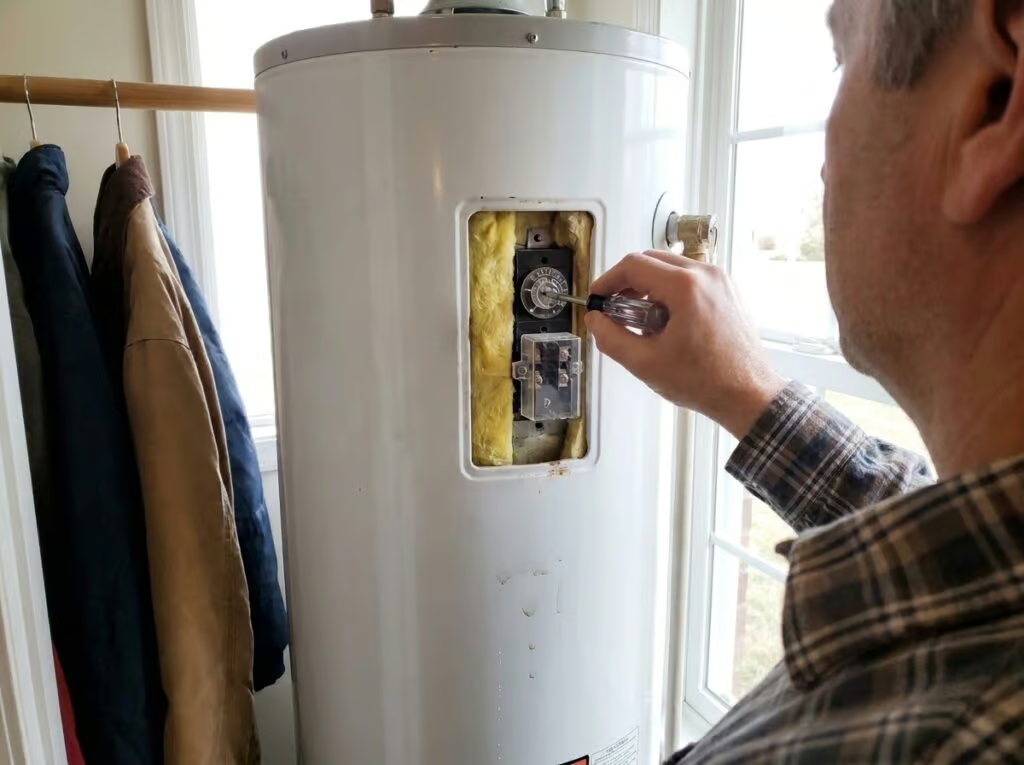
- Look at the temperature dial on the tank and make sure it’s at its usual setting.
- Spread out your showers, laundry and dishwasher runs so they don’t all use hot water at once.
Then watch what happens. Does the water turn lukewarm, or does it just run out sooner?
Flushing the tank is common upkeep. On an old tank, though, it can stir up sediment or expose a weak drain valve.
Don’t turn the heat up. The U.S. Department of Energy recommends 120°F for most homes. Hotter water can scald, especially young kids and older adults.
Leave gas lines, wiring and burner parts alone. Virginia’s Board for Contractors treats water heater work as plumbing, so it takes a state-licensed tradesman.
The well is the same. If your water pressure is off too, the Virginia Department of Health says to call a licensed professional. Adjusting the pump yourself can cause shock and injury.
Repair, Replace, or Go Tankless: A Straight Look at the Decision
Age and symptoms together usually point the way. A heater under 10 years old with one failed part, such as an element, is often worth repairing. One in the 10-15 year range with rust, a leak or a winter drop in hot water that never fully goes away is closer to replacement.
If a repair will do the job, we’ll tell you. No sense replacing a unit with good years left.
When replacement is right, we can install a new tank water heater in Halifax or handle Tankless Water Heater Installation. Tankless units don’t run out of stored hot water, but their flow rate drops with cold supply water, so size them with winter in mind.
Plan for a permit, too. Halifax County’s Trade Permit Application has a hot water heater line, with separate options for new and replacement work, so check with the county building office first.
Don’t count on a state rebate yet. At the time of writing, Virginia Energy says its Home Energy Rebates, including a planned water heater rebate, aren’t open to homeowners, and the program won’t pay for purchases made before it launches. Contact us for exact pricing.
Getting a Straight Answer on Your Water Heater
Hot water that runs out a little sooner each winter but stays hot is normal. Water that turns lukewarm, drops off suddenly or comes with rumbling from the tank is not. Have it checked before a small problem turns into a wet floor.
If you can’t tell which you’re dealing with, contact Solutions Heating & Cooling in Halifax, VA. We’ll look at your water heater and tell you in plain language whether a repair will carry it through more winters or it’s time to plan a replacement.
Not sure if it’s the cold weather or the tank? Call (434) 404-4461 → and we’ll tell you which before the next cold snap.
Winter Hot Water Questions Halifax Homeowners Ask Most
How long does it take to get hot water back after it runs out?
Hot water usually comes back within about an hour after it runs out, though electric tanks often take longer. Gas burners heat water faster than electric elements, and in winter, the chillier supply water stretches that wait. If recovery is much slower than it used to be, a failed element or sediment buildup may be to blame.
How do you fix hot water that runs out too fast?
To fix hot water that runs out fast, start by spacing out showers, laundry and dishwasher loads. A low-flow showerhead also makes each tankful last longer. If it’s a new problem or the water runs lukewarm, a failing element, dip tube or sediment buildup could be the cause. A heater that’s too small for winter may need replacing.
Why does a gas water heater run out of hot water quickly?
A gas water heater usually runs out quickly because of sediment, a weak burner or a broken dip tube. Sediment keeps the flame’s heat from reaching the water, while a dirty burner or venting problem cuts heat output at the source. Either way, burner and gas line work calls for a licensed professional, not a DIY fix.
Sources
- energystar.gov/products/water_heaters/residential_water_heaters_key_product_criteria
- www1.eere.energy.gov/buildings/appliance_standards/pdfs/water_heater_test_report_111413.pdf
Schedule Your Halifax Water Heater Check Today
Winter is the hardest season on a water heater, and a quick look now beats a cold shower in January. Call (434) 404-4461 →