
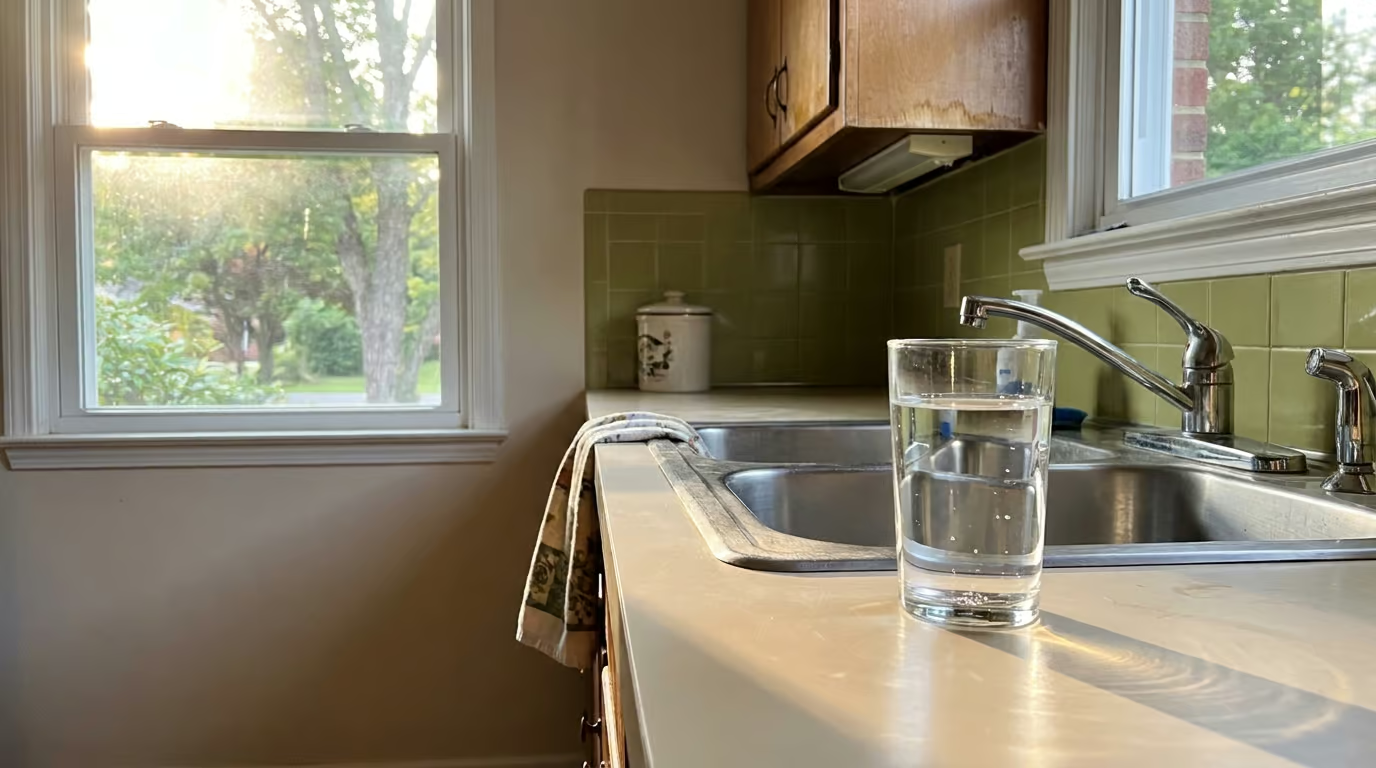
A well water report is a list of results, each one set beside a limit. Reading it comes down to spotting which rows are about your health and which are only about stains, scale and taste.
Plenty of Halifax, VA homes run on a private well, and that report is your only real look at what’s in the water. This guide on how to read well water test results covers the report layout, hardness, iron, pH and bacteria, plus what Virginia leaves up to well owners.
Four Checks That Make Any Water Report Readable
Work through your report in this order:
- Confirm the units. Most results are in milligrams per liter (mg/L), which equals parts per million (ppm) for water. Hardness may also appear in grains per gallon (gpg).
- Sort health limits from nuisance limits. Bacteria and nitrate have health-based limits. Iron, pH, hardness and total dissolved solids mostly affect taste, staining and scale.
- Check bacteria first. A “present” result for coliform or E. coli needs action right away.
- Read hardness and iron together. Both shape whether you need treatment and what kind.
If bacteria and nitrate pass, the rest of the report is about comfort and appliance life, not safety.
Reading the Report Layout: Units, the Less-Than Sign and Two Kinds of Limits
Most lab reports use four columns: the parameter (what was tested), the result, the limit and the units. Follow each row across, not down the page.
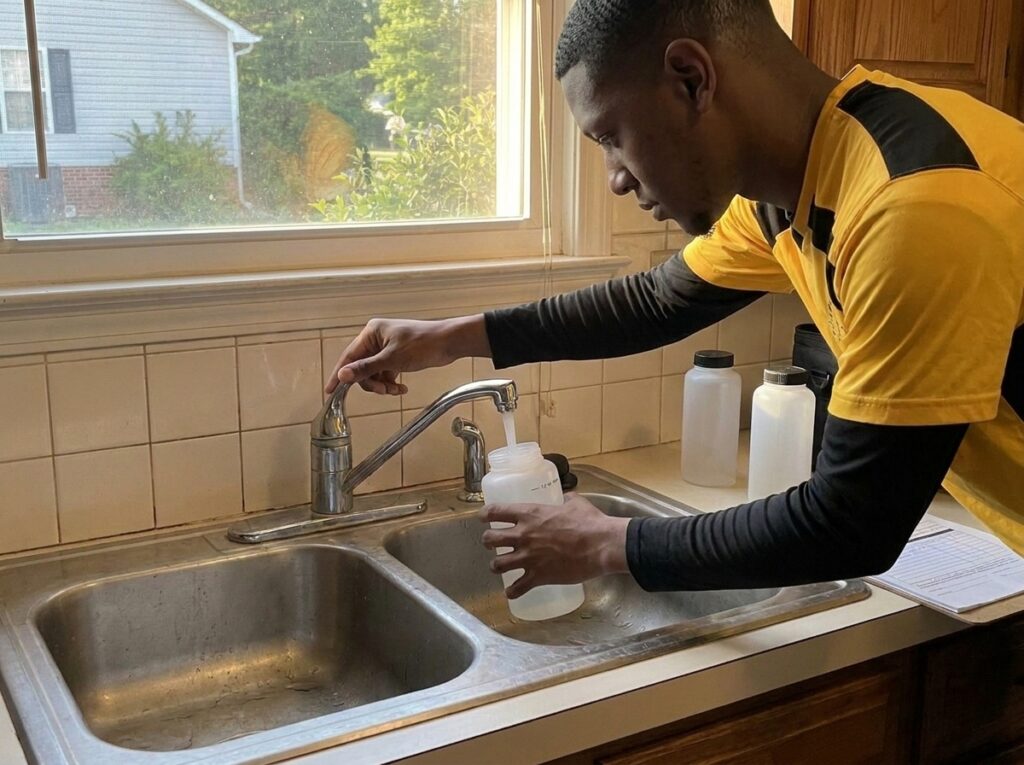
A less-than sign, such as “<0.05,” means the lab found less than it can measure: a clean result, not a missing one. Rows over a limit usually get a bold flag or a word like “unsatisfactory.”
Limits come in two kinds. The U.S. Environmental Protection Agency sets Maximum Contaminant Levels (MCL) for health and Secondary Maximum Contaminant Levels (SMCL) for taste, odor and staining, which is how a report can say your water “meets standards” and still flag iron as high. Both sets of limits are written for public water systems, so neither legally binds a private well, but labs use them as benchmarks.
Keep these reference points handy:
- Iron: 0.3 mg/L (a stain and taste guideline)
- pH: 6.5 to 8.5 (a taste and corrosion guideline)
- Total dissolved solids: 500 mg/L (a taste and deposit guideline)
- Nitrate: 10 mg/L as nitrogen (a health limit)
- Total coliform: absent is the result you want
Is a Hardness of 250 Bad? Converting mg/L to Grains per Gallon
Yes. At 250 mg/L, your water falls in the “very hard” class used by the U.S. Geological Survey.
To compare with appliance manuals and softener specs, divide mg/L by 17.1 to get grains per gallon: 250 ÷ 17.1 is about 14.6 gpg.
The USGS hardness classes:
- Soft: 0 to 60 mg/L (about 0 to 3.5 gpg)
- Moderately hard: 61 to 120 mg/L (about 3.5 to 7 gpg)
- Hard: 121 to 180 mg/L (about 7 to 10.5 gpg)
- Very hard: over 180 mg/L (over 10.5 gpg)
Hardness is mostly calcium and magnesium. It poses no health risk, but you’ll see it as cloudy dishes, crusty showerheads and faucet scale. Inside a tank water heater, scale settles on the bottom and can make the unit noisier and less efficient.
Hardness can differ from one well in Halifax, VA to the next, so the figure on your own report is the one that counts.
Have a Question About Your Home?
Talk to a real person on our Halifax team. We'll give you a straight answer and an upfront price.
Iron on Your Report: Clear-Water Iron, Rusty Iron and Why It Matters for Treatment
Iron above 0.3 mg/L is the usual cause of orange stains in sinks, tubs and laundry, and it can give water a metallic taste. How it shows up depends on its form.
Ferrous iron, often called clear-water iron, is dissolved: the water looks clean from the tap, then turns orange or forms a rusty ring as it sits. Ferric iron is already oxidized, so the water comes out rusty at the faucet.
Always weigh iron alongside hardness. A softener can handle small amounts of dissolved iron, but heavy iron can foul its resin bed, so a softener alone may not keep up.
Some homes with mild results need no treatment at all. The Virginia Department of Health (VDH) notes that home treatment systems are built for specific contaminants and won’t necessarily remove all of them.
That’s why, at Solutions Heating & Cooling, our well water testing comes before any softener recommendation. The numbers decide the answer.
What Your pH Number Says About Pipes, Fixtures and Taste
The EPA’s guideline range for pH is 6.5 to 8.5, set for taste and plumbing wear rather than health. Outside that range, the water can still wear on your pipes and fixtures or change how it tastes.
Low pH means acidic water, which can taste bitter or metallic, corrode metal pipes over time and leave blue-green stains where copper plumbing is involved. High pH leans the other way, toward a slippery feel, a soda-like taste and deposits.
Coliform Present: What the Result Means and What to Do Next
Bacteria is the one line you shouldn’t sit on. Results read “absent” or “present,” and absent is the goal.
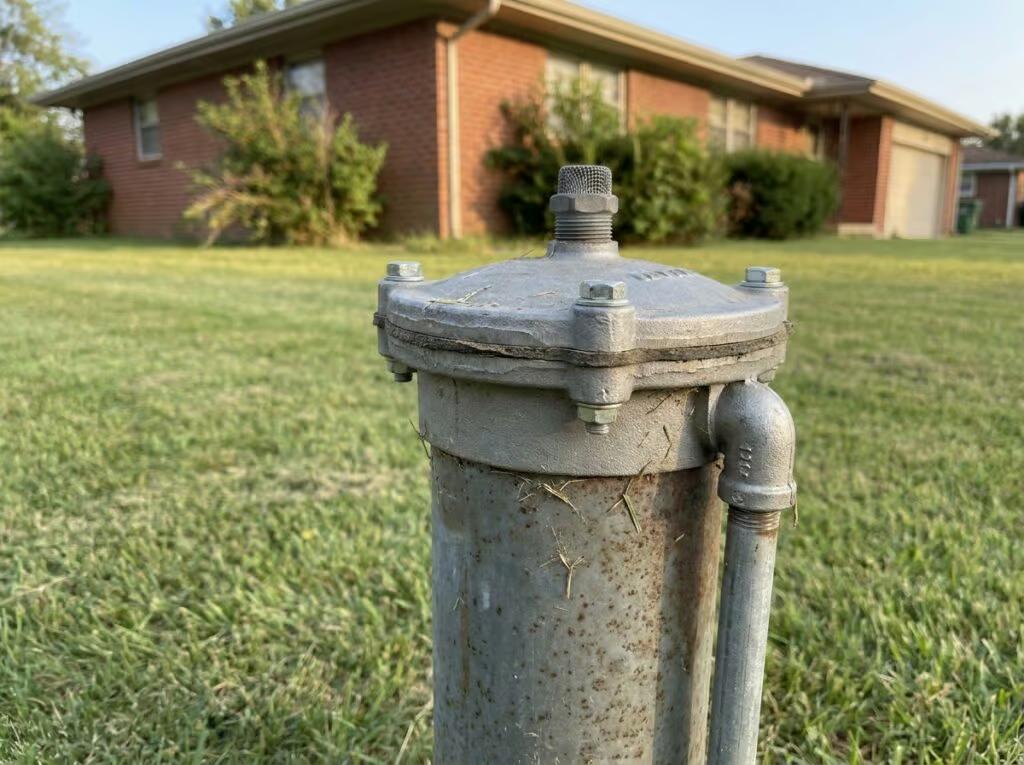
Total coliform bacteria are an indicator group, so a positive result means outside material is getting into the well, often through surface water or a gap at the cap or casing. E. coli is more serious. According to the EPA, it points to possible fecal contamination and calls for a faster response.
If your report shows coliform present:
- Switch to bottled water for drinking until the problem is resolved.
- Follow VDH guidance to disinfect the well, then flush the system.
- Retest through a state-certified lab.
- Track down and correct the source, such as a damaged well cap or poor drainage at the wellhead.
VDH also recommends retesting after wellhead flooding, any change in taste, color, odor or clarity, and any well system repair.
Nitrate is the other health-limit result to watch. Above 10 mg/L as nitrogen, the EPA warns it can harm infants under six months. Boiling won’t help; it concentrates nitrate.
Halifax County Well Owners Act on Their Own Numbers
The Virginia Department of Health does not test private wells and has no authority to require testing. Virginia’s Private Well Regulations (12VAC5-630) require a coliform test only on a new well before use. After that, testing is your call.
VDH recommends testing for bacteria and nitrate every year through a state-certified lab.
Ready to Test Your Well? Start With Us
Solutions Heating & Cooling offers well water testing for homes in Halifax, VA. If your well hasn’t been tested yet, or it’s been more than a year, that’s the place to start.
Once you have your results, the sections above will help you sort the health lines from the nuisance ones. If you have questions about testing, or about treatment for what turns up, we’re happy to talk it through.
Questions about testing your well water? Call (434) 404-4461 → and talk it through with our Halifax, VA team.
Quick Answers About the Numbers on Your Well Water Report
How often should private well water be tested in Virginia?
Private well water in Virginia should be tested for bacteria and nitrate at least once a year, VDH recommends. Use a state-certified lab, and test again after flooding near the wellhead, any change in taste, color or smell, or repair work on the well. Virginia doesn’t require ongoing testing, so the schedule is up to you.
What iron level in well water is too high?
Iron above 0.3 mg/L is over the EPA’s secondary guideline. That guideline is written for public water systems, but labs use it as a benchmark. It targets stains and taste, not health. Past it, expect orange marks on sinks and laundry and a metallic flavor. Because heavy iron can foul a softener’s resin, check your iron and hardness numbers as a pair.
What pH should well water be?
Well water pH should fall between 6.5 and 8.5, the EPA’s range. Below 6.5, water is acidic and can taste bitter or metallic, corrode metal pipes and cause blue-green stains near copper. Above 8.5, water can feel slippery, taste like soda and leave deposits. [1] Neither end is a health limit, though low pH in particular can wear on plumbing.
What is the difference between MCL and SMCL on a well water test?
On a well water test, MCL is an EPA health limit; SMCL is a taste, odor and staining guideline. [1] Bacteria and nitrate carry health-based limits, while iron, pH, hardness and total dissolved solids fall under secondary guidelines. A row over an SMCL isn’t a safety alarm. It can still mean stains, scale or off flavors.
Sources
- epa.gov/sdwa/secondary-drinking-water-standards-guidance-nuisance-chemicals
Get Straight Answers About Your Well Water
Whether you’re testing for the first time or following up on a result that raised questions, call us about well water testing for your Halifax, VA home. Call (434) 404-4461 →