
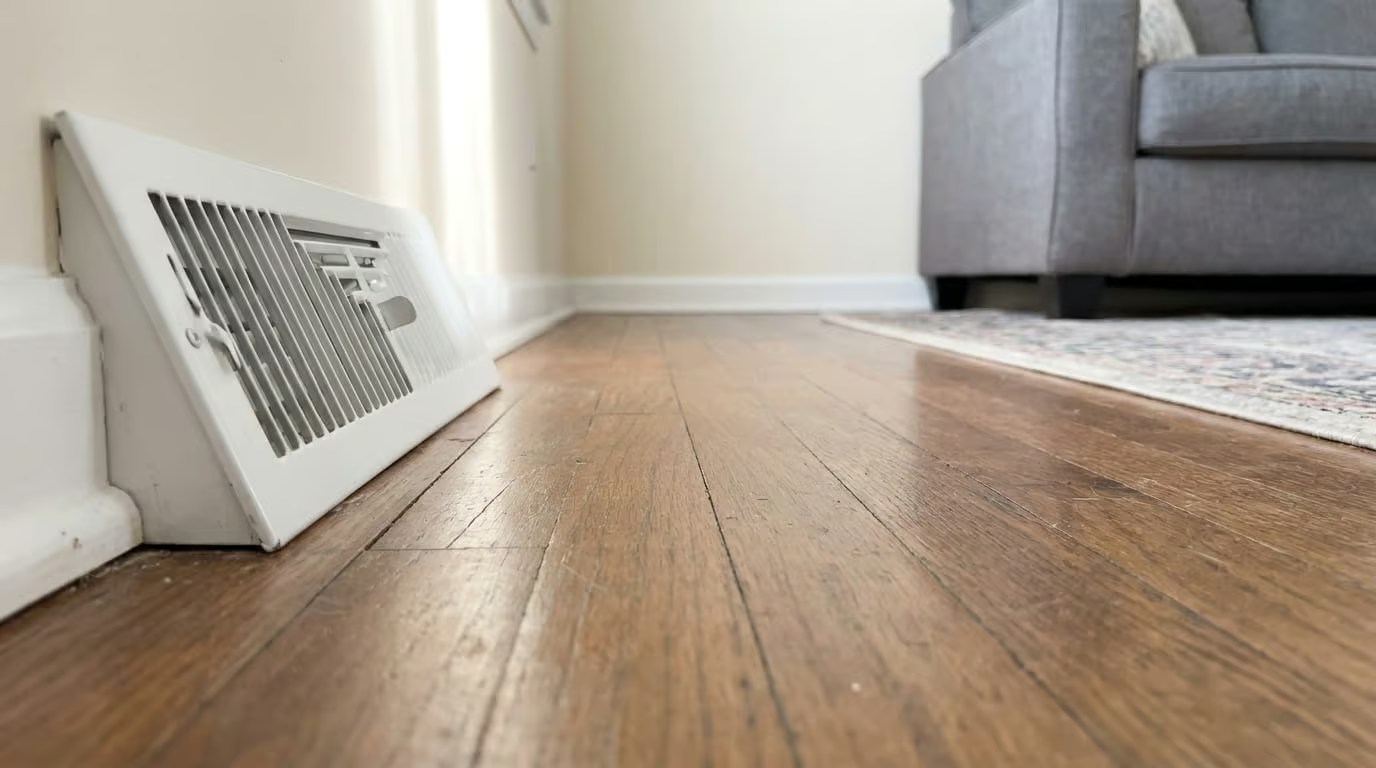
A short burst of cool air when your furnace first kicks on is usually normal. The burners need a little time to heat up before the blower sends warm air to your rooms. If the vents keep blowing cool air well past that start, or the heat cuts in and out, the furnace needs a closer look.
You notice it most on the first cold morning of fall. The thermostat clicks, the fan hums, and the air from the vent feels more like a draft than heat. Here’s what causes a furnace blowing cold air before warming up, which free checks to try first, and when to call for furnace repair.
Is It Normal for a Furnace to Blow Cool Air When It First Starts?
A brief cool start is usually normal. When a gas furnace turns on, the burners light first and heat a metal part called the heat exchanger. The blower waits until that metal is hot, so the air sitting in the ducts comes out first and the opening moments feel cool.
How long that delay lasts depends on the model, and your owner’s manual is the best guide. Cool air that won’t let up past that window, or heat that starts and stops in cycles, means something’s off. The most common causes are:
- A thermostat fan set to ON instead of AUTO
- A dirty or clogged air filter
- Ignition or flame sensor failures
- Leaky or poorly insulated ductwork
Two Checks to Make Before You Call: The Fan Setting and the Filter
Both are free, and between them they solve many cold-air complaints.
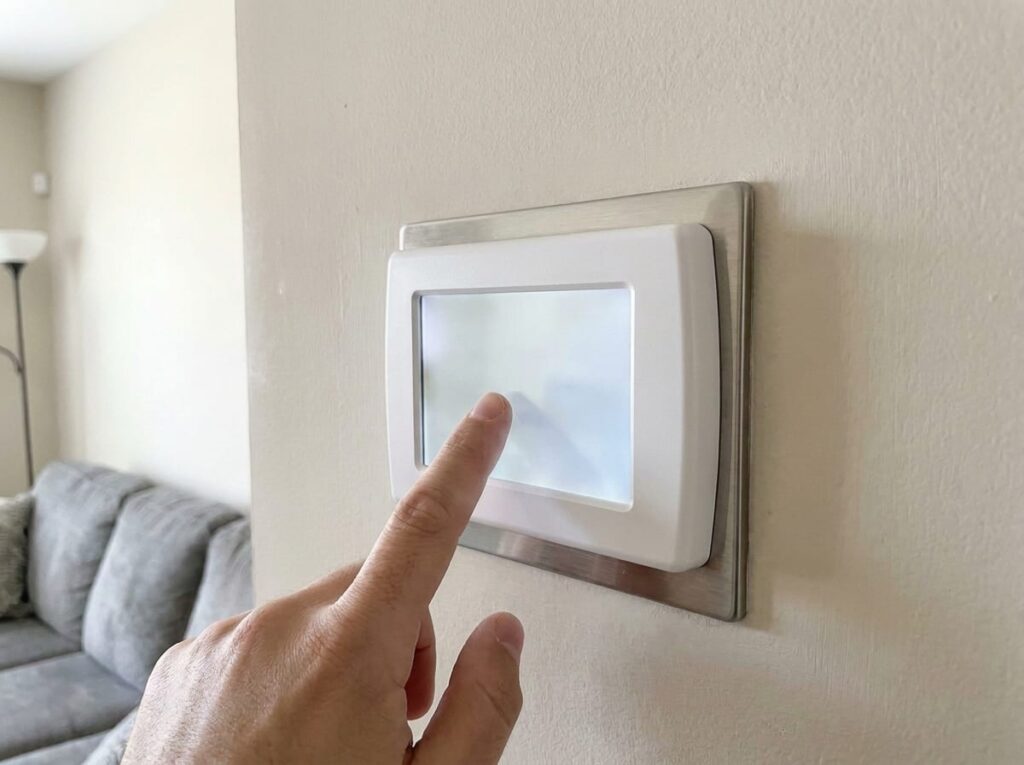
- Look at the thermostat fan setting. On ON, the blower runs nonstop and moves room-temperature air between heating cycles, which feels cold at the vent. [1] Switch it to AUTO so the fan runs only when there’s heat to move. [2]
- Pull the air filter. A clogged filter chokes airflow, and a furnace starved of air can overheat. A safety control then shuts the burners off while the blower keeps running. Gray and packed with dust? Swap in a new one.
Have a Question About Your Home?
Talk to a real person on our Lynchburg team. We'll give you a straight answer and an upfront price.
Ignition, Flame Sensor and Burner Problems That Cut the Heat Short
If the fan and filter check out, make sure the thermostat is set to HEAT and the gas supply to the furnace is on. If both look right, the trouble often sits in the parts that light the flame and keep it burning.
- Flame sensor. This thin metal rod confirms the burners are lit. When grime coats it, the furnace shuts off the gas soon after lighting while the blower keeps pushing cool air.
- Igniter and gas valve. Most newer furnaces use an electronic igniter instead of a pilot. If the igniter is cracked or the gas valve won’t open, the burners never light.
- Pilot light and burners on older units. Some older furnaces use a standing pilot that can go out, and dirty burners burn unevenly and put out weak heat.
- Limit switch. This safety switch cuts the burners when the furnace runs too hot, often because of poor airflow. Frequent trips deserve attention.
These parts sit near gas lines and open flame, so cleaning or replacing them is a job for a trained technician.
Why Older Homes Can Lose Heat in the Ductwork Before It Reaches the Vents
Sometimes the furnace heats fine and the heat gets lost on the way to your rooms. Over decades, joints loosen and seams pull apart, so warm air escapes under the house. Thinly insulated ducts shed heat through their walls too, especially in a damp, unheated crawl space in January. The result is lukewarm air at the vents farthest from the unit.
When testing confirms real leaks, our air duct sealing service closes them from the inside so more heat reaches the living space.
When to Stop Troubleshooting and Call for Furnace Repair
Call for furnace repair if:
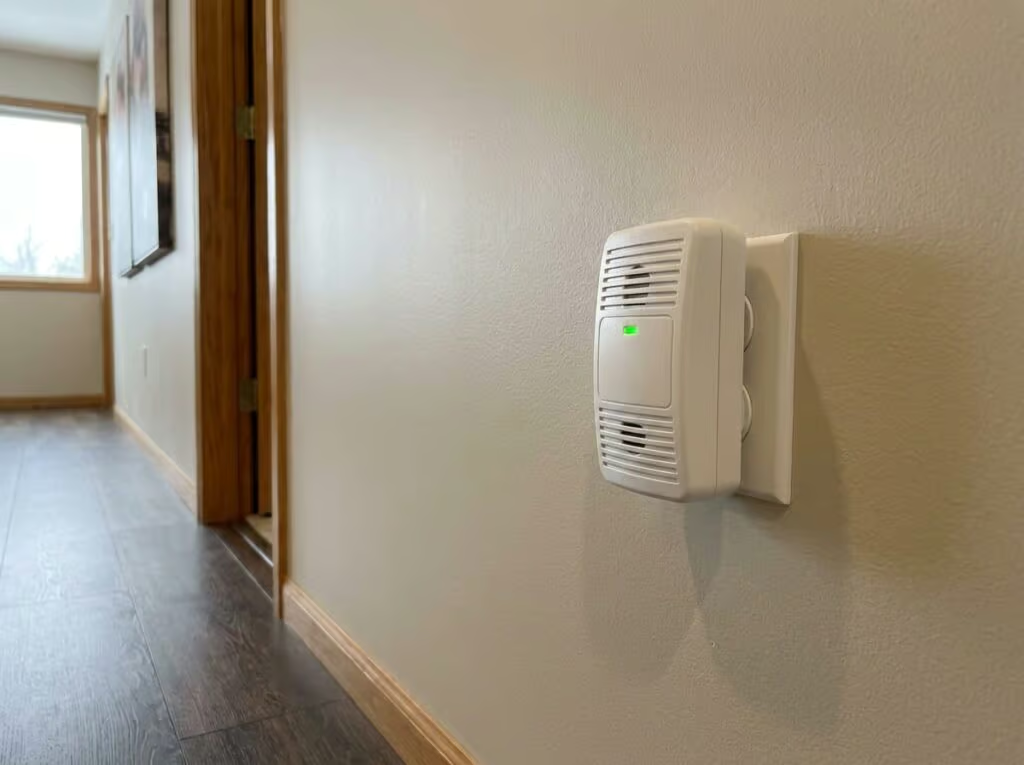
- Cool air keeps blowing past the startup time listed in your manual
- The furnace lights, shuts off and restarts over and over
- You changed the filter and set the fan to AUTO, and nothing improved
Turn the system off and call right away if you smell something burning, see soot near the furnace, or notice yellow, flickering flames instead of steady blue ones.
A carbon monoxide alarm is an emergency. The U.S. Consumer Product Safety Commission recommends CO alarms on every level of the home and outside sleeping areas, plus a yearly professional inspection of heating systems. [3] If the alarm sounds, get everyone outside and call 911 from there.
What a Technician Checks on a Furnace Repair Visit
A good repair visit starts with finding the cause. Our technicians usually inspect:
- The igniter and gas valve
- The flame sensor
- The blower motor
- The limit switch and other safety controls
- Airflow, including the filter and the ductwork we can reach
We explain each finding in plain language before any work starts. Repair cost depends on which part failed, for example, cleaning a flame sensor and replacing a blower motor are very different jobs. Contact us for exact pricing.
Cold Air at the Vents? Call Solutions Heating & Cooling in Lynchburg
A puff of cool air while the burners warm up is just your ducts clearing out. Cool air that keeps coming is worth fixing before the next run of freezing Lynchburg nights, not in the middle of one.
If you’ve checked the fan setting and the filter and your vents still blow cold, call Solutions Heating & Cooling. Our furnace repair visits in Lynchburg start by finding out why the heat isn’t reaching your rooms, whether the cause is the ignition, the flame sensor or the ductwork. Reach out to set up a visit or to get exact pricing for your system.
Vents still blowing cold after the burners light? Our Lynchburg technicians can track down the cause. Call (434) 771-0977 →
More Questions About a Furnace That Blows Cold Air
Why is my furnace running but not heating?
When a furnace runs but doesn’t heat, the blower is working but the burners aren’t lighting or staying lit. Start by confirming the thermostat is set to HEAT and the gas supply is on. If both look right, a failed igniter, dirty flame sensor or stuck gas valve is the likely cause, and those repairs belong with a trained technician.
Why is my furnace blowing hot air and then cold?
A furnace that blows hot air, then cold, usually has a safety control shutting off the burners mid-cycle. A grimy flame sensor, a clogged filter or a limit switch tripping from overheating are the usual causes. Check the filter first. If the pattern continues, have a technician test the sensor and safety controls.
How do I reset my furnace?
You can reset most furnaces by cutting power for a few minutes, then turning it back on. Set the thermostat to OFF, flip off the furnace switch or breaker, wait, then restore power. If your manual lists a reset button, press it once. A furnace that needs resetting again and again has an underlying fault a technician should track down.
Sources
- familyhandyman.com/article/furnace-blowing-cold-air
- energy.gov/sites/default/files/2022-08/energy-saver-guide-2022.pdf
- cpsc.gov/safety-education/safety-guides/carbon-monoxide/carbon-monoxide-fact-sheet
Get Your Lynchburg Home Warm Again
Whether your furnace quit on a cold night or you’d rather have it checked before winter settles in along the Blue Ridge, Solutions Heating & Cooling can help. Call (434) 771-0977 →