
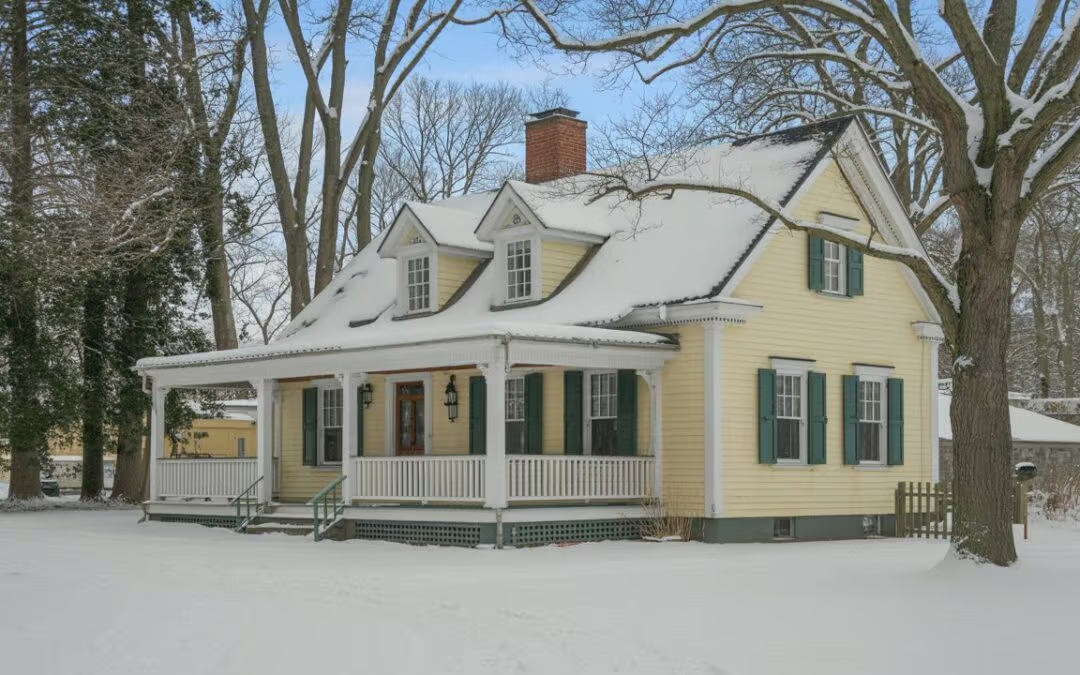
If you own an older home in Forest, VA, you’ve likely noticed those telltale signs: uneven heating, rooms that never quite warm up, and energy bills that climb higher each winter. Your heating system isn’t just outdated—it’s working overtime to heat a home it wasn’t designed to handle efficiently.
Older homes in Forest present unique heating challenges that newer construction simply doesn’t face. From inadequate insulation and original ductwork to vintage architectural features that affect airflow, your home requires a heating solution that works with—not against—its original design.
The good news? Modern heating technology has evolved to address these exact challenges. Whether you’re dealing with a system that’s approaching the end of its lifespan or simply tired of cold spots and high utility bills, the right heating system can transform your home’s comfort while reducing your monthly energy costs.
In this guide, we’ll walk you through the best heating systems for older homes in Forest, VA, helping you understand which systems work best with vintage construction, what to expect when it comes to costs and energy savings, and how to make a decision that protects your home investment for years to come.
What is the Best Heating System for an Old House?
The best heating system for an old house depends on whether you have existing ductwork. Homes with ductwork should consider high-efficiency gas furnaces (95%+ AFUE) or ducted heat pumps, which can reduce energy costs by 30-50%. Homes without ductwork benefit most from ductless mini-split systems, avoiding the significant cost of adding ducts. Your choice should factor in your home’s insulation, available fuel sources (gas, propane, or electric), and budget. Most older Forest, VA homes see immediate comfort improvements and monthly savings with modern high-efficiency systems.
Ready to find out which heating system fits your Forest home? Schedule your free home assessment today.
Call Solutions Heating and Cooling: (434) 771-0977
Why Your Older Forest Home Struggles with Heating
The Real Problem Isn’t Just an Old System
Older homes in Forest weren’t built with energy efficiency in mind. While your aging furnace is part of the issue, the bigger challenge is how your home was constructed:
- Minimal insulation in walls and attics (if any)
- Leaky or undersized ductwork that wastes heated air
- Single-pane windows and drafty doors
- High ceilings that let heat rise away from living spaces
When you combine these factors with a heating system that’s 15-20 years old and running at 70-80% efficiency, you get exactly what you’re experiencing: high energy bills, cold rooms, and a system that runs constantly but never quite keeps up.
Think of it like trying to fill a bathtub with the drain partially open. Your furnace keeps pumping heat into your home, but all those gaps, poorly insulated walls, and leaky ducts let that warmth escape almost as fast as it’s created.
Signs It’s Time for a New System
Maybe you’re not sure if your system really needs replacing. Here’s what to watch for:
- Your system is 15+ years old
- Heating bills have increased noticeably over the past few years
- Some rooms never get warm while others are too hot
- Your furnace cycles on and off frequently or runs nonstop
- You’re calling for repairs more than once a year
The average heating system lasts 15-20 years. After that, you’re dealing with worn-out parts, declining efficiency, and a unit that just can’t keep up with Virginia’s winter temperatures. According to the U.S. Department of Energy, older systems can lose 20-30% of their heating capacity through aged equipment and deteriorating ductwork alone.
Wondering if your heating system is costing you money? Request a free system evaluation. Call (434) 771-0977

Which Heating System Fits Your Home
The right system for your Forest home depends on one main factor: whether you have existing ductwork.
Most homes built before 2000 have some form of ductwork, even if it’s been sitting unused or needs work. If you’ve got ducts—or had central heating at some point—you’ve got options that’ll save you money on installation.
If You Have Ductwork: High-Efficiency Furnace or Heat Pump
If your ducts are in reasonable condition (or can be repaired), you have two main options:
High-Efficiency Gas Furnace (95%+ AFUE)
- Best for: Homes with natural gas or propane access
- Energy savings: 30-40% compared to older furnaces
- Expected lifespan: 15-20 years
Modern furnaces convert nearly all fuel into heat, compared to 70-80% for older models. That 95% AFUE rating means 95 cents of every dollar you spend on fuel goes directly to heating your home. Compare that to your old 70% efficiency furnace, where 30 cents of every dollar literally goes up the flue pipe.
Ducted Heat Pump
- Best for: Homeowners wanting both heating and cooling
- Energy savings: 40-50% compared to older systems
- Expected lifespan: 15-20 years
Heat pumps move heat rather than create it, making them more efficient. Modern cold-climate models work well even in freezing temperatures, and ENERGY STAR certified heat pumps can reduce your energy consumption significantly compared to standard models.
The beauty of a heat pump is it replaces both your furnace and your air conditioner. One system, year-round comfort, and the lowest operating costs of any heating option for older homes in Forest, VA. [1] [2]
What About Your Ductwork?
Even if you have ducts, they may need sealing or insulation. Your contractor should inspect them before recommending a system. Leaky ducts can waste 20-30% of your heated air before it even reaches your rooms.
If You Don’t Have Ductwork: Ductless Mini-Split System
Adding ductwork to an older home requires cutting through walls and ceilings and involves substantial cost and disruption. For most Forest homeowners, that’s not practical.
Ductless mini-split systems solve this problem:
Ductless Mini-Split Heat Pump
- Best for: Homes without existing ductwork
- Energy savings: 30-40% compared to old systems
- Expected lifespan: 20+ years
Indoor units mount on the wall in each room (or zone) you want to heat. They connect to an outdoor unit through a small hole in the wall. Installation takes 1-2 days with minimal disruption, and you get independent temperature control in each room.
The units are visible on your walls, which some homeowners don’t love aesthetically, but the trade-off is no renovation, lower installation costs, and excellent efficiency.

What You’ll Actually Pay (And Save)
Understanding Total Investment
Your total cost depends on which system type you choose, your home’s size and layout, and the condition of existing infrastructure like ductwork, electrical, and gas lines.
Installation costs vary based on your home’s specific needs. A basic furnace replacement in a home with good existing ductwork will cost less than a complete system upgrade requiring duct repairs or electrical modifications. Heat pump installations and multi-zone ductless systems represent higher upfront investments but offer greater long-term energy savings.
Monthly Savings and Payback
Most Forest homeowners see immediate reductions in their monthly heating bills. High-efficiency furnaces typically reduce heating costs by 30-40% compared to older systems, while heat pumps can save 40-50% on monthly energy expenses.
These savings add up over the 15-20 year lifespan of your new system. Over time, the energy savings often offset much of the initial investment, particularly when combined with available tax credits and rebates.
Financing and Rebates
Most homeowners finance their new system rather than paying cash upfront:
- 0% APR financing available for qualified buyers
- Monthly payments often comparable to energy savings
- Federal tax credits available for high-efficiency systems
- Local utility rebates vary by system type and efficiency rating
For current federal tax credit information and eligibility requirements, the Database of State Incentives for Renewables & Efficiency (DSIRE) provides up-to-date details on available programs. [3]
Questions about financing options or available rebates? Talk to a heating specialist about making your upgrade affordable. Call (434) 771-0977

Next Steps: Getting Your Home Evaluated
What Happens During a Professional Assessment
A proper evaluation takes 60-90 minutes and includes:
- Inspection of current heating system and age/condition
- Ductwork assessment (if present)
- Load calculation based on your home’s size and layout
- Check of electrical capacity and gas line access
- Customized recommendations with pricing options
Good contractors provide multiple options at different price points so you can choose what fits your budget and goals.
Red Flags:
- Quotes given over the phone without seeing your home
- Pressure to decide immediately
- Recommendations without measuring your space
- Unwillingness to explain equipment differences
Timeline and Installation Process
Best Times to Schedule:
- Fall (September-November): Better contractor availability, moderate weather
- Spring (March-May): Good for systems that provide both heating and cooling
- Avoid: Waiting until your system fails in January (limited options, higher costs, longer wait)
Installation Timeline:
- Basic system replacement: 1 day
- System with duct modifications: 2-3 days
- Multi-zone ductless installation: 2-3 days
Questions to Ask Before You Decide
About the Recommendation:
- What size system does my home need and how did you calculate it?
- Why are you recommending this system type for my home specifically?
- What efficiency rating should I get and what’s the cost difference?
About Installation:
- What exactly is included in the quoted price?
- Will you need to modify my electrical panel or gas line?
- How long will installation take and what disruption should I expect?
About Long-Term Costs:
- What does the warranty cover and for how long?
- What maintenance will I need and how much does it cost?
- Do you offer service agreements?
Choosing a local Forest contractor matters. When you need service, you want someone who can be at your house quickly. Solutions Heating and Cooling serves Southside Virginia and understands the specific challenges older homes in this area face.
Stop Struggling with an Outdated Heating System
Stop overpaying for inefficient heating. Solutions Heating and Cooling has served Southside Virginia for over 10 years, and our Lynchburg location brings over a decade of HVAC expertise to Forest, VA and surrounding areas. Our licensed technicians specialize in heating solutions for older homes, and we’ll help you find the right system for your home’s unique needs.
Ready to find out which heating system fits your Forest home? Schedule your free home assessment today.
Solutions Heating and Cooling
403 Fifth St, Unit 105
Lynchburg, VA 24504
Phone: (434) 771-0977
Hours:
Monday-Friday: 8:00 AM – 6:00 PM
Saturday: 8:00 AM – 4:00 PM
Sunday: Emergency service available
Service Areas: Forest, Lynchburg, Bedford County, Boonsboro, Peakland
Here’s what happens when you contact us:
- Free Home Assessment – We’ll visit your Forest home to evaluate your current system, ductwork, and specific heating challenges.
- Customized Recommendations – You’ll receive clear options tailored to your home’s infrastructure, your budget, and your comfort goals.
- Transparent Pricing – We provide detailed quotes with multiple options. You’ll know exactly what’s included before we start any work.
- Professional Installation – Our certified technicians complete most installations in 1-3 days with minimal disruption.
- Follow-Up Support – We return after installation to make sure your system is optimized and you’re completely satisfied.
Call (434) 771-0977 or schedule online to get started.
Common Questions About Heating Older Homes in Forest, VA
Which heating systems work best in older homes?
The best heating system for your vintage home depends on whether you have existing ductwork. If you do, we recommend high-efficiency gas furnaces with 95%+ AFUE ratings or ducted heat pumps, both reducing energy costs by 30-50%. Homes without ductwork benefit most from ductless mini-split systems, which avoid expensive duct installation while delivering excellent efficiency and room-by-room temperature control.
Which heating equipment performs best in freezing temperatures?
Modern cold-climate heat pumps perform exceptionally well even in freezing Virginia temperatures. These systems move heat rather than create it, making them highly efficient while providing both heating and cooling. Heat pumps offer the lowest operating costs of any heating option for older Forest homes, with 40-50% energy savings compared to traditional systems.
Why do older homes require more energy to stay warm?
Vintage homes weren’t built with energy efficiency in mind. We see minimal wall and attic insulation, leaky or undersized ductwork that wastes heated air, single-pane windows, drafty doors, and high ceilings that let heat escape. Combined with aging furnaces running at 70-80% efficiency, your heating system works overtime while heated air escapes almost as fast as it’s created.
Resources
- https://hvac-blog.acca.org/transforming-cold-climate-heating-a-look-at-mideas-innovation-in-heat-pump-compressors/
- https://www.consumerreports.org/appliances/heat-pumps/buying-guide/
- https://www.dsireusa.org/