

Your heat pump has kept your Danville home comfortable through humid summers and cold winter nights, but lately you’ve noticed it’s not performing like it used to. Maybe your energy bills have crept up, or certain rooms never quite reach the right temperature. As a homeowner in Southside Virginia, you’re wondering whether your system just needs repair or if it’s time for a replacement—a decision that affects both your comfort and your budget. Understanding how long heat pumps typically last and recognizing the warning signs of failure helps you plan ahead and avoid an emergency replacement during the worst possible weather.
How Do I Know When My Heat Pump Needs Replacing?
Your heat pump needs replacing when it shows these key warning signs:
- Age over 15 years – Most heat pumps last 10-15 years with proper maintenance
- Frequent repairs – Multiple service calls within a year indicate declining reliability
- Rising energy bills – A struggling system works harder and costs more to operate
- Inconsistent temperatures – Some rooms stay too hot or cold regardless of thermostat settings
- Strange noises – Grinding, squealing, or banging sounds signal mechanical problems
- Reduced airflow – Weak air from vents means the system can’t distribute air effectively
Let’s start with the most common question Danville homeowners ask us. Now that you know the basic warning signs, let’s explore what affects how long your heat pump lasts in our climate.
Understanding Heat Pump Lifespan in Danville’s Climate
Average Heat Pump Life Expectancy
Most heat pumps last between 10 and 15 years with regular maintenance. Installation quality, usage patterns, and maintenance frequency all affect longevity. Danville’s climate creates year-round demand—high humidity summers and cold winters mean your system never gets a break. Compared to furnaces (15-20 years) and air conditioners (12-15 years), heat pumps fall in the middle because they work harder, providing both heating and cooling instead of doing just one job.
Heat pumps work year-round versus single-function systems, which naturally shortens their lifespan. Proper sizing affects how long your system lasts—an oversized unit cycles too frequently while an undersized one runs constantly. Correctly sized systems last longer and operate more efficiently. [1]
What Shortens Heat Pump Lifespan
- Skipped maintenance appointments allowing minor issues to escalate
- Improper installation causing strain on components
- Oversized or undersized systems running inefficiently
- Clogged filters restricting airflow
- Refrigerant leaks reducing system efficiency
- Thermostat problems causing excessive cycling
- Ductwork issues forcing the system to work harder
Warning Signs Your Heat Pump Is Failing
Performance Issues
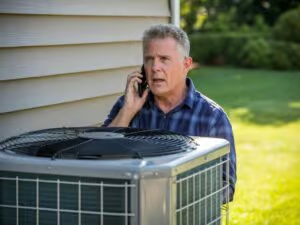
Uneven heating or cooling throughout your home is one of the first signs something’s wrong. Your system might run constantly but never reach the set temperature, or it takes much longer to heat or cool than it used to. Frequent cycling on and off, reduced airflow from vents, and ice buildup on the outdoor unit during winter (beyond normal defrost cycles) all indicate problems. When your system struggles during temperature extremes—the hottest summer days or coldest winter nights—it’s telling you the components are wearing out.
Unusual Sounds and Smells
Grinding or metal-on-metal sounds indicate worn bearings that need immediate attention. Squealing suggests belt or motor problems, while banging or clanking points to loose components rattling around inside the unit. Hissing sounds may indicate refrigerant leaks. Burning smells require immediate attention and an emergency service call. Musty odors signal moisture or mold issues in your ductwork or unit. Some problems need emergency service right away, while others can wait for a scheduled inspection.
Rising Operating Costs
Monthly energy bills climbing without changes in how you use your system is a red flag. When repair costs exceed 50% of what a replacement would cost, or you’re making multiple service calls in a single year, you’re throwing money away on a dying system. Compare the long-term savings with newer, efficient models. SEER2 (formerly SEER) ratings have improved significantly since your current system was installed, meaning today’s heat pumps use considerably less energy. [2]
Concerned about your heat pump’s performance? Solutions Heating and Cooling offers honest assessments and upfront pricing. Call (434) 425-8775 to speak to our experts or schedule a system evaluation.
Repair vs. Replace: Making the Right Decision
When Repair Makes Sense
If your system is less than 8 years old and you’ve maintained it regularly, repair usually makes sense. A single component failure with a clear diagnosis and a repair cost under $500-$1,000 is worth fixing. Systems without refrigerant leaks (an expensive fix for older units) are good candidates for repair. If you’re planning to move within 3-5 years, a repair gets you through until sale time. When your system still meets your efficiency needs and hasn’t shown multiple problems, repair extends its life at reasonable cost.
When Replacement Is the Better Investment
Age exceeding 12-15 years means you’re on borrowed time regardless of how well it’s running today. Systems using R-22 refrigerant face expensive refills since it’s been phased out. [3] Multiple components failing simultaneously indicates the whole system is breaking down. Efficiency ratings below 14 SEER2 (14 SEER) cost you money every month compared to modern systems. When repair costs approach or exceed $2,000, that money’s better spent on a new system. Energy bills increasing 25% or more show your system is struggling.
If you’re planning to stay in your home 5+ years, replacement pays off through lower energy costs. This is also your opportunity to rightsize the system for your current needs—maybe your home’s insulation has improved or your family size has changed. Access to rebates and incentives for high-efficiency models reduces upfront costs. Financing options can make monthly payments comparable to your rising energy costs, essentially letting the system pay for itself.
Extending Your Heat Pump’s Lifespan
Maintenance That Matters
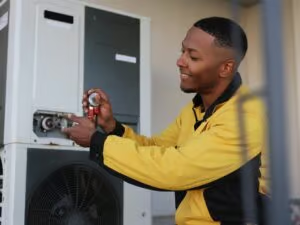
- Bi-annual professional tune-ups (spring and fall)
- Monthly filter changes during heavy-use seasons
- Keeping outdoor unit clear of debris and vegetation
- Checking thermostat settings seasonally
- Inspecting ductwork for leaks
- Monitoring energy bills for unexpected changes
Don’t Wait for a Complete Breakdown
Don’t wait until your heat pump fails on the hottest or coldest day of the year. Solutions Heating & Cooling provides honest assessments of your system’s condition with transparent, upfront pricing—no pressure, just straight answers about whether repair or replacement makes sense for your situation. Our licensed technicians understand Danville’s climate demands and can help you make the right decision for your home and budget.
Call (434) 425-8775 to schedule your system evaluation today.
Heat Pump Replacement FAQs: Your Questions Answered
What are the signs my heat pump should be replaced?
Your heat pump should be replaced when it’s over 15 years old, requires frequent repairs, drives up your energy bills, creates inconsistent temperatures throughout your home, makes grinding or squealing noises, or delivers weak airflow from your vents. We recommend replacement when you notice multiple warning signs appearing together.
What’s the typical lifespan of a heat pump system?
Heat pumps last between 10 and 15 years with regular maintenance. Your system works year-round providing both heating and cooling, which shortens its lifespan compared to single-function systems. Proper sizing, installation quality, and bi-annual maintenance help your heat pump reach its full life expectancy.
When does heat pump replacement make more sense than repairs?
Replacement makes more sense when your system exceeds 12-15 years old, uses discontinued R-22 refrigerant, requires repairs over $2,000, has an efficiency rating below 14 SEER2, or experiences multiple component failures. We also recommend replacement if your energy bills have increased 25% or more and you’re planning to stay in your home 5+ years.
Resources
- https://www.consumerreports.org/appliances/heat-pumps/reasons-to-consider-a-heat-pump-for-your-home-a6507162057/
- https://www.trane.com/residential/en/resources/glossary/what-is-seer/
- https://www.epa.gov/ozone-layer-protection/enforcement-actions-under-title-vi-clean-air-act