
Halifax County winters are usually mild, which is exactly why a hard freeze or an ice storm catches well owners off guard. The fix is simple to describe: seal and insulate the space around your pressure tank, add a safe heat source with automatic temperature control, and plan for a power outage.
This guide shows you how to protect a well pump and pressure tank from freezing before the first cold snap. A frozen pressure switch or cracked fitting can leave a household without water at the worst time of year, and a freeze-damaged pump may need well pump repair and replacement.
We cover which parts are at risk, what to insulate, which heat sources are safe, and what to do when the power goes out or something has already frozen.
The Short Answer: Three Steps That Keep a Well System From Freezing
In Halifax County, the well itself rarely freezes. The trouble is above ground: a pump house out back, a jet pump in the crawlspace, or a pressure tank and switch in an unheated basement corner. Three steps cover most homes:
- Find out which pump you have. A submersible pump sits deep in the well and is generally protected. A surface or jet pump in a pump house, basement or crawlspace has no such shelter.
- Seal and insulate. Close air gaps around the pump house or tank space, then wrap the tank, bare pipe, small fittings and the pressure switch.
- Add a controlled heat source. Use a heat lamp, self-regulating heat tape or small heater on a thermostatic control.
Hard freezes here usually arrive between November and January, so get this done in fall, before the first cold snap reaches Southside Virginia.
Which Parts of Your Well System Can Actually Freeze?
Water down in the ground stays above freezing, so the weak points sit at the top of the system: above-ground fittings, uninsulated supply lines, the pressure switch, the pressure tank and any surface jet pump. A deep-well submersible pump generally needs no winterizing, but the tank and lines it feeds still do.
Where your tank sits tells you how much risk it faces:
- Basement: Usually the safest spot, if the room stays heated and the line entry is sealed.
- Crawlspace: Colder and draftier, especially near vents and foundation gaps.
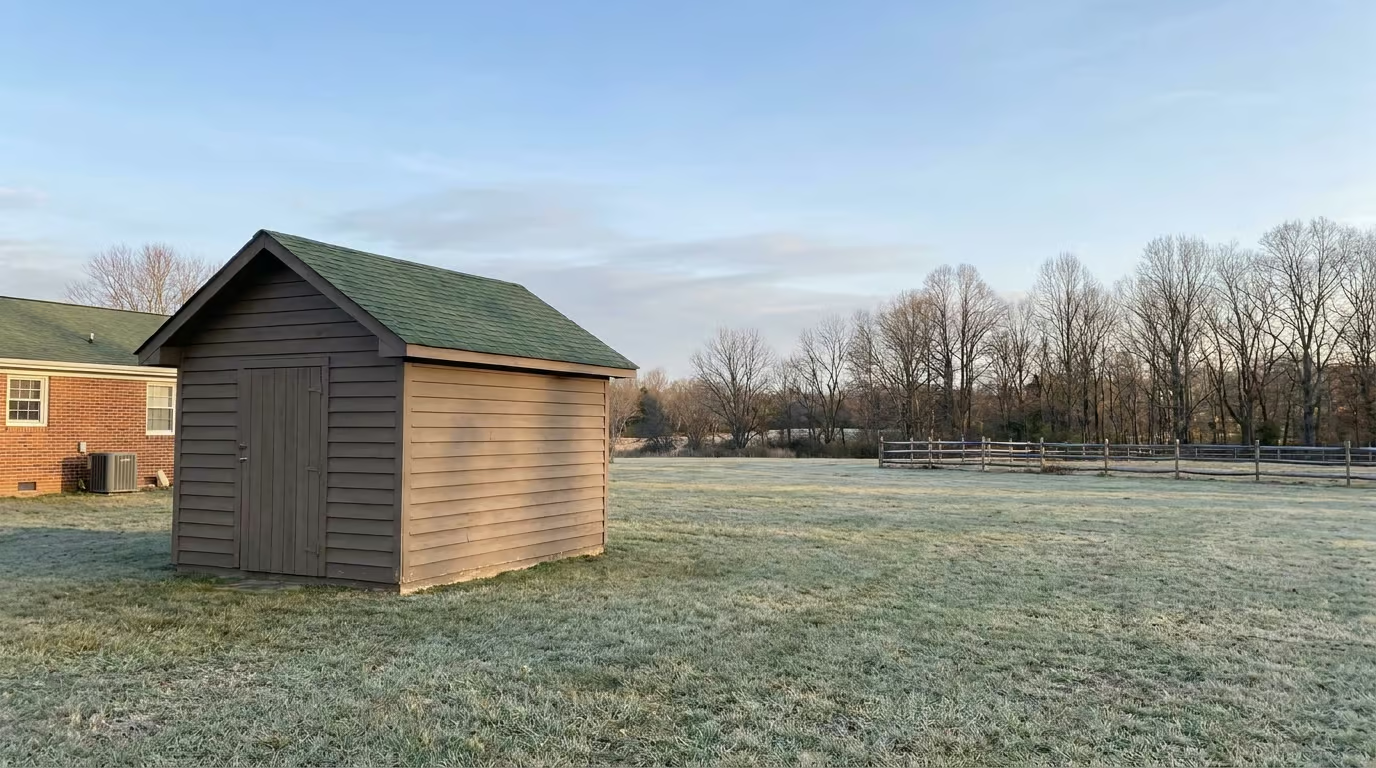
- Pump house: The most common freeze spot, since these outbuildings often have no heat.
- Well pit: Below ground, but often loosely covered and open to cold air.
According to the U.S. Census Bureau, the median home in Halifax town was built in 1965, so many local properties have older pump houses and crawlspaces. Walk out and check yours.
Insulating and Sealing the Pump House, Tank and Small Fittings
NOAA’s 1991-2020 climate normals for the nearest weather station put the Halifax area at about 3,813 heating degree days a year. That’s mild by northern standards, but plenty of nights still get cold enough to freeze a drafty pump house, usually through gaps around the door, vents and where pipes and wiring pass through.
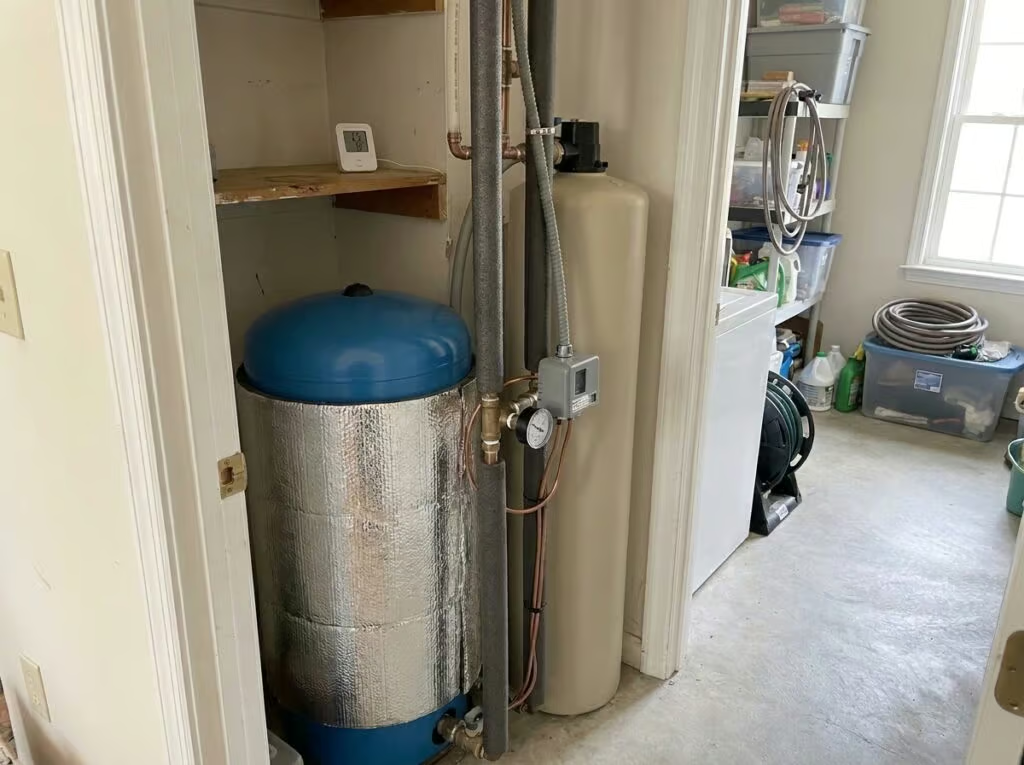
The pressure switch and short fittings near the tank are thin, and they freeze first. Wrap them, but leave the switch cover clear so you can still get to it.
Here’s the order we’d work in:
- Seal door gaps, vent openings and line entry points.
- Insulate the tank and all bare pipe.
- Cover the pressure switch tubing and small fittings.
- Test your heat source and its temperature control.
- Set a wireless thermometer inside the pump house or tank space.
Check that thermometer on the coldest mornings. If it’s hovering near freezing, track down the gap or heat problem now.
Have a Question About Your Home?
Talk to a real person on our Halifax team. We'll give you a straight answer and an upfront price.
Heat Lamps, Heat Tape and Heaters: What Works and What Creates Risk
Can a light bulb keep a well house from freezing? In a compact, tightly sealed space, an incandescent bulb can help on many cold nights. LED bulbs give off too little heat. In a drafty building, a bulb alone is a gamble.
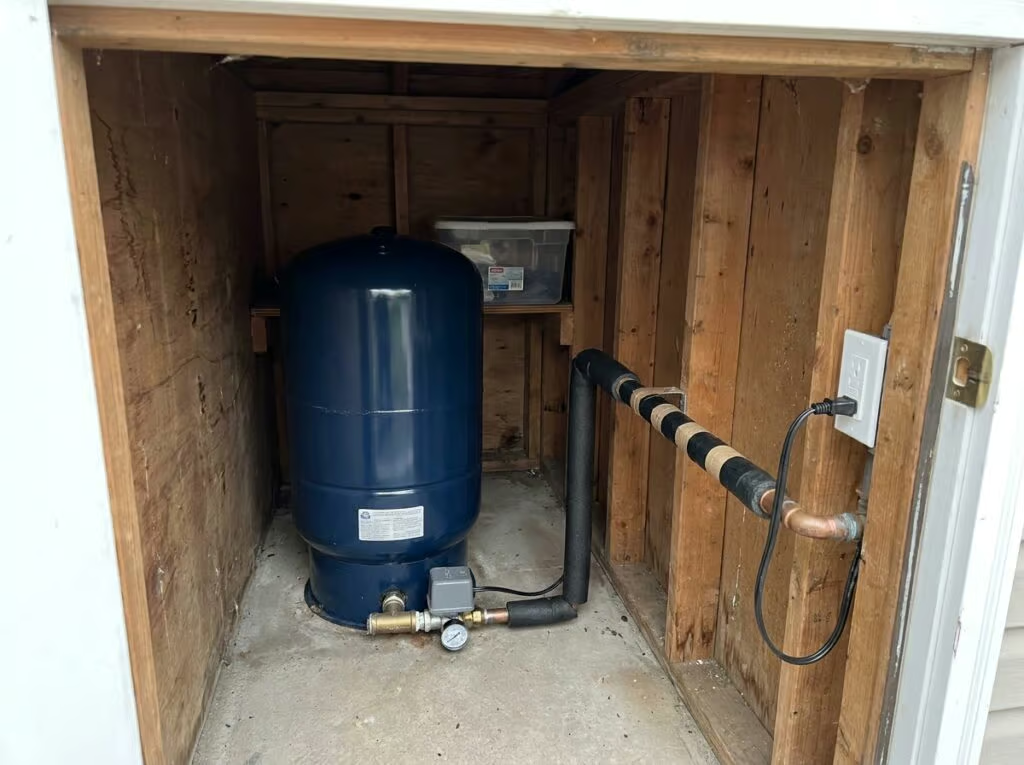
A heat lamp puts out more warmth but runs hot, so placement matters. Heat tape wraps directly around the pipe. For a larger pump house, a compact electric heater fits better, though it uses the most electricity and carries the biggest fire risk if set up poorly.
Whatever you choose, follow these safety basics:
- Plug into a GFCI-protected circuit.
- Choose self-regulating heat tape, which adjusts its output as temperatures change.
- Never overlap heat tape on itself.
- Keep lamps and heaters well clear of insulation, wood and anything that can burn.
- Use a temperature-activated outlet or built-in control so heat only runs when the space gets cold.
- Check whether the pump circuit is 120V or 240V before connecting anything near it.
If any of this means adding a new outlet or circuit, that’s a job for a licensed electrician.
What to Do Before an Ice Storm Knocks Out Your Power
Every heat source above quits when the power does, and in Halifax County ice storms are the usual culprit. The Virginia Department of Emergency Management reports that the governor declared a state of emergency ahead of a major winter storm in late January 2026 that brought outages and dangerously low temperatures across the Commonwealth.
When a storm is in the forecast:
- Fill jugs and the bathtub with water, since a well pump can’t run without power. [1]
- Keep the pump house door shut to hold in whatever heat is left.
- Run any generator outdoors, away from doors and windows.
- Never use a fuel-burning heater inside a closed pump house.
The Virginia Department of Health’s January 2026 winter storm guidance warned about carbon monoxide from generators and space heaters. In a cramped, closed-up building, that danger builds fast.
Dripping a faucet only helps while the pump has power, and it’s no substitute for a heat source.
Signs of a Freeze and What to Do Before You Restart the Pump
Watch for sudden pressure loss, no water at the taps, a pump that runs without building pressure, and frost on fittings. If your water pressure is suddenly low on a bitter morning, suspect the cold first.
If something froze:
- Shut off power to the pump at the breaker.
- Look for ice, cracked fittings and leaks.
- Thaw slowly with gentle, indirect warmth. Never use an open flame.
- Don’t restart until the lines are clear and every fitting is intact.
A pump that froze may have a cracked casing even if water flows again, and Virginia law allows only a state-certified water well systems provider to repair a well pump or well system, so don’t improvise. When we inspect a freeze-damaged system, we pin down why it failed and tell you plainly whether a repair will hold or a replacement makes more sense.
Once the system is back up, the Virginia Department of Health says the owner is responsible for testing the water after repairs or any disruption. Also check your homeowner’s insurance policy or equipment warranty for freeze coverage.
Your Pre-Freeze Plan Starts Now
Before the first hard freeze, walk out to wherever your pump and pressure tank live and work through the list: know which pump you have, close the gaps, insulate the vulnerable fittings and pick a thermostat-controlled heat source on safe wiring. Then plan for the night the power goes out.
If a cold night gets ahead of you and the pump won’t run, the pressure switch won’t kick on or a fitting has split, contact Solutions Heating & Cooling in Halifax, VA. We’ll check your well pump and pressure tank and talk you through next steps.
Pump house iced up or pressure tank not holding? Call (434) 404-4461 → for well pump repair in Halifax, VA.
Quick Answers on Freeze-Proofing Your Well Pump and Pressure Tank
Can a well pressure tank freeze?
A well pressure tank can freeze when it sits in an unheated pump house, crawlspace or well pit. Water expands as it turns to ice, and that can split the tank, crack nearby fittings or ruin the pressure switch. Insulating the tank and holding the space above freezing with a thermostat-controlled heat source heads off most of those problems.
Will a light bulb keep a well house from freezing?
A light bulb can keep a small, sealed well house from freezing, as long as it’s incandescent. LEDs won’t help; they make almost no heat. In a drafty building or during a hard freeze, a bulb alone often falls short. Self-regulating heat tape or a compact heater on an automatic temperature control is the safer bet, plugged into a GFCI-protected outlet.
Does a deep well submersible pump need freeze protection?
A deep well submersible pump rarely needs freeze protection, since it sits underground in water that stays above freezing. The parts it feeds are a different story. The pressure tank, pressure switch, wellhead fittings and any exposed supply line still need insulation, plus a heat source on automatic control if they’re in an unheated space.
What are the signs of a well pressure tank going bad?
A pump that clicks on and off every few seconds is the most common sign of a well pressure tank going bad. Other warning signs include swinging pressure at the tap, sputtering faucets, rust or leaks, and water spitting from the air valve. Short-cycling like that wears a pump down quickly, so we suggest having it checked early.
Sources
- familyhandyman.com/article/how-to-store-water-long-term
Keep Your Well Running All Winter Long
Whether your pump is nearing the end of its life or you’d rather have it checked before December, our team handles well pump repair and replacement for homes across Halifax, VA. Call (434) 404-4461 →