
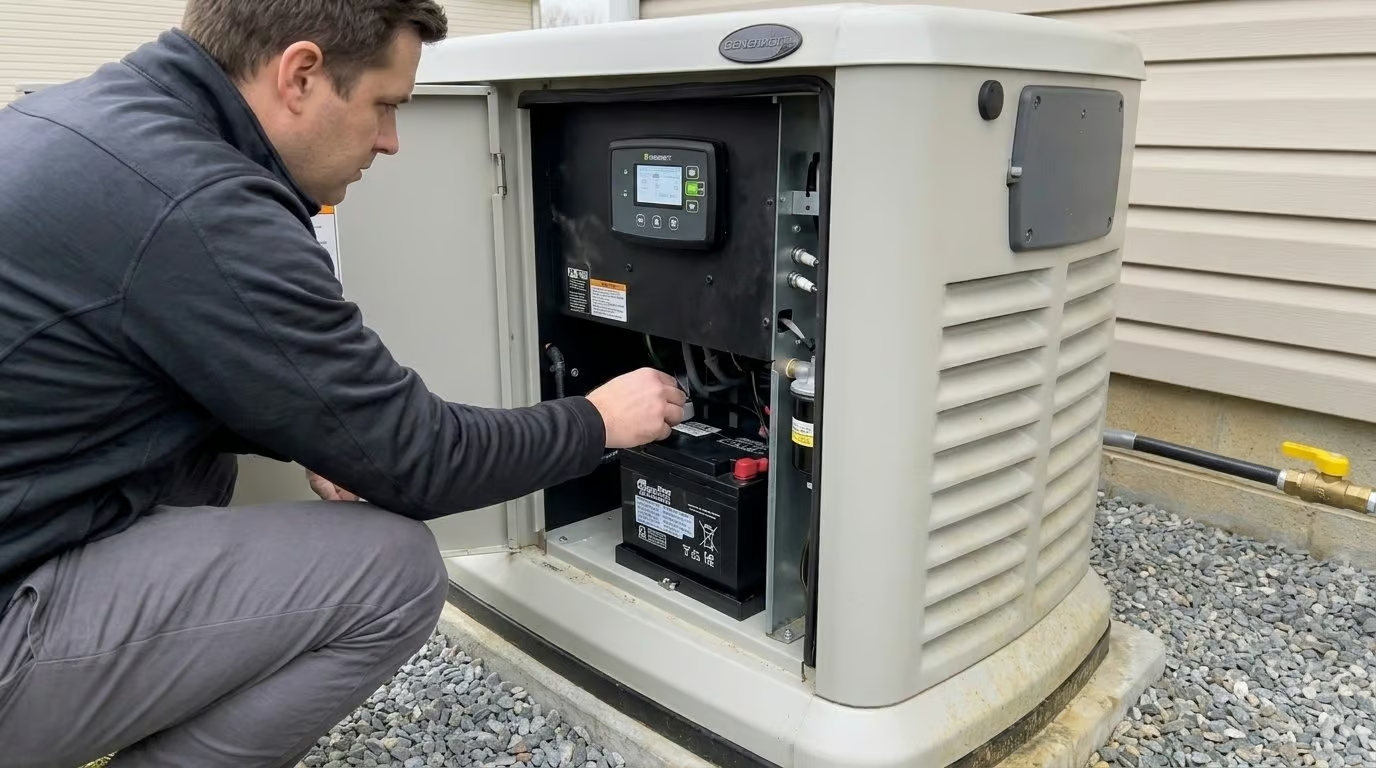
To test a standby generator before winter, you need more than the scheduled exercise run. Check the battery, confirm the fuel, and make sure the transfer switch actually moves your house onto generator power. That last part is the one a typical exercise run doesn’t check.
A generator can start on schedule all year and still leave you dark on the first night of an ice storm. Out in the county, a dark house often means a cold house with no water, because the well pump stops with everything else.
Ice storms have knocked out power across Halifax County before and will again. This guide is about finding the weak spot in November, not in the middle of an outage.
We’ll cover what the exercise cycle does and doesn’t prove, transfer switch warning signs, battery and fuel checks, and what to watch during and after a test.
Testing a Standby Generator Before Winter
Testing a standby generator before winter comes down to four checks:
- Let the exercise cycle run. Watch it start, then check the controller for warnings or stored fault codes.
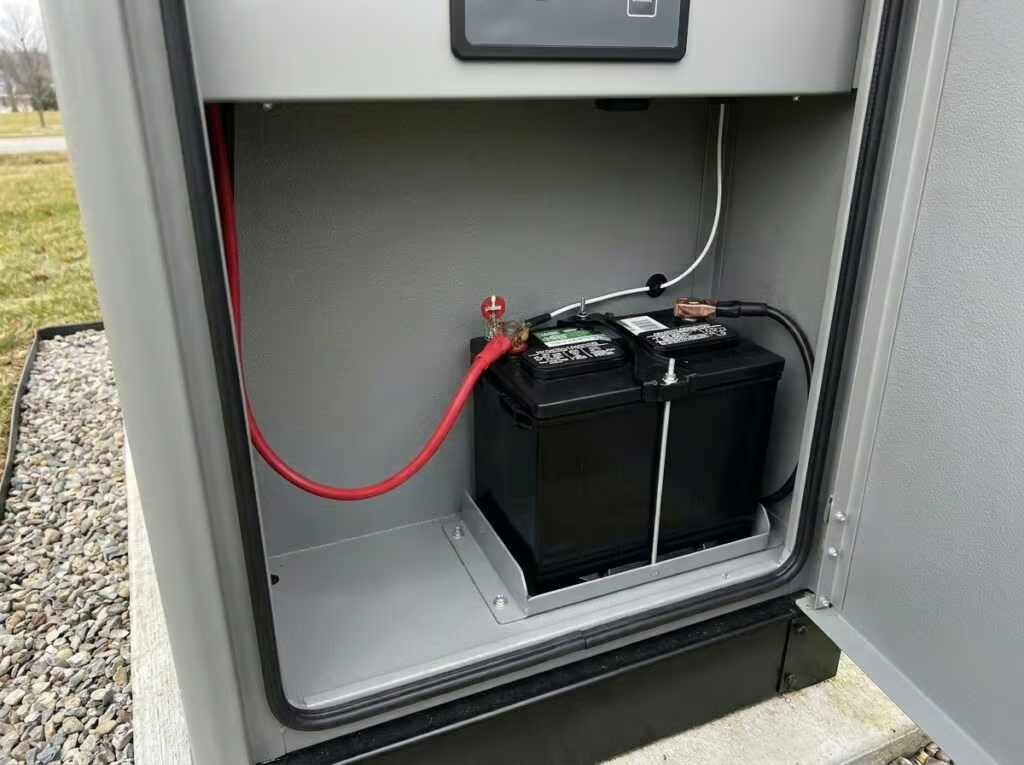
- Check the battery. Note its age, inspect the terminals for corrosion, and confirm the charger shows no alerts. [1]
- Confirm the fuel. Read the propane tank gauge, or check that the natural gas meter and regulator are clear of ice and debris.
- Run a real load transfer test. The house should switch from utility power to generator power and back cleanly.
Steps one through three are quick look-and-read checks you can do yourself. Step four involves live electrical equipment, so schedule it with a licensed electrician in the fall, well before ice season.
Why an Exercise Cycle Doesn’t Prove Your House Will Switch Over
The scheduled exercise cycle is a short run, usually with no load attached. Your house stays on utility power the whole time, so the engine gets proven and not much else. The transfer switch never has to move your circuits, and nobody learns whether the generator can carry your well pump, heat and refrigerator at once.
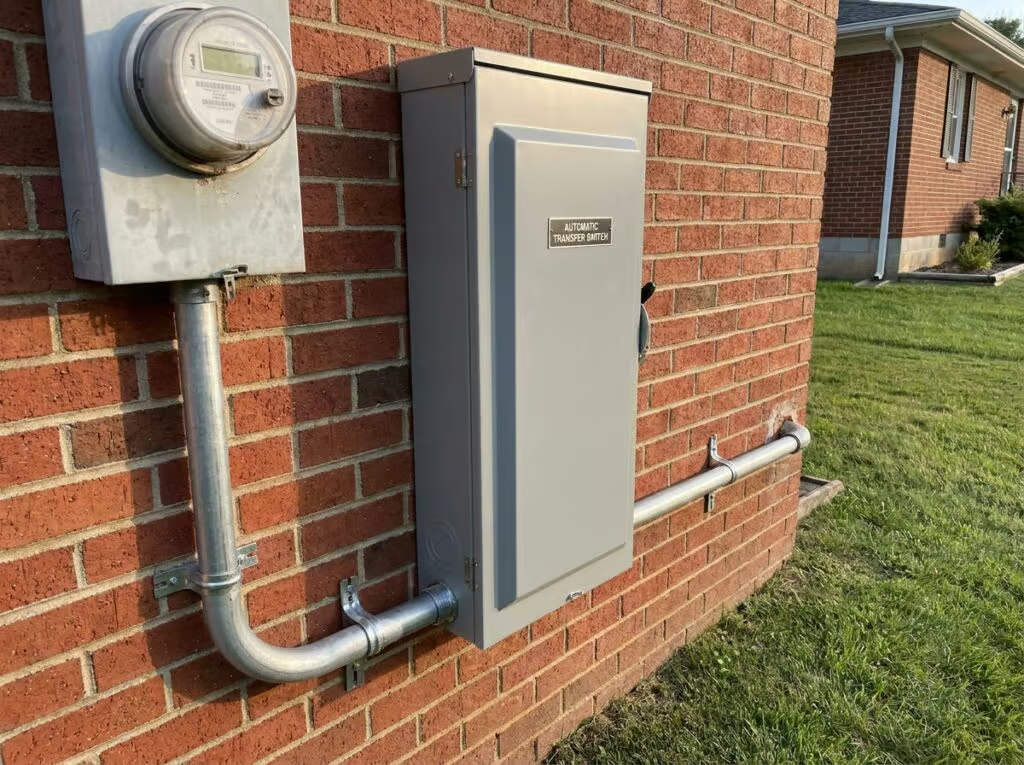
NFPA 110, the National Fire Protection Association’s standard for emergency and standby power systems in facilities such as hospitals, calls for monthly testing that includes operating the transfer switch. [2] It isn’t a rule for houses, but it reflects how professionals think: a generator isn’t proven until the switch has done its job.
A real transfer test simulates an outage so the switch moves your home’s circuits onto the generator, then back again.
Have a Question About Your Home?
Talk to a real person on our Halifax team. We'll give you a straight answer and an upfront price.
Transfer Switch Warning Signs Worth Acting On
A transfer switch rarely fails without some warning. If you notice any of these, call a licensed electrician instead of opening the panel yourself:
- Failure to transfer: the generator starts, but the switch never moves the load.
- Humming or buzzing: a steady noise can point to loose connections or a failing part.
- Burning smell: heat is building where it shouldn’t. Treat it as urgent.
- Scorched or discolored contacts: visible signs of arcing or overheating.
- Stored fault codes: the controller logged a problem, even if things seem fine now.
Never wire around a transfer switch that’s misbehaving. The switch is what keeps your generator’s power from flowing back out onto the power lines, where it can seriously hurt or kill the crews working to restore service.
When something looks wrong, ask for photos and a plain explanation of what failed before you approve a repair. And don’t overlook the panel. According to census data, the average Halifax home was built in the 60s, so the panel your transfer switch ties into may be decades old.
Battery, Fuel and the Space Around the Unit
Battery. Cold slows the chemistry inside a starting battery, so one that cranked fine in September can struggle on a January morning. Find the date on the label, look for white or green corrosion on the terminals, and see whether the charger or controller is flagging an alert.
Fuel. On propane, check the tank gauge and book a delivery before a storm shows up in the forecast, and watch for ice on the regulator or exposed gas lines. On natural gas, the outdoor meter and regulator can ice over just the same, and a severe storm can affect service.
The space around the unit. Clear leaves, snow, ice and nests from the enclosure vents and exhaust, and keep a path open so you or a technician can reach the unit in bad weather.
Exhaust carries carbon monoxide, so keep firewood, tarps and anything else stacked well away from the unit’s exhaust area.
What to Watch During the Test and Do Afterward
In a rural Halifax home, the well pump is often the first real hurdle. A pump pulls a heavy surge of current when it kicks on, and a struggling generator may bog down or shut off right there. Of course, if the generator holds steady and the pump still won’t run, the pump itself may be the problem.
Watch the other heavy draws too: a heat pump with electric backup strips, the sump pump, refrigerators and freezers, and any medical equipment someone in the house depends on.
After the test, read the controller log for stored fault codes and jot down the run hours to compare against next fall. If your furnace or heat pump is also due, a pre-winter heating system inspection pairs well with this one.
Questions About Your Electrical Setup? Call Us Before the Next Ice Event
A generator is only as dependable as the electrical system it connects to. If your test turned up a warning sign, or you’re unsure your panel and transfer switch are in good shape, we’d rather hear from you in November than while ice is weighing down the lines.
Solutions Heating & Cooling gives Halifax homeowners honest, plain-language assessments of their panels and whole-house backup power systems. We’ll tell you what’s sound and what needs work, with a clear estimate and timeline up front. Contact us with your questions before the next ice event.
Slow start, a hesitant transfer switch, or a breaker that won’t hold? Call (434) 404-4461 →
Standby Generator Testing Questions From Halifax Homeowners
Why won’t my standby generator start in cold weather?
A weak or aging battery is a common reason a standby generator won’t start in cold weather. Low temperatures sap the battery’s output and thicken engine oil, so the starter has to work harder. Fuel is another: a low propane tank, say, or an iced-over regulator. Before you call for help, pull up any fault codes on the controller.
Does an exercise cycle test the transfer switch?
Most exercise cycles don’t test the transfer switch, because the engine runs while your home stays on utility power. That confirms the engine runs, not that your circuits will move over. Answering that takes a load transfer test, which simulates an outage so the switch carries your house onto generator power and back. It’s a job for a licensed electrician.
How often should a standby generator run its exercise cycle?
Weekly or every two weeks is the usual exercise schedule for a standby generator, depending on model and settings. Each run lasts only a few minutes, and your owner’s manual lists the exact interval. After an outage, glance at the controller’s clock. If it’s off, reset it so the exercise runs when you can see or hear it.
What is the 80% rule for generators?
The 80% rule for generators means planning your steady load at no more than about 80% of rated capacity. That headroom is there for startup surges, since motors like a well pump or heat pump compressor briefly draw far more current than they use while running. Push a generator near its limit and it can sag or shut down the moment one of them starts.
Sources
- energy.gov/documents/21-fupwg-fall-2019-bondpdf
- docinfofiles.nfpa.org/files/AboutTheCodes/110/110_A2021_EPS_AAA_FD_FRStatements.pdf
Get Your Halifax Home Ready for Ice Season
Ice storms around Halifax can keep rural power lines down for days. Call (434) 404-4461 →