
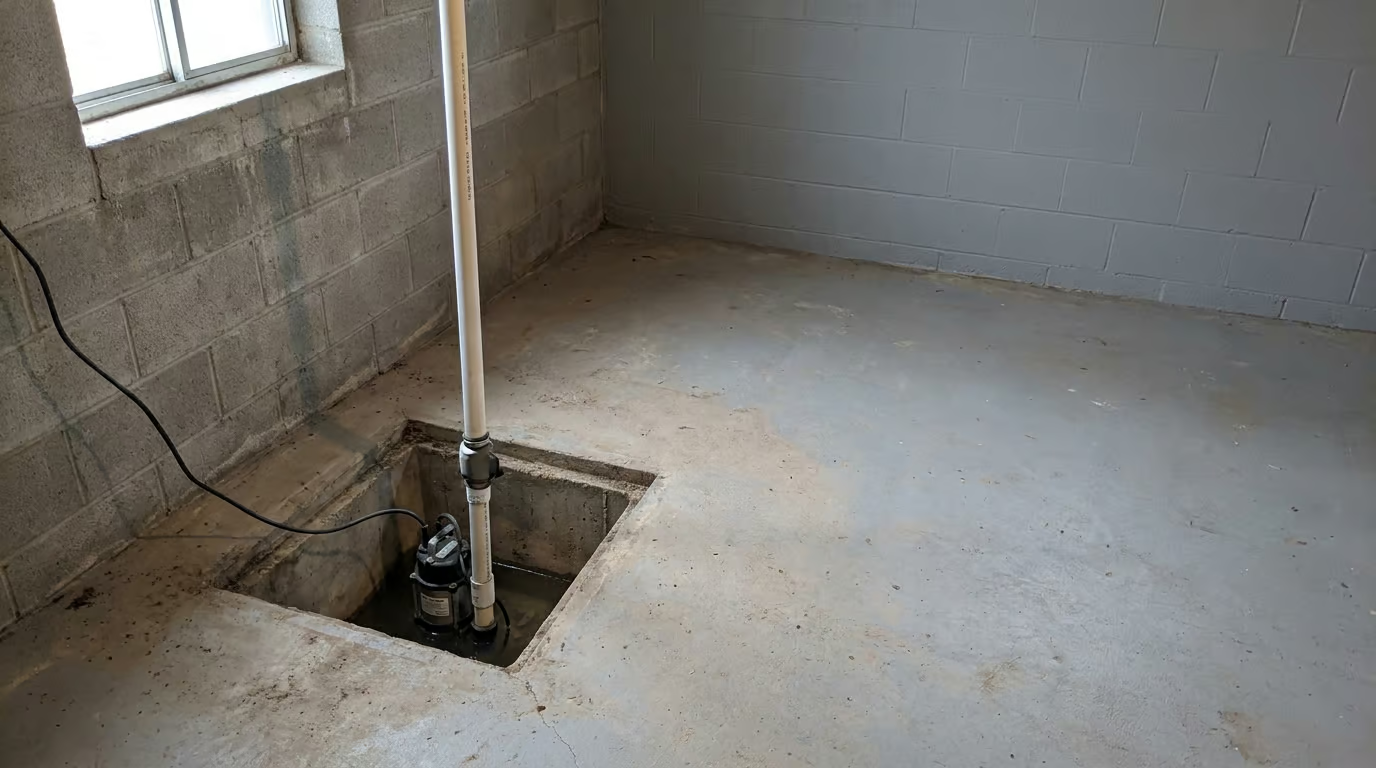
A sump pump sits quiet for months, then gets one night to prove itself. Sump pump maintenance before storm season comes down to four things: a bucket test, a clean pit, a clear discharge line, and a working outlet. Repeat them a few times a year.
Halifax County got a hard reminder of why in July 2025. According to the Gazette-Virginian, the remnants of Tropical Storm Chantal dropped about 7 inches of rain on parts of the county, enough to break an area record set in 2018. Roads closed. A sinkhole opened along U.S. 58. [1]
An untested pump is a guess, and the middle of a storm is a bad time to find out if it runs.
Below, we cover a seasonal schedule built around local storms, a hands-on checklist for basement and crawlspace pits, a plan for power outages, and the signs that a pump needs repair or replacement.
How Do You Test and Maintain a Sump Pump Before Storm Season?
The first check we run on a Halifax County sump pump call takes nothing but a bucket of water. Pour it into the pit. The float should rise, and the pump should start, empty the pit, and shut off on its own. Then work through these steps:
- Run the bucket test and confirm the float rises without snagging.
- Unplug the pump, then clear sediment and debris from the pit and the inlet screen.
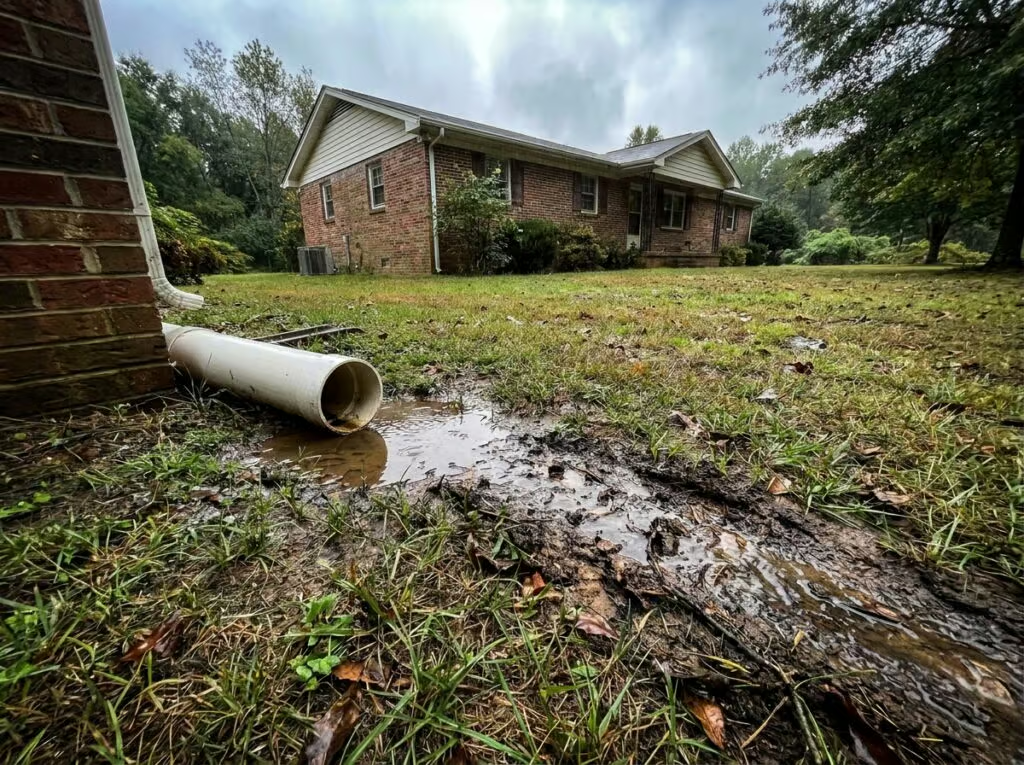
- Check that the discharge line is open and drains away from the foundation.
- Verify the outlet has power and hasn’t tripped.
- Repeat every few months and before any big storm.
If the pump won’t start, runs nonstop, or grinds, stop retesting. It’s due for repair or replacement.
When to Check Your Sump Pump: A Season-by-Season Schedule for Southside Virginia
A check every few months is a fine baseline, but timing matters more. The weather station nearest Halifax averages about 46 inches of precipitation a year, according to NOAA’s 1991-2020 climate normals, so line up your checks with the wettest stretches:
- Early spring: Do a full bucket test and pit cleanout before the wet months.
- By mid-August: Re-test before the tropical peak. The Virginia Department of Emergency Management (VDEM) says hurricane season runs June 1 to November 30 and peaks from mid-August to late October, and it warns that tropical rain can flood communities many miles inland. [2]
- Late fall: Before freezing weather, confirm the discharge line drains fully and isn’t blocked by leaves or ice.
- Any flood watch: When the National Weather Service office in Blacksburg issues a flood watch for Halifax County, run a quick bucket test that day.
Don’t let a mild forecast talk you out of it. At their 2026 hurricane readiness briefing, state emergency officials noted that El Niño usually holds down Atlantic hurricane activity, yet Virginia took hits from Fran, Bonnie, Joaquin, and Florence in El Niño years. [3]
In July 2025, the Hyco River flooded Route 501 near Route 96 (Virgilina Road), and even after the water dropped, the Virginia Department of Transportation reported at least six county roads still closed. Find problems on a dry day, while help can still reach you.
Have a Question About Your Home?
Talk to a real person on our Halifax team. We'll give you a straight answer and an upfront price.
The Hands-On Checklist for Basement and Crawlspace Sump Pits
Unplug the pump before you reach into the pit, and plug it back in only for the bucket test. Frayed cord, scorch marks, water near the outlet? Stop and call a professional.
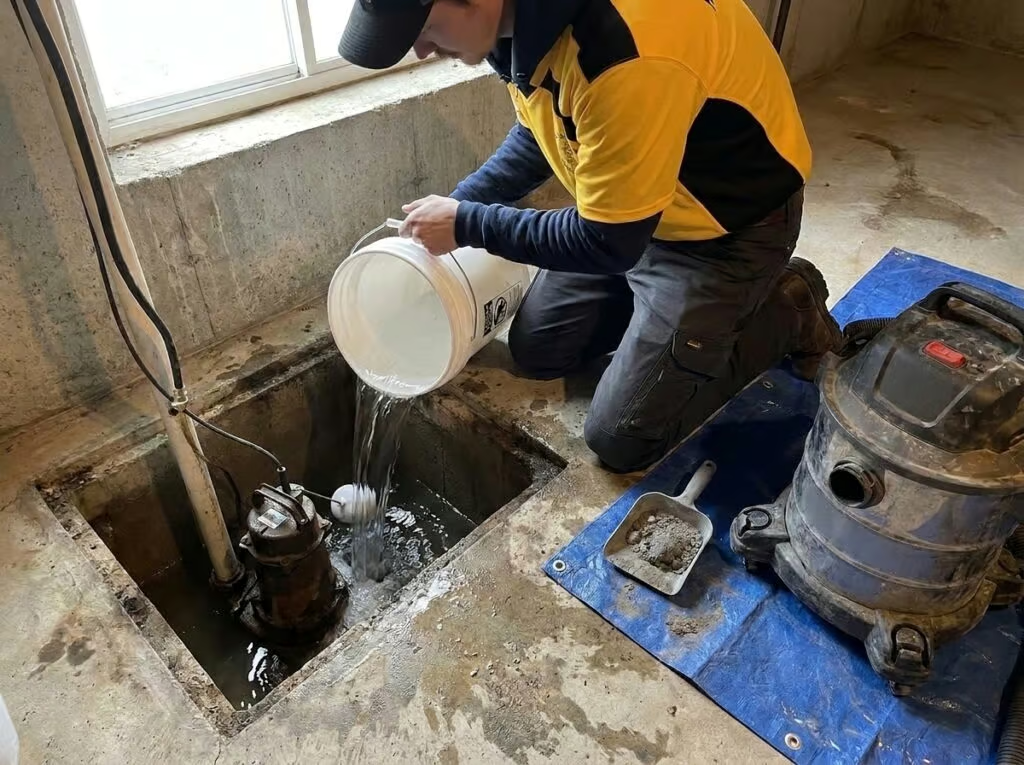
- Bucket test. Pour water in slowly. The float should rise and drop without catching on the pit wall, the cord, or built-up gunk.
- Clean the pit. Scoop out silt, gravel, and debris, then brush off the inlet screen at the base of the pump.
- Check valve. After the pump shuts off, water rushing back down the pipe or a pump that kicks right back on can signal a failing check valve.
- Discharge line. Joints should be tight and the end open, emptying onto ground that slopes away from the foundation.
- Outlet and GFCI. Seat the plug fully. On a GFCI outlet (the kind with test and reset buttons), press test, then reset.
- Record the date. Write the pump’s install date, or your best guess, on the pit lid or in a phone note.
If a sealed lid hides the float, pour water through the lid opening and listen for the pump to start and stop. If you can’t hear both, don’t assume it works.
Crawlspace Pits Need Extra Attention
The median home in the town of Halifax was built in 1965, according to the U.S. Census Bureau’s 2020-2024 American Community Survey, and many homes from that era sit over a crawlspace instead of a full basement. If your pit is down there, check that the lid seals, look for standing water nearby, and feel the vapor barrier for moisture.
A working pump in a damp crawlspace points to a moisture problem, not just a pump problem. For those cases, Solutions Heating & Cooling handles crawlspace waterproofing and other methods of moisture mitigation.
Planning for Power Loss When the Storm Takes the Lights Out
The storms that fill a sump pit fastest can also knock out power, and a pump on household current stops the moment the grid does. That’s why VDEM’s flood guidance suggests homeowners consider a sump pump with a battery.
On well water, your electric well pump goes down too, so store drinking water before a big storm.
Before the next outage:
- Know whether Mecklenburg Electric Cooperative or Dominion Energy serves your address, and how to report an outage.
- Label the sump pump’s breaker so anyone in the house can find it.
- Look in the pit when power returns, and confirm the pump restarts on its own.
When a Failed Test Means Repair, and When It Means Replacement
Have the pump inspected if you notice any of these:
- The pump never starts during the bucket test.
- It runs constantly or cycles every few minutes long after the rain stops.
- You hear grinding, rattling, or a loud hum.
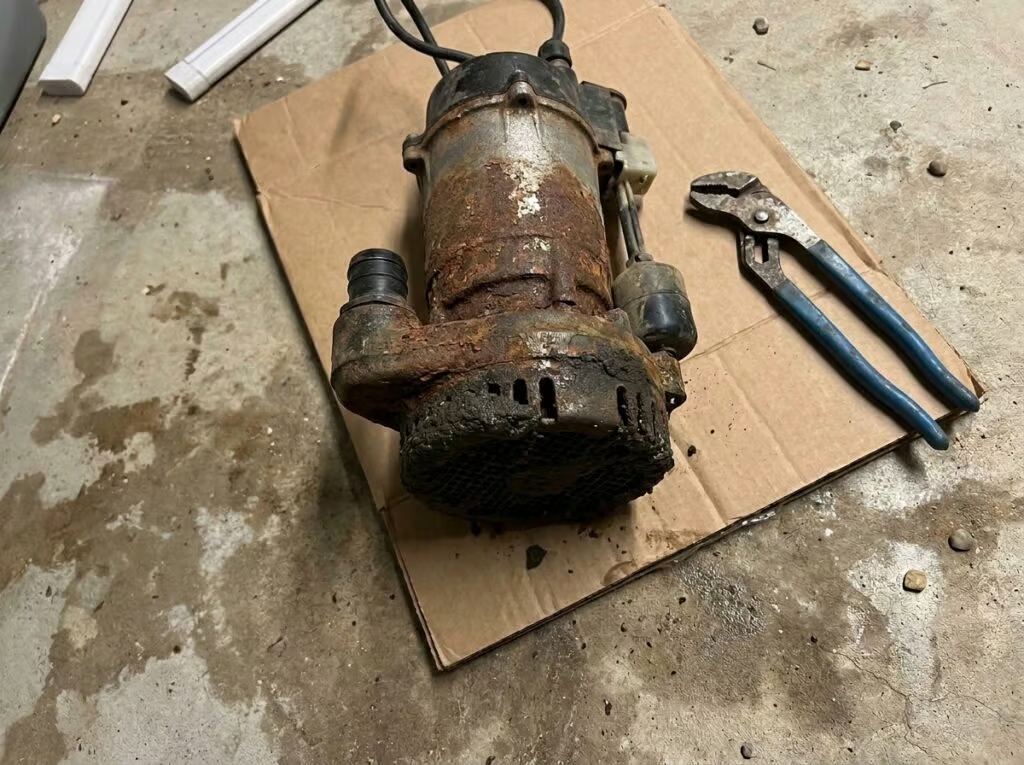
- The pump body shows rust or corrosion.
- The float sticks even after cleaning.
- The pit fills faster than the pump can empty it.
Age matters too. A common rule of thumb treats a pump around ten years old, or one of unknown age in a home bought without service records, as a replacement candidate.
Whether it’s a sump pump repair or a sump pump replacement, we explain what we found in plain language and tell you honestly which option makes the most sense.
Get Your Pump Checked Before the Rain Arrives
Test your pump now, again by mid-August before the tropical peak, and once more before the first hard freeze.
If your pump failed any of these checks, or came with the house and you don’t know its age, call Solutions Heating & Cooling in Halifax. We handle both Sump Pump Repair and Sump Pump Replacement, so you’ll get a straight answer on which your pump needs and a quote before any work starts. Contact us for exact pricing.
Not sure your sump pump will hold up through the next big storm in Halifax? Call (434) 404-4461 →
Quick Answers on Cleaning and Caring for Your Sump Pump
How often should a sump pump be cleaned out?
A sump pump should be cleaned out at least once a year, including the pit and inlet screen, and more often if silt builds up fast or the pump runs a lot. For Halifax County, a good rhythm is a full cleanout in early spring, a quick retest by mid-August, and a bucket test whenever a flood watch goes up.
How do you clean a sump pump without removing it?
You can clean most of a sump pump right where it sits. Unplug it first. Lift silt and gravel out of the pit, brush grime off the inlet screen, and wipe the float until it slides easily, then plug it back in and run a bucket test. If the pump body is caked or corroded, leave it for a professional.
What is a sump pump and how does it work?
A sump pump is an electric pump in a pit at the lowest point of a basement or crawlspace, where groundwater collects. As the water rises, a float switch turns the pump on. It pushes the water out through a discharge line, away from your foundation, and then shuts off.
Sources
- yourgv.com/news/local_news/eastbound-lanes-of-u-s-58-in-halifax-county-closed-after-tropical-system-creates-sinkhole/article_fafc8782-ab74-4559-90f8-7962974c386e.html
- vdem.virginia.gov/prepare/disaster-threats/hurricanes
- vaco.org/wp-content/uploads/2026/07/7.23.26_2026-Hurricane-Readiness-Briefing.pdf
Keep Your Basement Dry This Storm Season
A sump pump only proves itself when the water is already rising, and that’s the worst time to find out it won’t start. Book a visit with our Halifax plumbing team while the weather is calm. Call (434) 404-4461 →