
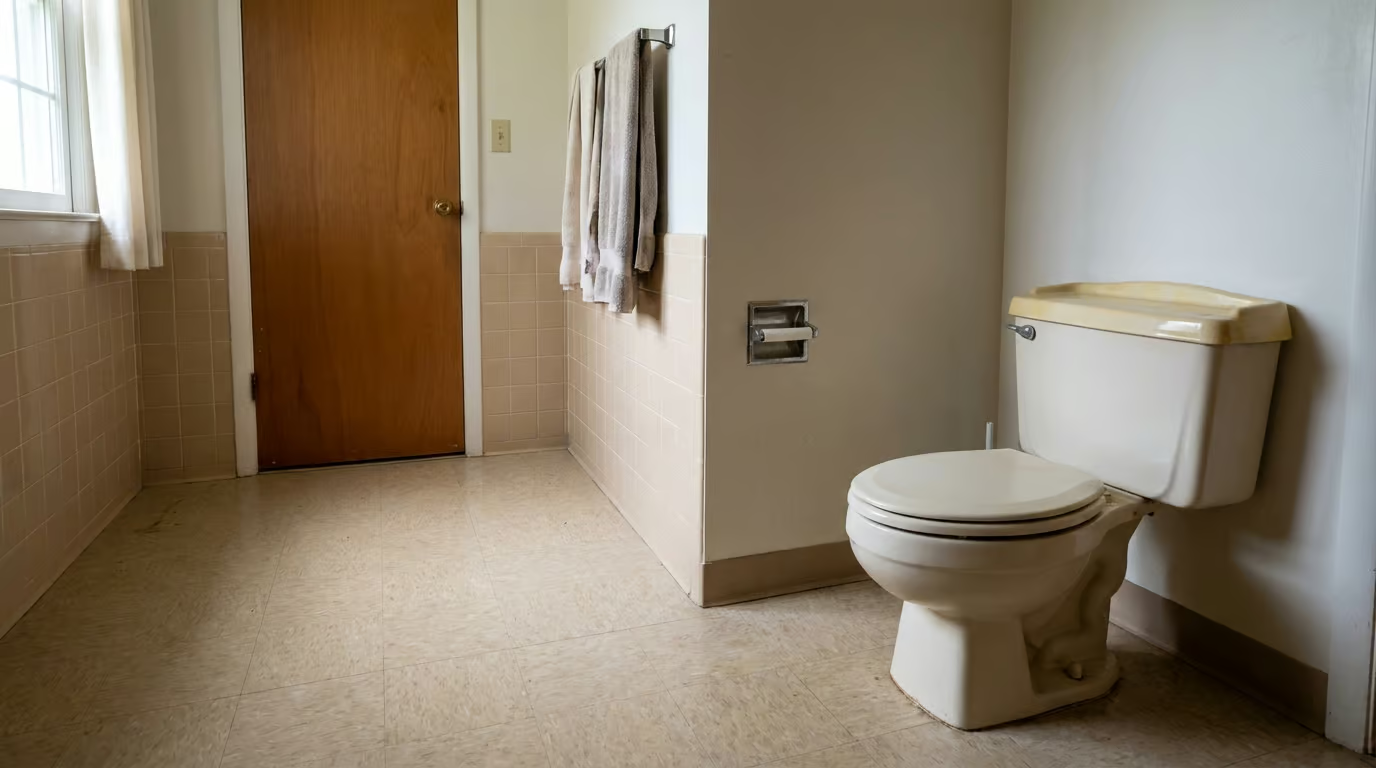
A cracked tank or bowl, a base that keeps leaking or rocking, or a weak flush on an older model usually means the toilet is done. A worn flapper alone isn’t enough reason to replace one.
That faint hiss after the tank refills is easy to tune out. It’s also water you pay for on a town bill, or water your well pump keeps pulling for nothing.
This guide covers the toilet replacement signs we see in Halifax County homes and how to tell them apart from quick fixes. We’ll cover which problems point to replacement, how to read your toilet’s age and flush volume, how local water and older houses change the math, and what installation involves.
How Do You Know When a Toilet Needs Replacing?
For an older Halifax County toilet, the real question is whether the trouble is in the fixture itself or just a worn part inside it. Replace the toilet when it’s the fixture. The clearest signs are:
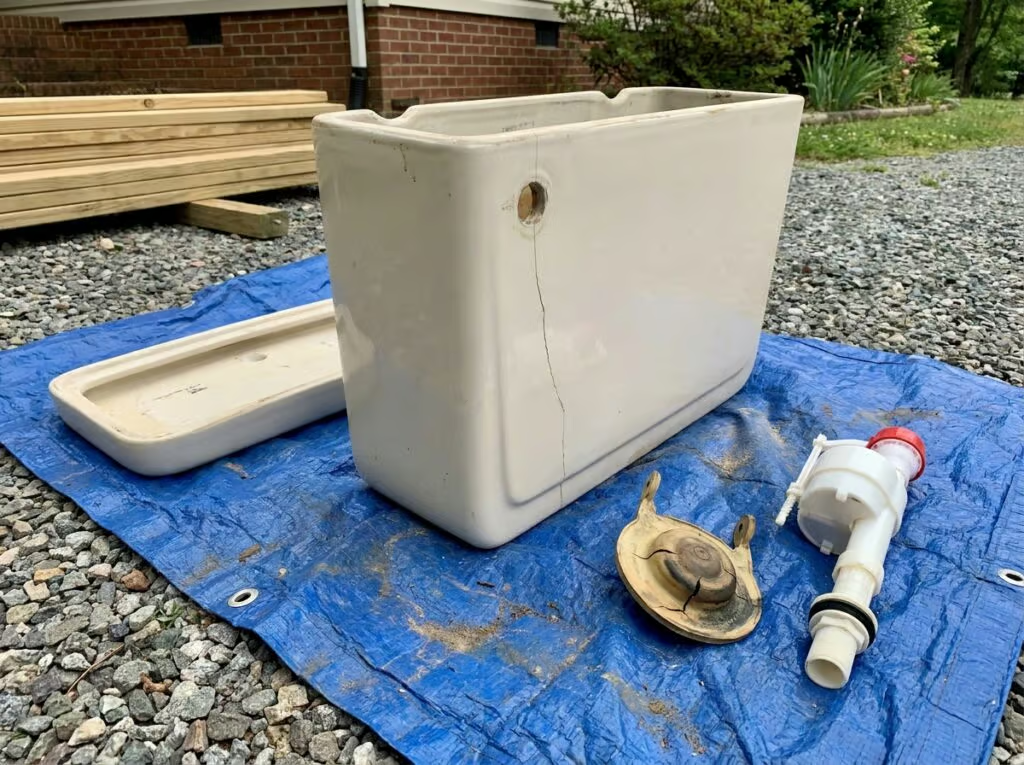
- Cracks in the bowl or tank, even hairline ones
- A leak where the tank meets the bowl
- A base that leaks or rocks again after the bolts are tightened
- A weak flush from an older, low-performing design
- Repairs that keep coming back
A worn flapper or tired fill valve is a cheap part fix, not a reason to replace. If the porcelain is sound and the toilet sits firm, repair it first. If it’s cracked, leaking or simply spent, replace it.
Rocking Base or Leaking Joint? What to Check First
A rocking base and a leak at the tank or base are the two signs people misread most, because the toilet isn’t always the cause.
The U.S. Environmental Protection Agency’s WaterSense program points to a worn flapper as a common cause of toilet leaks, so rule that out before pricing a new fixture. [1]
A wobble can come from loose closet bolts, an uneven floor or an old flange, so start with the bolts. [2] If snugging them down stops it for good, you’re fine. If the rocking returns within weeks, look to the flange or floor, because a toilet that won’t sit still keeps breaking its seal.
Aging shutoff valves behind the toilet can seize or snap when forced, one reason many homeowners want a pro on hand. Whichever way your toilet leans, we’ll give you a straight answer on repair versus replacement.
Have a Question About Your Home?
Talk to a real person on our Halifax team. We'll give you a straight answer and an upfront price.
Reading Your Toilet’s Age, Flush Volume and Silent Leaks
Two markings tell you most of what you need. Lift the tank lid and check the inside back wall, where manufacturers often stamp a production date. Then look behind the seat hinge or near the base for a gallons-per-flush (gpf) marking.
Federal rules capped new toilets at 1.6 gpf starting in 1994. Before that, according to EPA WaterSense, toilets could use as much as 6 gallons per flush, while WaterSense labeled models today use 1.28 gpf or less.
Replacing old, inefficient toilets with WaterSense labeled models could save an average family nearly 13,000 gallons of water a year, EPA WaterSense estimates. Household leaks can waste about 180 gallons a week, by the EPA’s estimate. Both are national figures, not a promise about any one home.
To check for a silent leak:
- Add a few drops of food coloring to the tank.
- Wait about 15 minutes without flushing.
- Look in the bowl.
Color in the bowl means water is slipping past the flapper, which usually calls for a new flapper, not a new toilet. Flush afterward so the dye doesn’t stain.
Why Town Water, Well Water and an Older Halifax Home Change the Math
The Town of Halifax has a lot of older housing. According to the U.S. Census Bureau’s American Community Survey (2020–2024), the median home in town was built in 1965, and 72% of homes are owner-occupied. Some still run on decades-old fixtures.
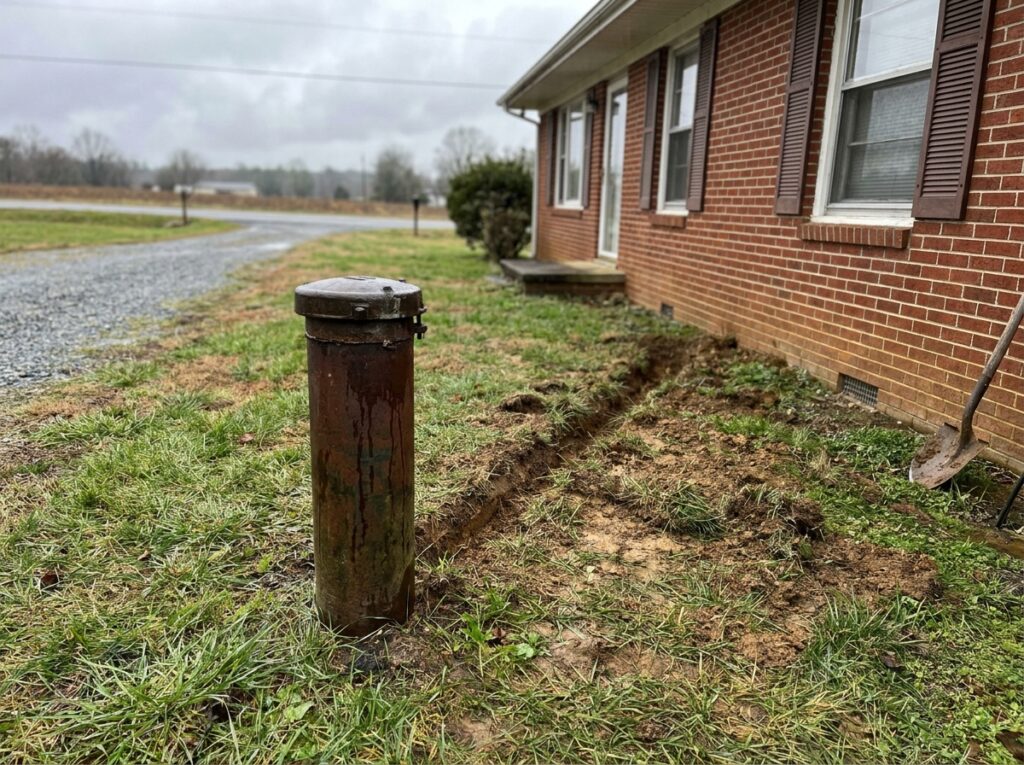
On public water, a running toilet shows up on your metered bill. A home on a private well gets no bill to flag it; the pump just runs more often, so the dye test matters even more out in the county.
Hard water’s dissolved minerals leave crusty deposits and stains, and that scale can keep a flapper from sealing. Our Well Water Testing service can tell you what’s in yours.
Many rural homes here also rely on septic, and a toilet that wastes water sends extra volume to the system.
Water use carries more weight in a dry year. In September 2026, WDBJ7 reported that the U.S. Drought Monitor had placed parts of Halifax County in extreme drought, and the Halifax County Service Authority kept its voluntary conservation request in place at the time of writing. Conditions may have changed since publication.
Will a New Toilet Fit, and What Does the Swap Involve?
Fit comes down to three things. Start with rough-in: measure from the finished wall, not the baseboard, to the center of the closet bolts. Bowl shape comes next, since elongated bowls stick out farther than round ones. And the floor flange has to be solid enough to anchor the new toilet.
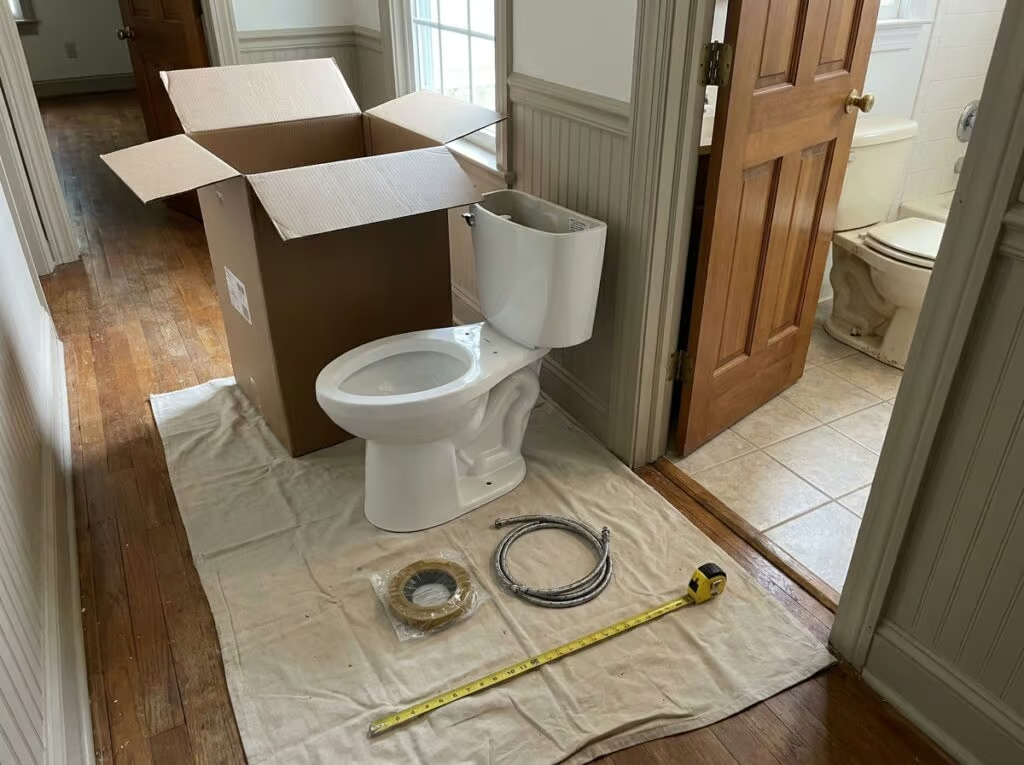
The wax ring is where a lot of installs go wrong. If it doesn’t seat evenly, or the toilet shifts after setting, the base can start leaking days or months later, and that slow seep can soften the subfloor before anyone spots it.
Under Virginia’s Uniform Statewide Building Code, replacing a toilet without altering the supply, drain or vent lines is generally exempt from a permit. In a special flood hazard area, though, a local building official can still require one. The Virginia Board for Contractors licenses plumbing contractors, so ask anyone you hire about theirs.
Toilets are heavy and the bolt work is cramped, so plenty of people would rather hand it off. Our toilet replacement service takes the lifting, the wax ring and the bolt work off your plate.
What a Toilet Replacement Quote Covers
No two toilet replacements cost exactly the same, especially across the mix of older homes and newer builds around Halifax County. The main things that move the price are:
- The toilet you choose
- How many toilets you’re replacing
- The condition of the shutoff valve and floor flange
- Whether the floor under the toilet is sound
We serve homes in town and out on rural roads alike. When we come out, we look at the bathroom, explain what we find, and give you a quote with a few options before any work begins. If the shutoff valve is seized or a slow leak has softened the floor, you’ll hear about it before we pull the old toilet, not after.
If your toilet is showing any of these signs, contact Solutions Heating & Cooling in Halifax, VA for exact pricing on Toilet Replacement.
Is an older toilet quietly adding to your water bill? Get Toilet Replacement started in Halifax, VA with one quick call: Call (434) 404-4461 →
Toilet Replacement Questions We Hear From Halifax County Homeowners
Is a running toilet a sign I need a new one?
A running toilet usually doesn’t mean you need a new one, because the cause is most often a worn flapper or a faulty fill valve, and both are inexpensive to replace. Try the food coloring test first. If it still runs after new parts, or you find a crack in the tank or bowl, then it’s time to talk about replacing the toilet.
How long does a toilet last?
A toilet can last for decades if the porcelain never cracks, but the parts inside the tank wear out much sooner. Flappers, fill valves and seals break down over time, and hard water can speed that up. Age alone isn’t a reason to replace one. A cracked fixture or a leak that keeps coming back is.
Can a toilet go bad and not flush well?
Yes, a toilet can go bad and stop flushing well, and some early low-flow models from the 1990s were notorious for weak flushing by design. If an older toilet has never flushed well, a newer model is often the better fix.
How much does it cost to replace a toilet?
The cost to replace a toilet in Halifax County depends on the toilet you choose and what we find under the old one. A seized shutoff valve, a damaged floor flange or a soft subfloor all add work, and so does replacing more than one toilet. We quote before any work starts, so contact Solutions Heating & Cooling for exact pricing.
Sources
- epa.gov/watersense/residential-toilets
- familyhandyman.com/list/toilet-problems-youll-regret-ignoring
Stop Paying for an Old Toilet’s Wasted Water
Every flush from a worn-out toilet costs more than it should. Call (434) 404-4461 →