
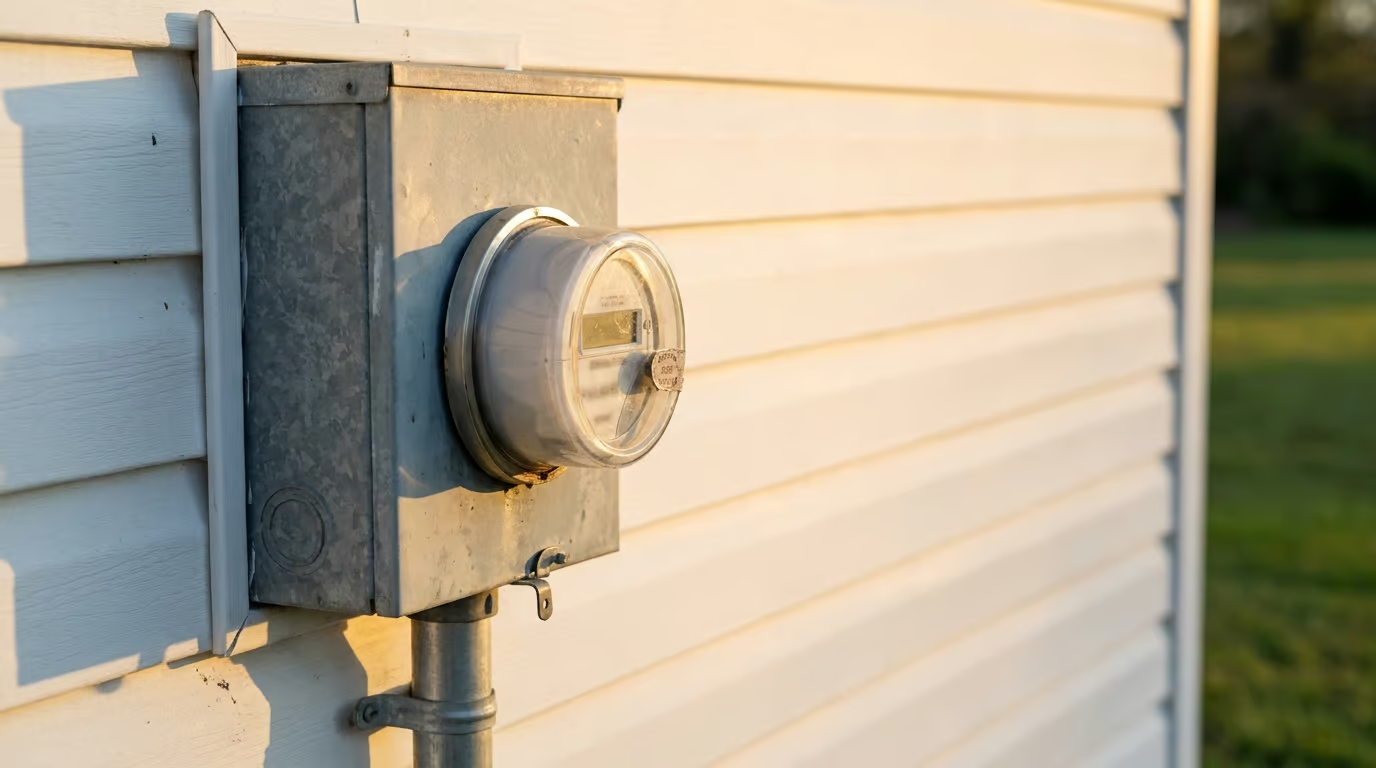
“Why does my breaker keep tripping in winter?” In most Halifax County homes, the cold itself isn’t to blame. Space heaters, heat pump backup strips and holiday lights run for hours on decades-old wiring, and when those loads overlap, the breaker shuts the circuit off.
That’s the breaker protecting the wire. But repeated trips can also point to a worn breaker, a loose connection or a panel with no room left.
This guide helps you tell a nuisance trip from a warning sign. We’ll cover the space heater math, how heat pump backup heat adds load, how to read a trip by its timing and when the panel becomes the bottleneck.
What Actually Trips a Breaker in Winter: Extra Load on Older Circuits
The cold isn’t the culprit. Winter load is. Heaters and electric heat run for hours in cold months, and that constant load is often more than an older circuit can handle.
Most winter-time trips come from one of three causes:
- Overload: too much running on one circuit
- Short or ground fault: current taking a path it shouldn’t
- Worn breaker or loose connection: the hardware itself is failing
If a breaker trips again and again, or trips with heat, a burning smell or buzzing, stop resetting it and have a licensed electrician trace what’s causing the trips.
The Space Heater Math Behind Most Winter Trips
Most portable space heaters draw 1,500 watts on high, about 12.5 amps at 120 volts. [1] A lot of bedroom and living room circuits sit on a 15-amp breaker.
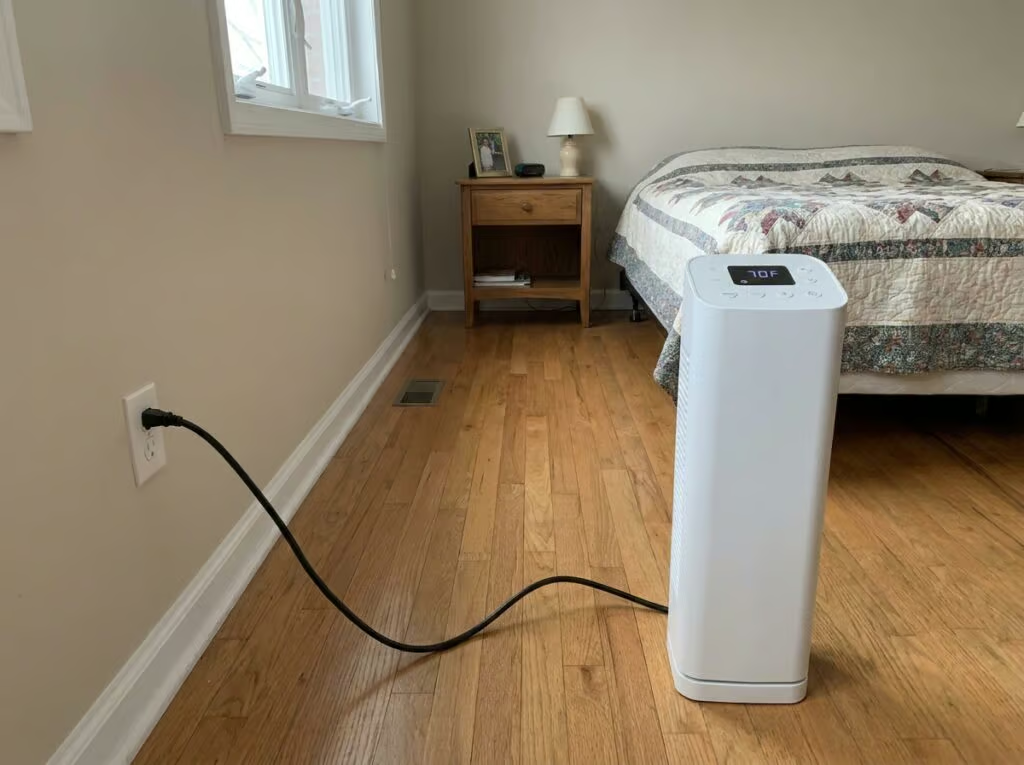
The National Electrical Code treats a load running three hours or more as continuous and sizes circuits so it stays at or below 80 percent of the breaker rating: 12 amps on a 15-amp circuit. [2] A heater running all evening passes that line on its own.
Add a lamp, TV or vacuum on the same circuit, and the total can climb past 15 amps. Because breakers respond slowly to a modest overload, the trip may not come until an hour after the heater starts. Extension cords and power strips also raise the risk.
However, just swapping in a bigger breaker isn’t the necessary fix. Wire size sets the limit, and a 20-amp breaker on 15-amp wire lets that wire overheat before anything shuts off.
Heat Pump Backup Strips and Electric Heat Stacking Onto One Panel
Plenty of Halifax County homes heat with a heat pump. In deep cold it can’t keep up alone, so electric backup strips in the indoor unit kick on.
They also run during defrost, when the outdoor unit briefly reverses to melt ice off its coil, keeping cold air out of your vents.
Backup strips draw several times what a space heater does, and emergency heat mode runs them alone, using far more power than regular heating. Run them alongside baseboard heaters, portable heaters and kitchen appliances, and the panel takes the strain.
Rural homes see a sharper version after an ice storm, when the heat pump, strips, well pump and sump pump can all start at once as power returns.
Have a Question About Your Home?
Talk to a real person on our Halifax team. We'll give you a straight answer and an upfront price.
Overload, Short or Worn Breaker: Reading the Trip by Timing
How fast a breaker trips tells you a lot about the cause.
- Trips minutes or hours after a heater starts. Usually an overload. Move the heater or cut what else runs on that circuit.
- Trips instantly with a pop, flash, burning smell or scorch mark. Points to a short or ground fault. Unplug everything on that circuit, leave the breaker off and call a licensed electrician.
- Trips at random on one breaker with nothing new plugged in. Possibly a worn breaker or loose connection. This takes a technician with the panel cover off, not trial and error.
- Outdoor holiday lights trip a GFCI outlet on wet nights. Most often moisture in a plug or light string. Use outdoor-rated cords and keep connections off wet ground.
A loose connection can arc and heat up, which makes it a fire risk rather than a nuisance. A trained technician needs to inspect it and tighten it to the specified torque. This isn’t a do-it-yourself fix.
When the Panel Itself Is the Limit
Sometimes no single circuit is the problem. Many homes built from the 1960s through the 1990s still run on their original service, often 100 amps.
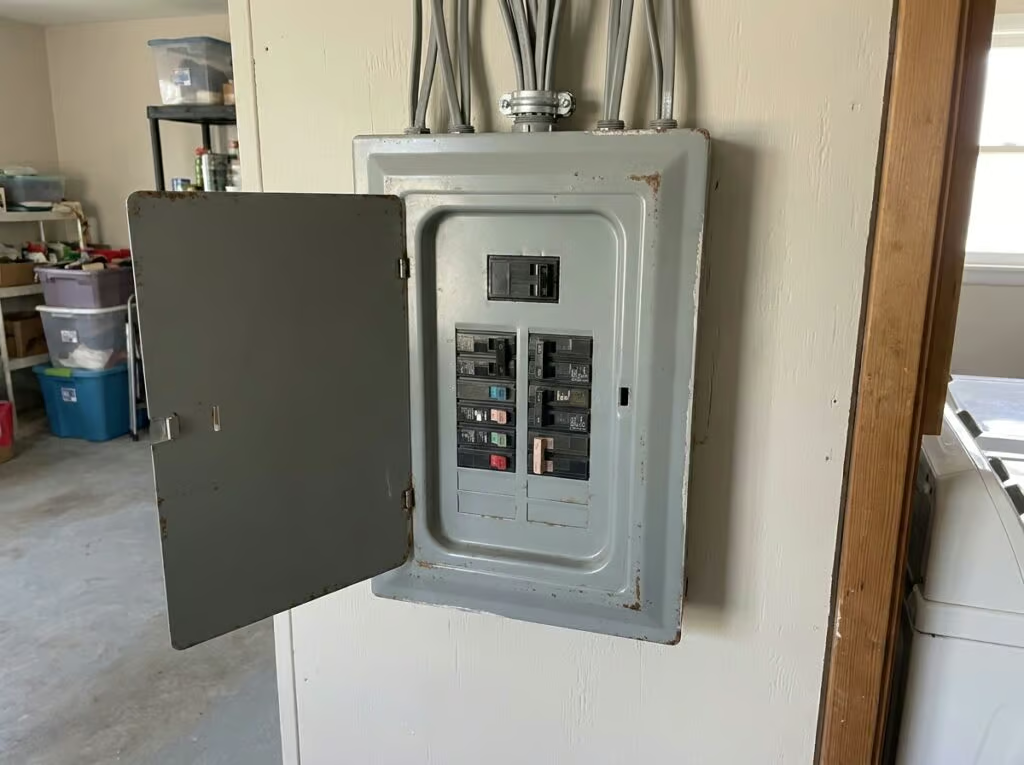
That was fine when they were new, but heat pumps, backup strips, a second freezer and space heaters push it past its limit. Panels that age also tend to be crowded, sometimes with double-tapped breakers, where two wires share a terminal built for one.
The clearest sign is trips that follow every new load, with no single bad circuit to blame. An evaluation of your system and electrical load is the right first step before anyone talks about replacing equipment.
What to Do Before You Call, and the Signs That Mean Stop Now
A few notes make a service visit faster. Write down:
- Which breaker tripped and what its label says
- What was running on that circuit
- How long it had been running before the trip
- Any smell, sound, flicker or warm outlet you noticed
Shut things down and get help now if you notice:
- A warm breaker or panel cover
- A burning or hot-plastic smell
- Buzzing or crackling from the panel or an outlet
- A scorched or discolored outlet
- A breaker that won’t reset
If the whole house acts up at once, the problem may be on the utility side. Call your provider about the service line or meter.
Get the Trip Checked Before the Next Cold Snap
In Halifax County, the first hard freeze puts every heater in the house to work, and a weak circuit shows itself fast. Sort out the tripping before that night comes.
If the trips start when your heat pump or its backup strips kick on, call us at Solutions Heating & Cooling. We can look at how the heating equipment is running and how much load it adds, and any problem at the panel or in the wiring belongs with a licensed electrician.
Breaker tripping every time the heat kicks on? Don’t wait for the next freeze to find out why. Call (434) 404-4461 →
Winter Breaker Trips: Straight Answers for Halifax County Homeowners
Is it dangerous to keep resetting a breaker?
Repeatedly resetting a breaker that keeps tripping can be dangerous, because the breaker is reacting to a real problem. One reset after an obvious overload is fine. But if it trips again the moment you reset it, or you notice heat, buzzing or a burning smell, leave it in the off position.
Can cold weather make a circuit breaker trip?
Cold weather rarely makes a circuit breaker trip on its own. The heating loads winter brings usually do: space heaters, heat pump backup strips and holiday lights running for long stretches, often on older 15-amp circuits where that steady draw climbs quickly. Outdoor GFCI outlets are a separate case. They can trip when moisture gets into plugs on wet winter nights.
When does a tripping breaker mean I need a panel upgrade?
A tripping breaker often means you need a panel upgrade when every new load trips it, not one bad circuit. Other signs include original 100-amp service, no open breaker slots and double-tapped breakers. A load evaluation by a licensed electrician should come first, so you know whether the panel or a single circuit is the real limit.
Can a tripped breaker still be in the on position?
Yes, a tripped breaker can look like it’s still on, because many breakers stop in a middle position. Look for a handle that sits slightly out of line with the others or feels loose. To reset it, push the handle fully to off, then back to on. If it won’t stay on, leave it off and get a licensed electrician to check it.
Sources
- familyhandyman.com/article/safest-space-heater
- ul.com/thecodeauthority/knowledge/circuit-breaker-guide
Stop Losing Power Every Time It Freezes
Before you reset that breaker one more time, tell us which one trips, what was running when it did and how old your panel is. Call (434) 404-4461 →