
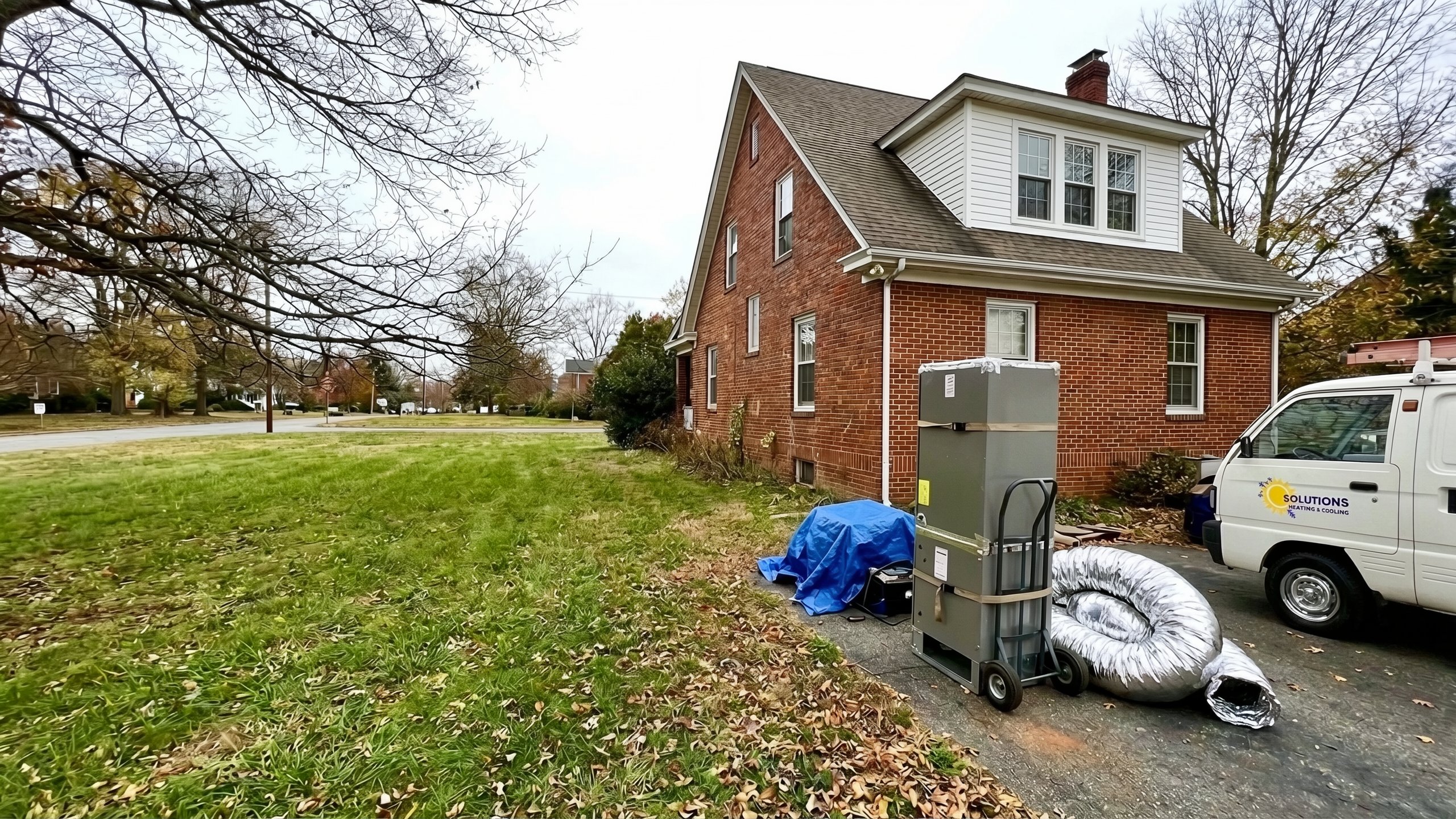
If you own a home in Rivermont, Daniel’s Hill, or one of Lynchburg’s other historic neighborhoods, you’ve probably noticed it. One room never quite cools down. The second floor bakes in August, and a converted attic sits unlivable half the year.
That’s rarely a broken furnace or AC. It’s almost always a ductwork sizing problem baked into the house’s own renovation history. In this guide, we’ll walk through why older Lynchburg homes end up with mismatched ducts, how to spot the signs, and how to correct the problem without tearing into original plaster and trim.
The Short Answer: Is Your Ductwork the Wrong Size?
Mismatched duct sizing in older Lynchburg homes almost always traces back to additions, subdivided rooms, or converted attics built after the original ductwork went in. The house grew. The ducts often didn’t.
Signs worth checking for:
- A room or floor that never reaches the right temperature
- Weak airflow at vents farthest from the furnace or air handler
- High energy bills despite a healthy, properly running system
These same symptoms can also point to low insulation, duct leaks, or an aging unit, so a Manual J load calculation or professional energy audit is the only reliable way to confirm sizing is the actual cause. Once it is, the fix is usually resizing or rebalancing the specific run at issue, not a full replacement.
A Century of Additions Built on Top of Original Duct Runs
Lynchburg has eight named historic districts, all formally established under the city’s 1976 Historic Districts Ordinance. [1] Those include Rivermont, Daniel’s Hill, Diamond Hill, Federal Hill, Court House Hill, Garland Hill, Pierce Street Renaissance, and Virginia University of Lynchburg. Many homes in these areas date back to the 1840s through the early 1900s.
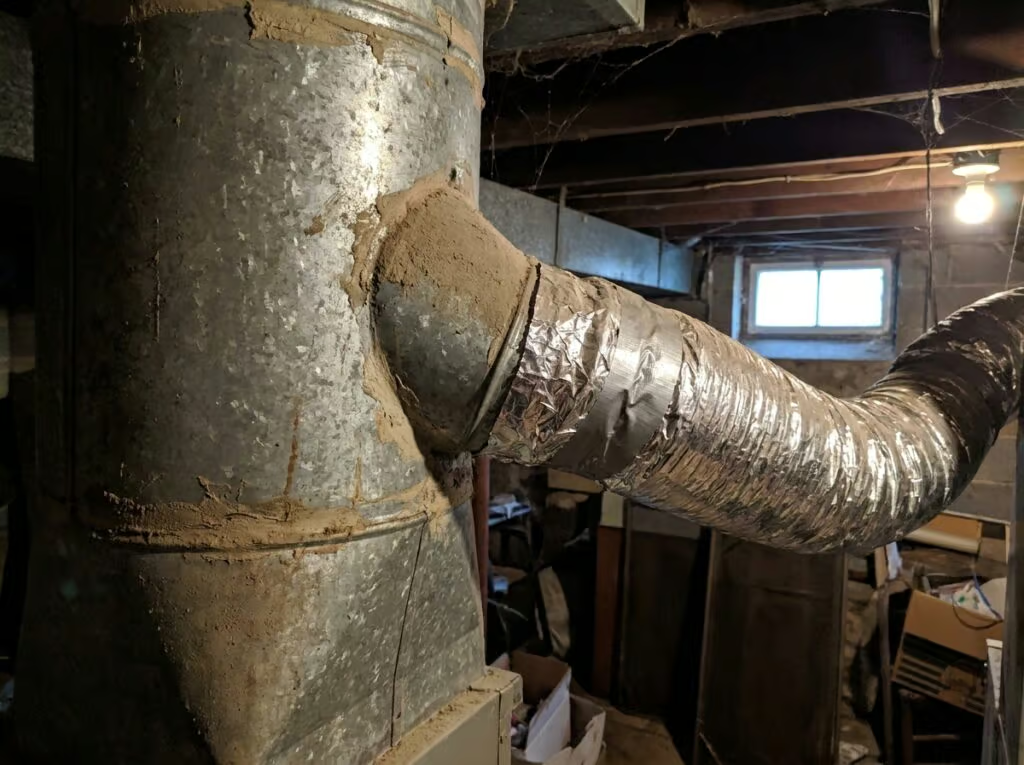
A house that old has lived several lives. Rooms were subdivided, porches enclosed, attics and basements finished into bedrooms, offices, and family rooms. Each change piled on square footage the heating and cooling system now has to serve, but the ductwork rarely got rebuilt to match. When a mid-century furnace or AC replaced the original heating setup, the installer often reused whatever duct runs were already there.
That mismatch takes two common forms. Some homes carry oversized trunk lines left over from an old gravity furnace or an earlier, larger system. Others have undersized branch runs feeding newer additions or converted attic spaces, where someone tapped a long, skinny duct off the existing system and hoped it would reach. Either way, the house changed and the ducts stayed roughly the same, which is the uneven comfort you feel today.
Have a Question About Your Home?
Talk to a real person on our Lynchburg team. We'll give you a straight answer and an upfront price.
What Oversized and Undersized Ductwork Actually Feels Like Day to Day
You don’t measure duct sizing with a tape in your hand. You feel it, in specific and frustrating ways around the house.
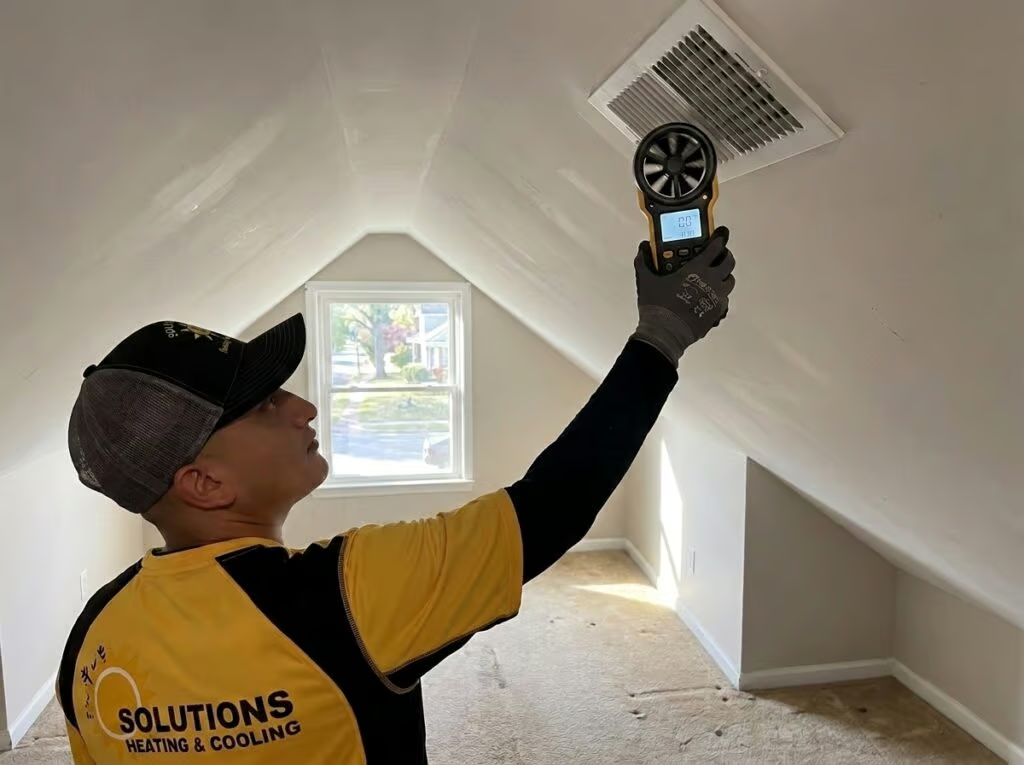
Undersized ductwork tends to produce weak airflow at distant vents. [2] The far bedroom barely gets a breeze, and the converted attic stays hot in summer and cold in winter no matter where you set the thermostat. Your equipment strains to push air through runs that are too small, which wears it out faster and drives up your bills.
Oversized ductwork creates a different pattern. The system short-cycles, kicking on and off quickly without ever settling the house, and humidity lingers because the AC never runs long enough to pull moisture from the air. [3]
If you recognize either pattern in your own home, the equipment probably isn’t the culprit. The path the air travels is.
The Manual J Question: How Professionals Actually Diagnose a Sizing Problem
A Manual J load calculation is the industry-standard method for figuring out exactly how much heating and cooling a specific home needs. It accounts for your square footage, ceiling heights, insulation, window exposure, and layout. From there, a technician can tell whether your ducts are sized to carry that load or working against it.
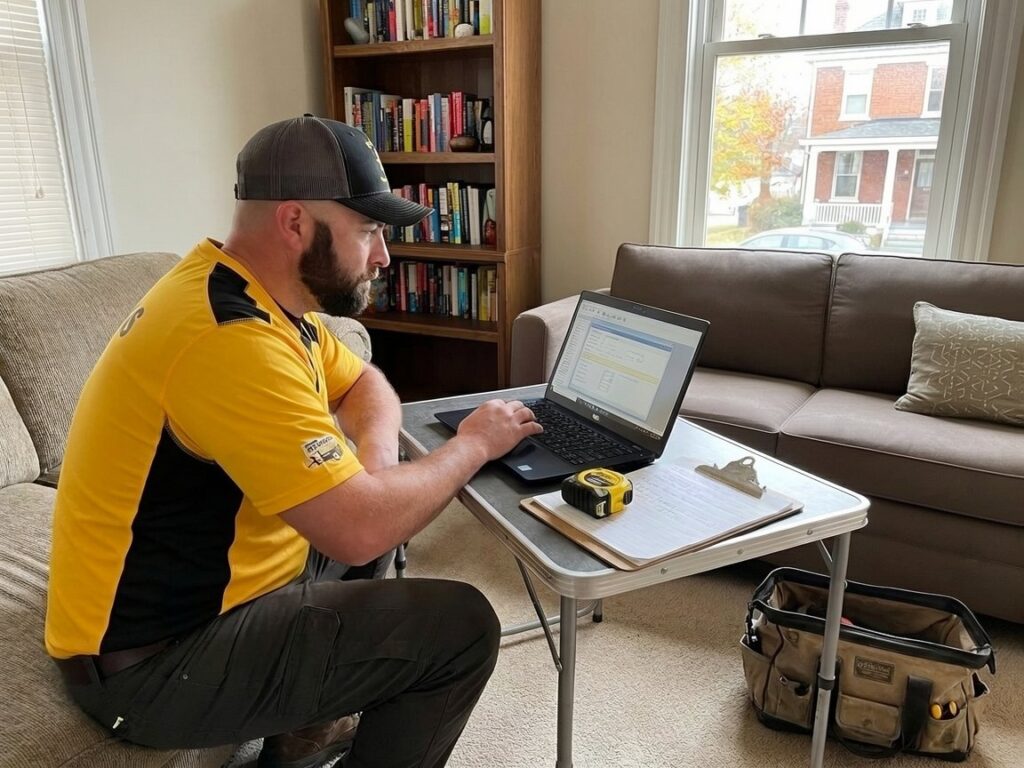
This matters because you can’t pin down a sizing problem over the phone. A guess leads to the wrong solution, and the wrong solution usually means money spent without the comfort you were after.
That’s why we treat the System Evaluation and Energy Audit as a distinct first step. Before anyone recommends sealing, resizing, or replacement, we look at how your home actually loses conditioned air and where the airflow breaks down. You see the findings before any work is proposed.
If you’ve ever worried about being sold a repair you don’t need, this is the answer to that worry. The diagnosis comes first, in plain terms, and it drives the recommendation instead of a sales script. Whether your home needs duct resizing, interior sealing, or a full system replacement, the honest version of that answer starts with the same evaluation.
Fixing It Without Tearing Into Plaster and Original Trim
An undersized branch run typically gets resized or paired with a second branch, so a converted attic or finished addition finally gets the airflow it was never built to carry. An oversized trunk line gets rebalanced with dampers or redesigned for the smaller load the house actually has today, which stops the short-cycling. Aeroseal duct sealing handles the leakage that usually rides along with either problem, closing gaps from the inside without touching plaster or trim. Full replacement is reserved for runs that are structurally damaged or truly beyond saving, not a default first move.
The evaluation is what tells us which of these your home actually needs. From there, you get a specific plan, resize this run, rebalance that trunk line, seal the leaks throughout, rather than a one-size-fits-all recommendation.
Getting an Honest Read on Your Home’s Ductwork
If you live in Rivermont, Daniel’s Hill, Diamond Hill, or any of Lynchburg’s older and historic neighborhoods, don’t assume uneven comfort means a full replacement. The house may just need its ductwork brought back in line with how it’s actually laid out today.
That’s the work we do at our HVAC contractor in Halifax. We run the System Evaluation or Energy Audit first, map where your home is losing conditioned air, and tell you plainly whether your ducts need sealing to stop air loss, resizing to correct a genuine capacity problem, or both. You get a straight answer tied to your house, not a quote pulled off a phone call. Call us when you’re ready for that read on your ductwork.
Wondering if your ductwork is the real problem? Call (434) 771-0977 → and we’ll start with a straight diagnosis, not a sales pitch.
Common Questions About Ductwork Sizing in Older Lynchburg Homes
How do I know if my ductwork is the wrong size for my house?
The clearest signs of incorrectly sized ducts are rooms that never reach the right temperature, weak airflow at distant vents, and high energy bills even when your system runs fine. A Manual J load calculation or a professional energy audit confirms it by comparing your home’s real heating and cooling needs against what your ducts can carry.
Can old ductwork be resized without replacing the whole system?
Old ductwork can almost always be resized without replacing the whole system. Sealing fixes leaks but not true capacity problems, so a genuinely mismatched run typically gets resized or rebalanced on its own. Full replacement is reserved for ducts that are structurally damaged, not a default first step.
Does adding a room or finishing an attic affect duct sizing?
Adding a room or finishing an attic does affect duct sizing, since the added square footage changes how much air your system must move. When an addition or conversion is tied into the original ducts without resizing, the new space often gets weak airflow while the rest of the house falls out of balance.
Sources
- lynchburgva.gov/295/Local-Districts-Sites
- thisoldhouse.com/heating-cooling/23567960/air-balancing
- nachi.org/gravity-furnace-inspection.htm
Get the Right Read on Your Ductwork
Older Lynchburg homes deserve better than a guess. Let our team map where your home is losing conditioned air and show you the smallest fix that actually works. Call (434) 771-0977 →