
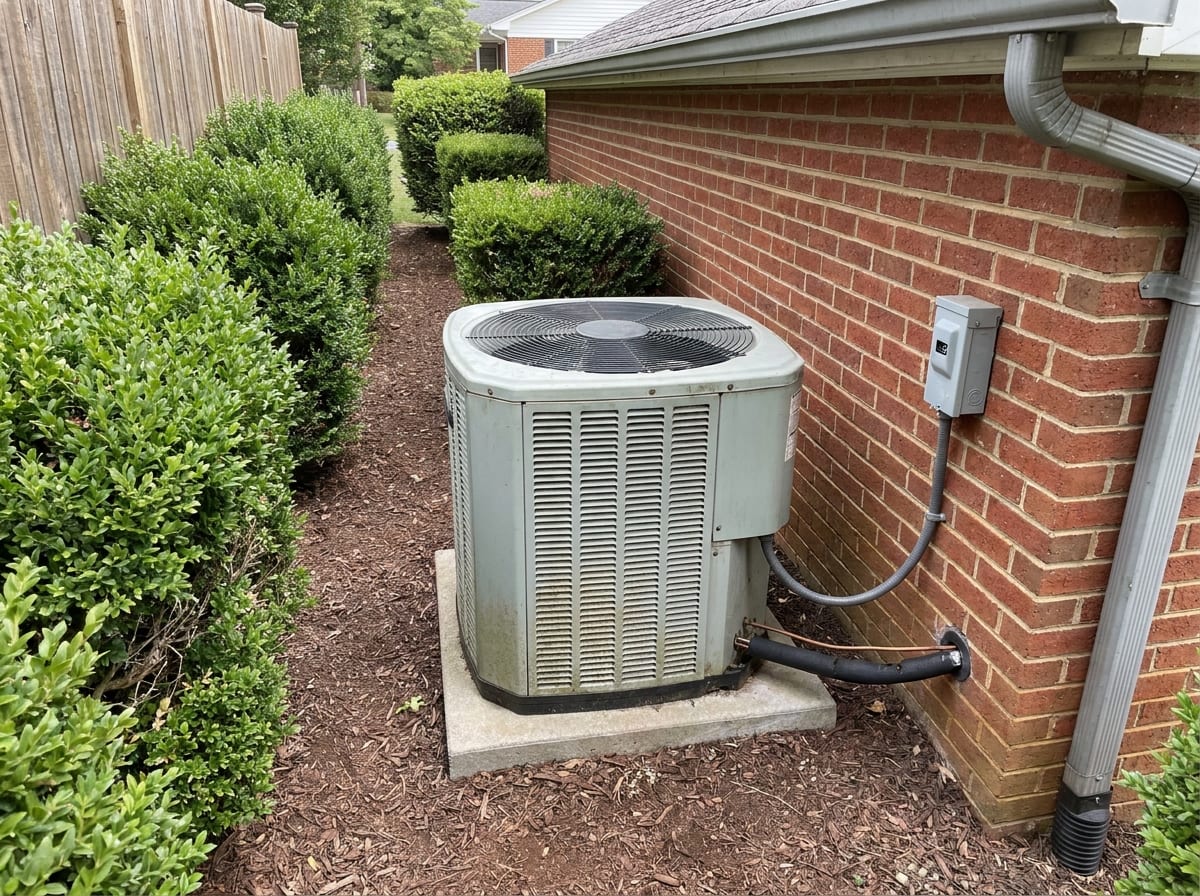
Getting a heat pump ready for winter does not mean covering it or shutting it off. Your outdoor unit is your heat source until spring, so the goal is to keep it clear, running, draining and level.
The “cover it and forget it” habit from air conditioners can starve a heat pump of air. This guide shows how to winterize your outdoor heat pump unit before freeze weather settles over Lynchburg, in steps most homeowners can finish in an afternoon.
How Do You Winterize an Outdoor Heat Pump Unit?
Winterizing a Lynchburg heat pump mostly means leaving it alone: no cover, no shutoff, and clear space around the cabinet so the coil gets steady airflow. [1]
- Keep it running. Leave the system on in snow and ice so defrost cycles can work.
- Keep it clear. Remove leaves, trim plants back, and keep snow off and away from the cabinet.
- Keep it draining. Defrost water should run off, not refreeze under the unit.
- Keep it level. A tilted pad can trap water and ice.
- Get it checked. A technician can test the defrost controls, the coil and the refrigerant.
For exact clearance distances, follow your manufacturer’s manual.
Why a Heat Pump Isn’t Winterized Like an AC (and Why Covering It Backfires)
An air conditioner sits idle from fall to spring, so some people cover it. A heat pump gets no such break. It runs in reverse all winter, pulling heat from the outside air to warm your home.
The coil needs air moving across it every time the system runs, and a cover blocks that air while holding moisture against the metal. Some advice online, including a manufacturer blog, suggests a cover in snowy areas, but on a unit that heats your house, anything wrapped around the coil works against it.
Shutting the system off during snow or ice backfires too, because defrost cycles can’t clear ice on a unit that’s off.
The Clearance Checklist for Your Outdoor Unit
A clear unit pulls in more air and defrosts better. Walk around yours with this list before the next hard freeze:
- Leaves and debris. Brush leaves, sticks and grass clippings off the top and away from the sides.
- Shrubs and plants. Trim them back to the clearance in your manual, since published recommendations vary.
- Gutter and roof drip. Dripping water can freeze on top of the cabinet and weigh down the fan.
- Level pad. Pads settle over the years. The unit should sit level and high enough that defrost water drains away and snow doesn’t bury the base. Pooling on one side usually means a tilt.
- Piled snow. Never shovel snow from walks or driveways against the cabinet.
Gutter drip matters more on older houses, and Lynchburg has plenty: according to the U.S. Census Bureau, the median home here was built in 1971.
Have a Question About Your Home?
Talk to a real person on our Lynchburg team. We'll give you a straight answer and an upfront price.
Normal Defrost Frost vs. a Unit Locked in Ice
In cold, damp weather, frost forms on the outdoor coil, and the unit periodically runs a defrost cycle to melt it. The fan may stop, the sound may change, and steam may rise off the top. It looks like a breakdown, but it isn’t.
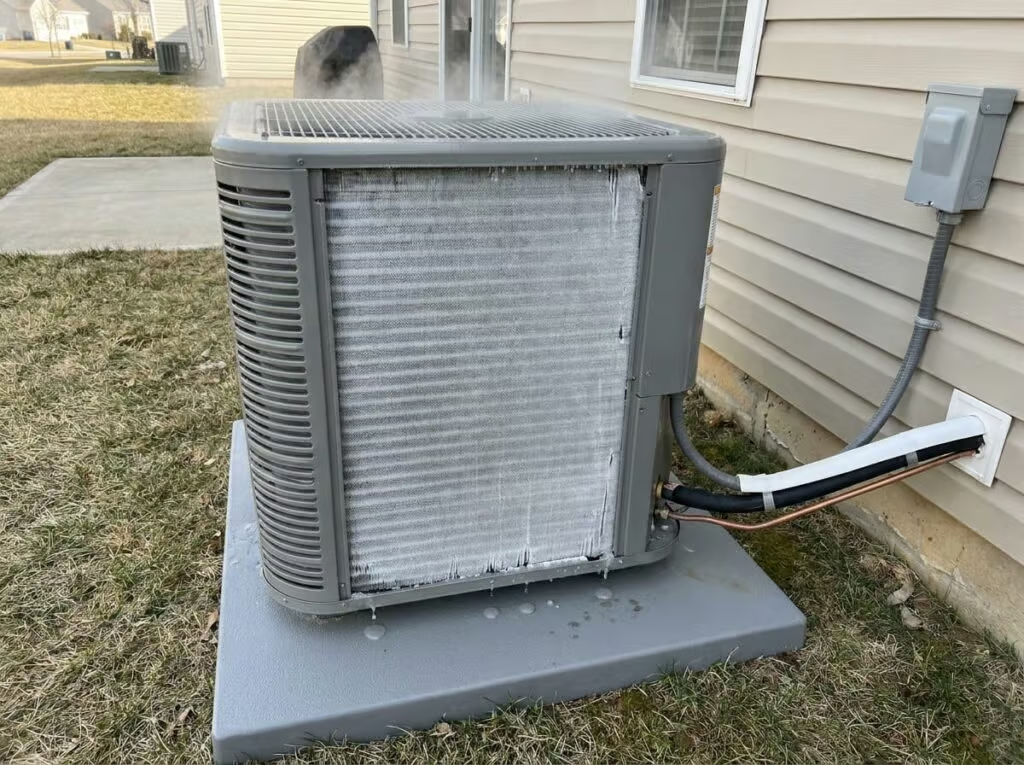
This table matches what you see at the unit to what it usually means.
Swipe the table to see every column ›
| What you see | Usually means | What to do |
|---|---|---|
| Thin frost on the coil in cold, damp weather | Normal defrost cycle | Leave the unit running |
| Steam or fog rising, fan briefly stopped | Normal defrost cycle | Wait for the cycle to finish |
| Refrozen water pooled under the unit | Drainage or level problem | Clear it safely, check the pad and drainage |
| Ice returns within about an hour of clearing | Likely a fault | Call for service |
| Coil or cabinet locked in solid ice | Likely a fault | Call for service |
Frost that comes and goes is fine. Ice that stays or keeps coming back is your signal to call.
To clear ice, pour warm water over it or sweep it gently with a soft broom. Never chip at the coil with a screwdriver, scraper or shovel; the thin fins bend and puncture easily. A frozen puddle underneath is usually harmless, just a slip hazard and a hint that water isn’t draining.
Ice storms bring a different risk. In late January 2026, Winter Storm Fern dropped heavy ice and downed limbs across Appalachian Power’s service area. The storm hit on a Sunday, and by Tuesday morning the utility still reported about 13,000 customers in Virginia and West Virginia without power.
At the time of writing, WDBJ7’s winter 2026-27 forecast flags a moderate to high risk of an ice storm across the region and WSET’s outlook calls for 10 to 20 inches of snow in Lynchburg. [2] [3]
When power returns, let the system start on its own instead of flipping breakers or cycling the thermostat. If limbs have hit the unit or the cabinet looks damaged, leave it off and have us take a look.
Emergency Heat: What It Does and Why It Raises Your Bill
Most heat pump thermostats have an emergency heat setting, often labeled “EM heat.” It bypasses the outdoor unit and runs electric resistance strips inside the indoor unit, a lot like a big toaster coil. Those strips cost more to run than the heat pump, so switching to emergency heat just because it’s cold can push your electric bill up.
Your system may lean on backup heat on its own during defrost or on very cold days, which is normal. The manual setting is a short-term bridge for a confirmed outdoor unit problem, like a coil locked in ice. If you need it, get the unit repaired rather than living on the strips for weeks.
What a Technician Checks Before Cold Weather, and What You Can Do Yourself
Plenty of winter prep is homeowner work: clearing leaves and snow, trimming plants, rinsing dirt off the cabinet on a mild day, and thawing ice with warm water.
Cleaning the coil itself, testing the defrost controls, measuring airflow and verifying refrigerant take training and the right tools. We can handle any heat pump repair work that turns up. And, of course, we will walk you through what we found in plain language, so you see the reason first and decide from there.
Getting Your Heat Pump Checked Before the Next Cold Snap
Most of what keeps a heat pump going through a Lynchburg winter happens out in the yard: a clear cabinet, a level pad, water that drains away, and a system that stays on through the ice. Leave the cover in the shed.
The parts you can’t see from the yard, the defrost controls, the coil and the refrigerant, are what our technicians check during a heating system maintenance visit. Contact Solutions Heating & Cooling in Lynchburg to get one on the calendar before deep winter sets in.
If you see ice that won’t clear, hear a new noise that keeps going, or find your system stuck on emergency heat, give us a call instead of waiting for a warmer day.
Not sure your outdoor unit is ready for freezing nights in Lynchburg? Talk to our team: Call (434) 771-0977 →
Heat Pump Winter Questions We Hear From Lynchburg Homeowners
Should I cover my outdoor heat pump unit in winter?
You should not cover your outdoor heat pump unit in winter, because it heats your home all season. A cover blocks the airflow the coil needs and traps moisture against the metal. Worried about roof drip or falling ice? Fix the gutter or drip edge instead of wrapping the unit.
What should I do if my heat pump freezes up?
If your heat pump freezes up, leave it running and give its defrost cycle time to clear the ice. If the ice hangs on, rinse it with warm water or brush it off lightly with a soft broom. Don’t pry at the fins with anything sharp. Ice that returns again and again points to a fault that needs a service visit.
How often should a heat pump be serviced before winter?
A heat pump should be serviced once each fall, before Lynchburg’s first hard freeze. Because it both heats and cools, many technicians suggest a second visit in spring. That fall check gives a technician the chance to test the defrost controls and refrigerant before the unit carries your home through the cold months.
How does a heat pump work when it’s freezing outside?
Even when it’s freezing outside, a heat pump works by pulling heat from the outdoor air and moving it indoors. Air at 30 degrees still holds usable heat. As temperatures drop, the unit works harder and loses efficiency, so backup heat may switch on by itself, which is normal on Lynchburg’s coldest mornings.
Sources
- energystar.gov/sites/default/files/asset/document/HeatingCoolingGuide%20FINAL_9-4-09_0.pdf
- wdbj7.com/2026/10/30/first-alert-2026-winter-predictions/?outputType=amp
- wset.com/weather/weather-extra/snow-or-no-george-flickinger-gives-his-winter-weather-outlook-lynchburg-virginia
Keep Your Heat Pump Running All Winter
Whether your heat pump is new or has a decade of winters behind it, our team in Lynchburg will tell you plainly how ready it is for freezing weather and what needs attention first. Call (434) 771-0977 →