
Imagine replacing your water heater once and not thinking about it again for 20 years — while paying less each month to heat water than you do right now. For Halifax homeowners weighing the switch to tankless, that scenario is realistic. Here's what the numbers actually look like.
This post breaks down the real cost of going tankless, what installation involves for homes on well water, and how to calculate whether the ROI makes sense for your specific situation. Whether your current tank is showing its age or you're budgeting for your first major home upgrade, you'll have a clear picture by the end.
Is a Tankless Water Heater Worth It?
For most Halifax homeowners, yes — especially when replacing a system that's 10 or more years old. Here's why the investment makes sense:
- Lower energy bills: Tankless units eliminate standby heat loss
- Longer lifespan: Tank water heaters last 8–12 years; tankless units typically last 15-20 or more years with proper maintenance
- Endless hot water: Hot water on demand for the whole household
- Well water compatible: With proper filtration, tankless units perform reliably on Halifax well water
- Resale value: Energy-efficient upgrades like tankless systems are increasingly attractive to homebuyers in Virginia markets
What Does a Tankless Water Heater Actually Cost in Halifax?
Unit and Installation Cost Ranges
The number most people are searching for: typical tankless water heater installation in Halifax runs $1,800–$4,500, depending on fuel type, unit size, and your home's existing infrastructure.
Gas tankless units generally cost more upfront than electric but tend to deliver stronger long-term ROI in Virginia's climate. [1] Solutions Heating & Cooling provides written estimates covering all associated work — no surprise charges after the fact.
What Drives Installation Costs Higher
These aren't hidden costs — they're known variables that come up regularly in older Halifax homes. Budgeting for them upfront is a lot better than finding out mid-project.
- Gas line upgrades if existing capacity isn't sufficient
- Electrical panel capacity for homes considering electric tankless systems
- Sediment pre-filter or water softener for well water homes
- Venting modifications for indoor gas units

How to Calculate Your Real ROI
Standby Loss — Where Your Current Water Heater Is Bleeding Money
Think about heating a pot of water on the stove and leaving the burner on all day whether you need it or not. That's essentially what a tank water heater does — cycling on and off around the clock, even at 2 a.m. when nobody's touched a faucet.
That wasted energy is called standby heat loss, and eliminating it is how tankless units save money. According to the U.S. Department of Energy, tankless units are 24–34% more energy efficient for homes using 41 gallons or less of hot water daily. [2] For Halifax homeowners already paying $300–450 a month in utilities, that's a line item worth attacking.
Payback Period — What Halifax Homeowners Can Realistically Expect
Payback timelines vary based on your home's existing infrastructure, fuel costs, and hot water usage. Pairing the tankless installation with other efficiency upgrades — duct sealing, a smart thermostat, or a water softener — can improve the overall financial picture, and Solutions Heating & Cooling can help you think through what makes sense to combine.
Have questions about what the numbers look like for your specific home? The team at Solutions Heating & Cooling is happy to talk it through — just give us a call at (434) 404-4461.
Well Water Compatibility — What Halifax Homeowners Need to Know
Hard Water and Tankless Units
Most generic tankless content skips this conversation. For Halifax homeowners on well water, it's one of the most important things to understand before making a decision.
Hard well water accelerates mineral buildup inside a tankless heat exchanger. Left unaddressed, that buildup reduces efficiency and shortens the unit's lifespan. Annual descaling is the standard recommendation for well water homes.
Without a water softener or filtration system in place, warranty coverage on some tankless units may be affected — check with your installer on the specific brands Solutions Heating & Cooling carries before assuming coverage applies. Choosing a local installer who actually knows Halifax well water is the difference a big-box retailer install simply can't offer.
Filtration for Halifax Well Water
A sediment pre-filter is the baseline recommendation for any well water tankless installation — think of it as a screen door for your water supply, catching particles before they reach the heat exchanger. Pairing it with a water softener extends the unit's lifespan and protects the rest of your plumbing in the process.
Tankless vs. Tank — The Honest Comparison
Where Tankless Wins
- Lifespan: 15-20+ years vs. 8–12 for a standard tank [3]
- Energy efficiency: 24–34% reduction in water heating costs for average households, per the U.S. Department of Energy
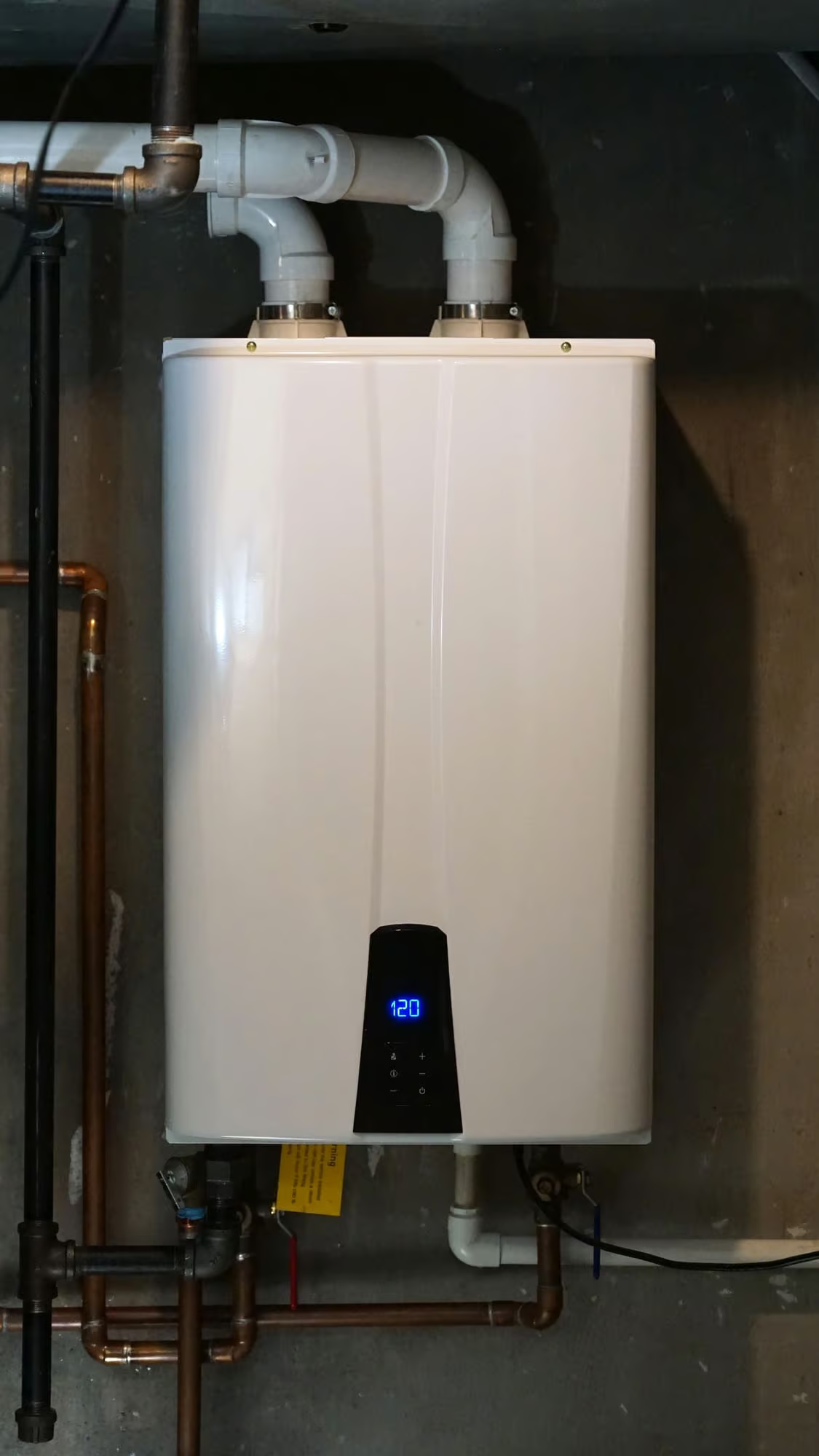
- Space savings: Wall-mounted units free up floor space in utility rooms and crawlspaces
- Endless hot water: No recovery period — especially valuable for multi-bathroom homes
- Resale value: An increasingly expected upgrade in the Virginia real estate market
Where a Tank Replacement Still Makes Sense
Not every Halifax homeowner should go tankless right now, and saying otherwise wouldn't be straight with you.
If the upfront cost isn't something your budget can absorb, a quality tank replacement — which typically runs less than a tankless install — is a responsible short-term solution.
Homes with very low hot water demand — a single occupant with minimal use — may see limited ROI from the upgrade.
If your gas line or electrical panel also needs work and you're already stretched across multiple replacements, timing the tankless install separately may make more financial sense.
The right answer depends on your home, your budget, and your timeline. An honest assessment is the fastest way to figure out which path makes sense.
What the Installation Process Looks Like
Gas vs. Electric Tankless Units
Gas tankless units require proper venting and adequate gas line capacity — older Halifax homes frequently need gas line upgrades. Electric whole-house tankless units require significant amperage, and most pre-2000 homes with 100-amp panels will need an electrical panel upgrade to support them.
One option worth knowing: point-of-use electric tankless units for a single sink or bathroom draw far less power and may not require a panel upgrade at all.
Solutions Heating & Cooling handles both gas and electrical work in-house — no coordinating separate contractors.
What to Expect on Installation Day
A straightforward tankless swap typically takes 3–5 hours. When gas line, electrical, or filtration work is needed, same-day completion is often still possible when one contractor handles all the trades.
Solutions Heating & Cooling has been serving Southside Virginia since 2015 — and with HVAC, plumbing, and electrical all handled in-house, a tankless installation that touches all three trades isn't a coordination problem. It's a Tuesday.
Your Water Heater Isn't Going to Fix Itself — But the Decision Is Easier Than You Think
If your water heater is 10 or more years old, a conversation with Solutions Heating & Cooling costs nothing. Our team serves Halifax and Southside Virginia with honest assessments across HVAC, plumbing, and electrical — no pressure, no jargon, just straight answers about what makes sense for your home and budget. Call us at (434) 404-4461 to schedule your evaluation today.
Does switching to a tankless water heater boost your home's resale value?
Switching to a tankless water heater does boost your home's resale value — energy-efficient upgrades like tankless systems are increasingly attractive to homebuyers in Virginia markets. Buyers are paying attention to long-term operating costs, and a home that already has a tankless system in place is one less major upgrade they need to plan for.
How does standby heat loss drive up your water heating costs?
Standby heat loss is what happens when your tank water heater cycles on and off all day — including at 2 a.m. — just to maintain water temperature nobody's using. That constant energy draw adds up fast. Tankless units eliminate standby heat loss entirely by heating water only on demand, which is how they deliver 24–34% better energy efficiency for average households.
What does it cost to have a tankless water heater installed in Halifax, Virginia?
Tankless water heater installation in Halifax typically runs $1,800–$4,500, depending on fuel type, unit size, and your home's existing infrastructure. We provide written estimates that cover all associated work — no surprise charges after the fact. Call us at (434) 404-4461 to get an accurate picture for your specific home.
Tankless Water Heater Questions Halifax Homeowners Ask About
Resources
- https://www.angi.com/articles/how-much-does-water-heater-installation-cost.htm
- https://www.energy.gov/energysaver/tankless-or-demand-type-water-heaters
- https://www.lowes.com/n/how-to/when-to-replace-a-water-heater