

Is your AC running harder than it used to — but cooling your home less than it should?
Homes in Boonsboro, Peakland, and Forest tend to run larger, with more square footage and more demand on systems that are often 15, 20, even 25 years old. At some point, the math on continued repairs stops making sense.
This article breaks down how to recognize the signs that replacement makes more sense than another repair, what the process actually looks like for a home like yours, and how our Lynchburg air conditioning experts — serving Virginia homeowners since 2015 — can help you make that call with confidence.
Signs It’s Time to Replace the AC in Your Older Home
- Your system is 15 years old or older
- Repair costs are approaching 50% of the cost of a new system
- Energy bills have increased without a clear explanation
- The system runs constantly but can’t maintain a consistent temperature
- Some rooms are noticeably hotter than others
- Your AC uses R-22 refrigerant, which the EPA phased out of production in 2020
- You’ve had two or more repairs in the past 12 months
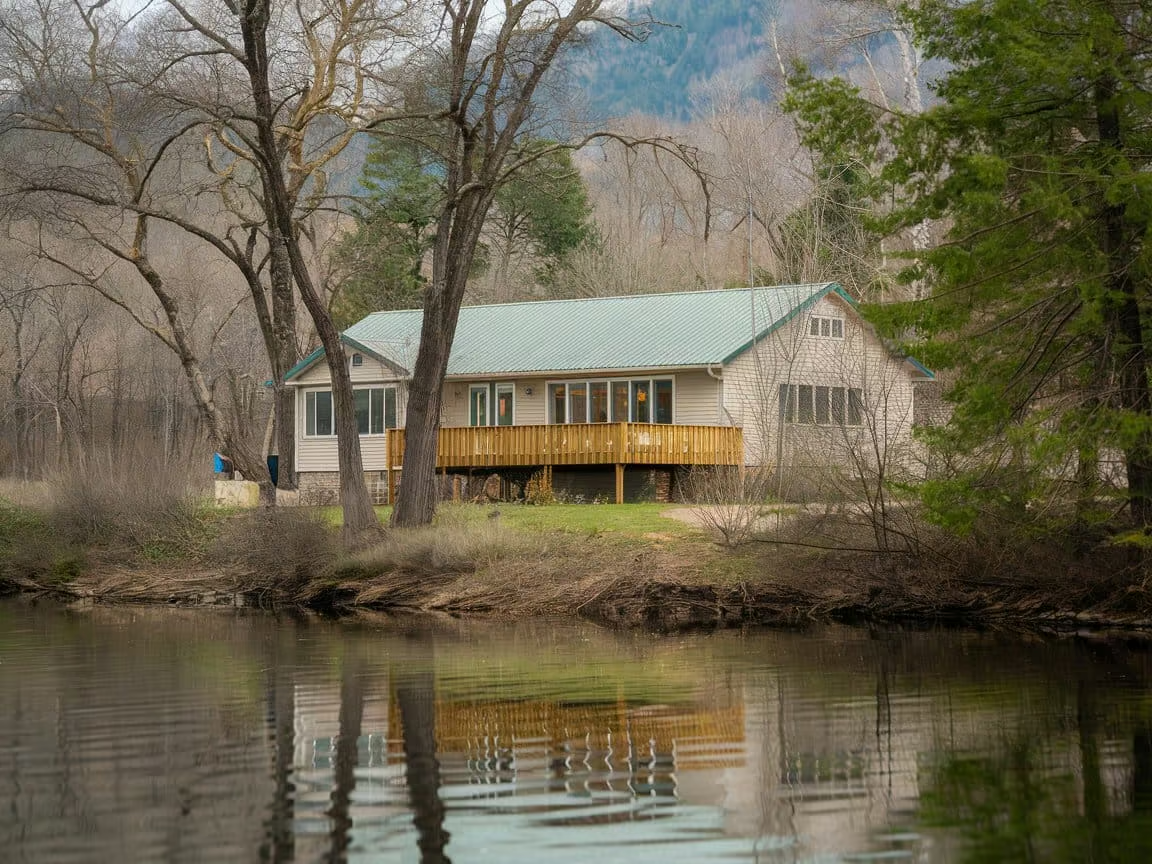
Why Older Homes in Boonsboro, Peakland, and Forest Present Unique AC Challenges
These are established neighborhoods with larger homes — and more square footage means more cooling load on systems that were installed when federal efficiency standards were significantly lower than what the U.S. Department of Energy requires today. [1] [2] That gap shows up on your energy bill every summer.
There’s another layer most homeowners don’t think about. The ductwork in these homes is often just as old as the system itself — and over time, ducts deteriorate, develop leaks, or become undersized for the space they’re serving. A brand new, high-efficiency AC unit paired with old, leaking ductwork will still underperform.
A proper replacement isn’t just swapping out equipment. It’s an opportunity to evaluate the full system and make sure everything is actually working together.
Repair vs. Replace — How to Make the Call
This is the part most homeowners get stuck on. Nobody wants to spend money on a full replacement if a repair will do the job — but nobody wants to throw good money after bad on a system that’s on its last legs either. Here’s a practical way to think through it.
The 50% Rule
If the cost of a repair is approaching 50% of what a new system would cost, replacement is almost always the better financial decision. Age matters here too. That same repair on a 10-year-old system might make sense. On an 18-year-old system that’s already had two service calls this season, it rarely does.
The Hidden Cost of Staying With an Aging System
The repair bill is only part of the picture. Staying with an aging system carries costs that compound quietly over time:
- Higher monthly bills — older systems run longer cycles to reach the same temperature, and that shows up every month
- Repair frequency — two or three service calls in a single summer can easily exceed a year of payments on a new system
- Comfort and air quality — uneven temperatures, lingering humidity, and reduced air quality affect daily life in ways that are real even when they’re hard to put a dollar amount on
When Repair Still Makes Sense
Replacement isn’t always the answer. If your system is under 10 years old, the repair is minor and isolated, and the system has been well-maintained without a history of recurring issues — repair is likely the right call. The goal here is an honest assessment, not a sale.
Not sure if repair or replacement is the right call? Solutions Heating and Cooling offers honest assessments for Lynchburg-area homeowners. Call (434) 771-0977.
What AC Replacement Looks Like for an Older Home
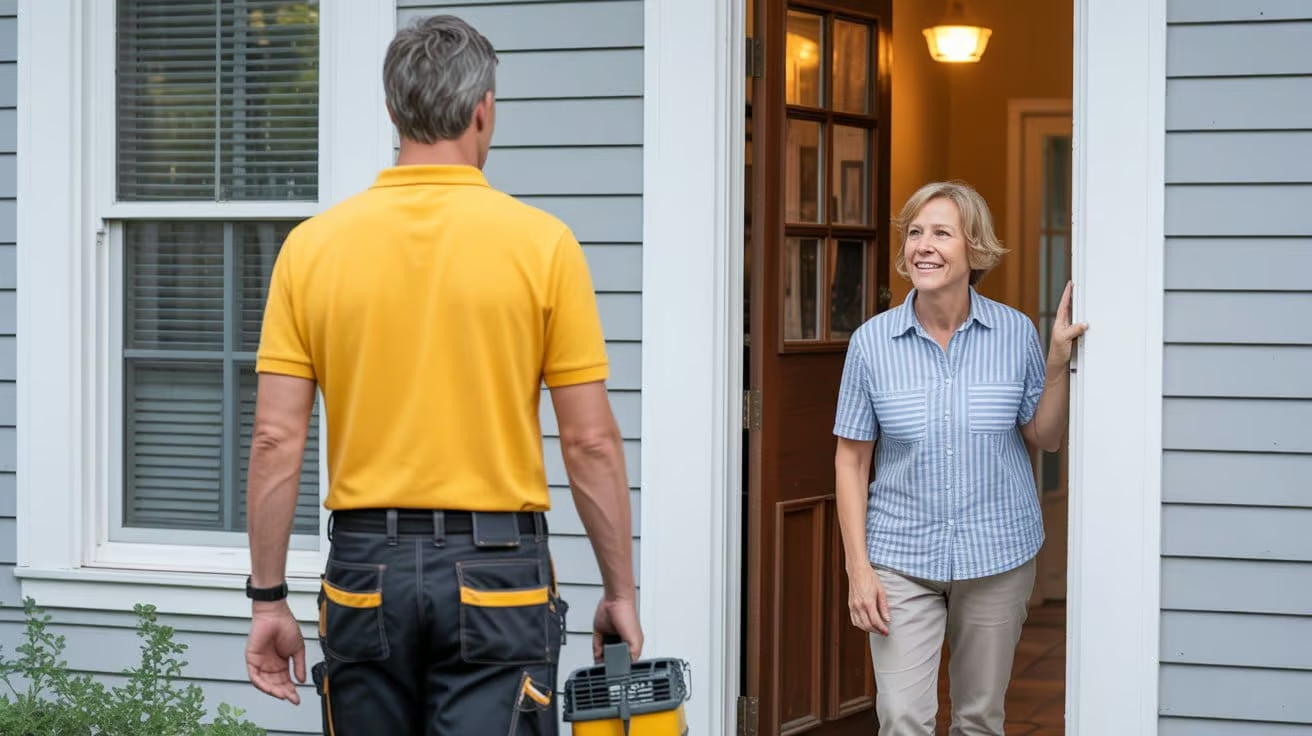
It starts with a load calculation — specifically, a Manual J calculation, the industry-standard method from ACCA (Air Conditioning Contractors of America) for right-sizing a system to a specific home. [3] One sentence on why it matters: a system that’s too big short-cycles, and one that’s too small runs constantly. Neither is efficient, and neither is comfortable.
From there, ductwork gets evaluated. In older homes like those in Boonsboro, Peakland, and Forest, leaks and deterioration in the duct system will undermine even the best new equipment if they’re not addressed.
Modern systems also bring smart thermostat compatibility — the ability to manage temperature from your phone, set schedules, and track energy use. For homeowners already interested in smart home integration, it’s a natural next step.
And if upfront cost is a concern, financing options are available. Reach out to Solutions directly for current details before you make a decision.
Why Lynchburg Homeowners Choose Solutions Heating and Cooling
There’s no shortage of HVAC companies out there. But for homeowners in Boonsboro, Peakland, and Forest, finding one with a real track record — not just a new face in the market — makes a difference.
Solutions Heating & Cooling has been serving Virginia homeowners since 2015. That’s over a decade of hands-on experience working through the kind of real-world HVAC challenges that don’t show up in a textbook.
If you want to know what working with Solutions is actually like before you pick up the phone, our Google reviews tell that story best.
Ready to Stop Guessing and Start Cooling?
Replacing an AC system is a significant decision, and if you’ve done your research before calling — that’s a smart approach. You’re in the right place.
For homeowners in Boonsboro, Peakland, and Forest, Solutions Heating & Cooling is the local team that knows these neighborhoods, knows these homes, and knows how to size and install a system that’ll actually perform the way you need it to.
When you’re ready to explore your options give us a call at (434) 771-0977. No pressure. Just honest answers from a team that’s been doing this for a long time.
Solutions Heating and Cooling
403 Fifth St, Unit 105, Lynchburg, VA 24504
(434) 771-0977

AC Replacement Questions Answered by Lynchburg’s Local HVAC Team
Is it worth replacing an HVAC system that’s 20 years old?
Replacing a 20-year-old HVAC system is almost always worth it when you run the full numbers. A system that age is running on efficiency standards far below what’s required today, which means higher bills every month. Add in repair frequency and the real comfort costs — uneven temperatures, lingering humidity — and a new system pays for itself faster than most homeowners expect.
Is it possible to install a modern AC system in an older home?
Installing a modern air conditioning system in an older home is absolutely possible — and often a significant upgrade. We evaluate not just the equipment but also your existing ductwork, which in older homes is frequently just as aged as the system itself. Pairing new, high-efficiency equipment with a properly assessed duct system gives you the performance your home was never getting before. Call us at (434) 771-0977.
How much money am I losing each month by keeping an old, inefficient AC system?
Keeping an old, inefficient AC system costs more than most homeowners realize month to month. Older systems run longer cycles to hit the same temperature a modern unit reaches efficiently, and that gap shows up on every utility bill. On top of that, repair costs accumulate — two or three service calls in one summer can easily exceed a full year of payments on a replacement system.
Resources
- https://www.eia.gov/todayinenergy/detail.php?id=40232
- https://www.ahrinet.org/2023-energy-efficiency-standards
- https://www.achrnews.com/articles/147490-is-a-manual-j-load-really-necessary-on-residential-retrofits