

You’ve experienced it before—a winter ice storm knocks out power for three days. No heat. No hot water. If you’re on well water, no water at all. Your frozen food spoils, and you’re left wondering if your pipes will freeze and burst before power returns. [1]
A whole-house generator solves this problem by automatically keeping your home running during outages. But here’s the catch: your electrical panel might not be ready to handle one.
Most homes built in the 1970s through 1990s have 100-amp or 150-amp electrical panels. Meanwhile, whole-house generators require proper panel capacity, an automatic transfer switch, and enough amperage to handle both your home’s normal load and the generator’s output. Install a generator on an undersized panel, and you’re looking at tripped breakers, potential fire hazards, or a generator that can’t power what you actually need.
This guide explains what your electrical panel needs to support a whole-house generator, typical upgrade costs for Halifax homeowners, and how a qualified electrician can determine if your current setup is ready—or what changes you’ll need to make.
What size electrical panel do I need for a whole house generator?
Most whole-house generators require a minimum 200-amp electrical panel to function safely and effectively. Here’s the breakdown:
- 100-amp panels: Cannot safely support whole-house generators; upgrade required
- 150-amp panels: May support smaller generators (12-16kW) but often need upgrades
- 200-amp panels: Standard requirement for most whole-house generators (16-24kW)
- 400-amp panels: Needed for larger homes or commercial applications
Your generator size depends on what you want to power during outages. A licensed electrician should perform a load calculation to determine your specific panel requirements and whether upgrades are necessary.
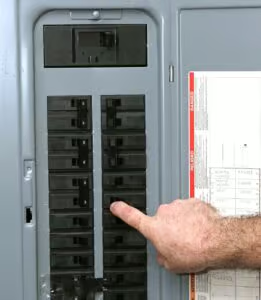
Understanding Your Current Electrical Panel Setup
How to Identify Your Panel’s Amperage Rating
Your electrical panel’s amperage rating is typically labeled on the main breaker or on a sticker inside the panel door. Look for numbers like “100A,” “150A,” or “200A.” If you can’t find this information, the panel was likely installed when your home was built—homes from the 1970s-1990s typically have 100-amp or 150-amp panels, while newer construction uses 200-amp panels as standard.
If the rating isn’t visible from outside, take a photo of your panel and text it to a qualified electrician who can identify it for you.
Why Older Panels Weren’t Built for Generators
Homes built before 2000 were designed for much lower electrical demands. Back then, typical loads included basic HVAC systems, a water heater, kitchen appliances, and lighting. Today’s homes add well pumps, multiple computers, home office equipment, security systems, and potentially EV chargers to that list.
A 100-amp panel was adequate for 1980s living, but adding a whole-house generator to that same panel creates a dangerous overload situation. The generator itself doesn’t increase your panel’s capacity—it’s simply an alternate power source. Your panel still needs enough amperage to handle everything you want running during an outage.
The Role of the Automatic Transfer Switch
An automatic transfer switch is the brain of your generator system. When utility power fails, the transfer switch detects the outage, signals your generator to start, and seamlessly switches your home from utility power to generator power. When utility power returns, it switches back and shuts down the generator.
The transfer switch must be sized appropriately for both your panel and your generator. A typical whole-house transfer switch requires a 200-amp panel minimum and connects directly to your main electrical panel. This is why panel capacity matters—the transfer switch needs adequate amperage to safely manage the power transition.
What Whole-House Generators Actually Require
Generator Sizing Basics for Halifax Homes
Whole-house generators are sized in kilowatts (kW), typically ranging from 12kW to 24kW for residential applications. The size you need depends on what you want to keep running during outages [2]:
12-16kW generators can power necessities: heating/cooling system, refrigerator, well pump, some lights, and a few outlets. This might work for smaller homes (1,200-1,800 sq ft) with moderate needs.
18-22kW generators handle most homes comfortably: full HVAC, all appliances, well pump, water heater, lighting, and multiple rooms. This is the sweet spot for typical Halifax homes (1,500-2,500 sq ft).
24kW and larger support larger homes or those with high electrical demands like workshops, multiple HVAC zones, or electric water heaters.
Load Calculation: What You Actually Need to Power
A professional load calculation determines which circuits you need during an outage and how much power they require. Here’s what most Halifax homeowners prioritize:
Non-negotiable circuits: HVAC system (heating especially during winter), well pump (no electricity means no water), refrigerator and freezer, sump pump if you have crawlspace moisture issues, and lighting in main living areas.
High-priority circuits: Water heater (especially if you have young children or elderly family), kitchen outlets for cooking, home office equipment for remote work, and security systems.
Nice-to-have circuits: Garage door openers, washing machines, additional outlets, and entertainment systems.
Your electrician will add up the amperage requirements for your priority circuits to determine minimum generator size and confirm your panel can handle the load.
Natural Gas vs. Propane: Installation Differences
Whole-house generators typically run on either natural gas or propane. In rural Halifax, most homes use propane since natural gas lines aren’t widely available. Both fuel types require the same electrical panel capacity and transfer switch installation. [3] The fuel choice doesn’t change your panel upgrade requirements.
Generator Comparison Table:
| Generator Size | What It Powers | Best For |
| 12-16kW | HVAC, refrigerator, well pump, basic lighting, few outlets | Smaller homes (1,200-1,800 sq ft), minimal needs |
| 18-22kW | Full HVAC, all appliances, well pump, water heater, lighting, multiple rooms | Most Halifax homes (1,500-2,500 sq ft) |
| 24kW+ | Everything above plus workshops, multiple HVAC zones, electric water heater | Larger homes, high electrical demand |
When Your Panel Needs an Upgrade
Signs Your 100-Amp Panel Can’t Handle a Generator
If you have a 100-amp panel, it cannot safely support a whole-house generator. Here’s why: your current home electrical load likely already uses 60-80 amps during normal operation (HVAC running, water heater on, well pump cycling, appliances in use). Adding a transfer switch and generator doesn’t increase panel capacity—it just provides backup power to that same limited capacity.
Additionally, 100-amp panels from the 1970s-1990s often show other warning signs:
- Frequent breaker trips when running multiple appliances
- Breakers that feel warm to the touch
- Visible corrosion or rust inside the panel
- Outdated breaker types that are hard to replace
- Lack of GFCI/AFCI protection required by modern code
A generator installation on a 100-amp panel is a fire hazard and won’t pass electrical inspection. Panel upgrade to 200-amps is mandatory.
The Gray Area: 150-Amp Panels
A 150-amp panel falls in the middle. Some can support smaller generators (12-14kW) if your home’s normal electrical load is relatively low. However, most electricians recommend upgrading to 200-amps for several reasons:
You’re already investing $8,000-$12,000 in generator installation—adding another $2,000-$3,000 for panel upgrade future-proofs your home. A 150-amp panel limits your generator size options, meaning you might not be able to power everything you want during outages. Modern code requirements often trigger full panel upgrades anyway when doing major electrical work.
If your 150-amp panel is over 25 years old, the upgrade makes sense regardless of the generator installation.
Why 200-Amp Panels Are the Standard
A 200-amp panel provides adequate capacity for modern home electrical demands plus a whole-house generator. This amperage supports typical home loads (60-100 amps during normal use) with substantial headroom for the generator system and future electrical additions.
Most 18-22kW whole-house generators require 200-amp minimum panel capacity for safe operation and proper load management through the automatic transfer switch. The 200-amp standard also accommodates other modern needs like EV charger installation, home office equipment, smart home systems, and upgraded HVAC equipment.
When you upgrade to 200-amps, you’re not just preparing for the generator—you’re bringing your home’s electrical infrastructure up to modern standards that support how people actually live today.
Concerned your aging electrical panel might need replacement even without a generator? Our electrical safety inspections identify potential hazards in panels over 25 years old—including outdated breakers, inadequate grounding, corrosion, and insufficient capacity for modern electrical demands.
Request an electrical panel safety inspection. Call (434) 404-4461

Cost Breakdown: Panel Upgrades and Generator Installation in Halifax
Electrical Panel Upgrade Costs
A 100-amp to 200-amp panel upgrade in Halifax typically costs $2,000-$3,500, depending on several factors:
Basic panel upgrade ($2,000-$2,500): Straightforward replacement with adequate existing service line and minimal complications.
Panel upgrade with service line replacement ($2,800-$3,500): Required when your existing wire from the meter can’t handle 200-amp service. Common in homes built before 1985.
Complex upgrades ($3,500+): Homes requiring extensive rewiring, grounding system updates, or structural modifications to accommodate the new panel location.
These costs include the new 200-amp panel and breakers, labor for removal and installation, permits and inspection fees, service disconnection/reconnection coordination with utility, and code compliance updates.
Whole-House Generator Installation Costs
Complete generator installation in Halifax ranges from $8,000-$15,000 depending on system size and complexity:
12-16kW systems ($8,000-$11,00): Adequate for smaller homes with basic power needs during outages.
18-22kW systems ($11,000-$14,000): Most popular for typical Halifax homes; powers most circuits comfortably.
24kW+ systems ($14,000-$18,000+): Larger homes or high electrical demand situations.
Installation costs include the generator unit, automatic transfer switch (typically $800-$1,200), concrete pad installation, electrical connection and startup, fuel line installation (propane), permits and inspections, and warranty registration.
Permits, Inspections, and Bundling Benefits
Both panel upgrades and generator installations require electrical permits in Halifax, VA. Your electrician pulls these permits, which trigger inspections at specific project stages—verifying proper wire sizing, grounding, breaker installation, transfer switch installation, and code compliance.
The bundling advantage: Many homeowners save $800-$1,500 on combined labor and permit costs by coordinating panel upgrade with generator installation rather than doing them separately months apart. This approach means fewer service disconnections and a single inspection process.
Never skip permits to save money. Unpermitted electrical work creates insurance problems if you have a claim, makes your home difficult to sell, and poses serious safety hazards.
Financing combined projects: Investing $12,000-$18,000 for panel upgrade plus generator installation is substantial, especially when you’re already managing other home maintenance costs. Solutions Heating and Cooling offers financing options for bundled electrical and generator projects, allowing you to spread costs over 12-60 months with approved credit.
Special Considerations for Rural Halifax Homes
Well Pump Requirements During Outages
If you’re on well water, your generator must power the well pump—or you’ll have no water at all during outages. Well pumps typically draw 10-15 amps running, with startup surge requirements of 30-40 amps.
Why sizing matters: A generator that’s too small might start your well pump but then trip when your HVAC system tries to start simultaneously. Proper load calculations make sure all priority circuits can run together without overloading the generator.
The reality: A three-day winter power outage without a generator means:
- No water for drinking, cooking, or bathing
- No flushing toilets
- Health and safety risks for families with young children or elderly members
Generator installation isn’t just convenience—it’s protecting your family’s basic needs during rural Virginia’s frequent weather-related outages.
Backup Power for HVAC and Water Heaters
Losing heat during winter ice storms poses serious risks: frozen pipes that burst and cause thousands in water damage, health dangers for elderly family members or young children, and potential home damage if temperatures drop too low for extended periods.
Your generator must be sized to handle your heating system’s startup and running requirements. Heat pumps and electric furnaces draw significant power—typically 15-25 amps running, with 40-60 amp startup surge. Gas furnaces use less electricity (just the blower motor and controls) but still need adequate power.
Water heaters are similar. Electric water heaters are power-hungry (20-30 amps), while tankless units vary based on size. Gas water heaters only need power for controls and ignition.
When discussing generator sizing with your electrician, specify that reliable heat and hot water during multi-day outages are non-negotiable priorities.
Crawlspace Sump Pumps and Moisture Control
Many Halifax homes have sump pumps managing crawlspace moisture. During power outages combined with heavy rain or snowmelt, your sump pump stops working—and water accumulates rapidly.
Battery backup limitations: Battery backup sump pumps provide 4-8 hours of protection, but multi-day outages exceed battery capacity.
Generator advantages: A whole-house generator keeps your sump pump running indefinitely, protecting your home’s structural integrity and preventing mold growth from moisture intrusion.
Protecting your investment: If you’ve invested in crawlspace encapsulation and dehumidification systems, generator power protects that investment by keeping moisture control equipment operational during storms that often bring both power outages and heavy precipitation.

Not Sure If Your Electrical Panel Is Generator-Ready?
Let Solutions Heating and Cooling assess your current electrical panel and provide a detailed evaluation for whole-house generator installation. Our licensed electricians will perform a complete load calculation, determine if panel upgrades are necessary, and provide transparent pricing for your specific situation.
We serve Halifax, South Boston, Clover, Scottsburg, Virgilina, and surrounding Southside Virginia communities with honest, professional electrical service.
Call (434) 404-4461 to schedule your generator consultation.
Common Generator Questions for Halifax Homeowners
Does generator installation require a specific type of electrical panel?
Yes, most whole-house generators require a minimum 200-amp electrical panel to function safely. Your current panel size determines whether you need an upgrade—100-amp panels cannot support generators and require upgrades, while 150-amp panels may work for smaller generators but often need upgrades anyway. We perform load calculations to determine your specific requirements based on what you want powered during outages.
How many kilowatts does a 2000 square foot home need from a backup generator?
A 2000 square foot home typically needs an 18-22kW generator to power most circuits comfortably during outages. This capacity handles your full HVAC system, all appliances, well pump, water heater, lighting, and multiple rooms simultaneously. Smaller 12-16kW generators can power necessities but limit what runs at once, while 24kW systems are better suited for homes with workshops or multiple HVAC zones requiring higher electrical demand.
Is a separate fuel line required for residential backup generators?
Yes, whole-house generators require dedicated fuel line installation, either for natural gas or propane. Fuel line installation is included in the $8,000-$15,000 total installation cost we provide. Most rural Halifax homes use propane since natural gas lines aren’t widely available in our area. Both fuel types require the same electrical panel capacity and transfer switch installation—the fuel choice doesn’t change your panel upgrade requirements.
Resources
- https://www.generac.com/resources/emergency-preparedness/cost-of-power-outages-vs-home-standby-generator-investment/
- https://www.ready.gov/power-outages#during
- https://www.iccsafe.org/building-safety-journal/bsj-dives/codenotes-underground-gas-piping-system-requirements-in-the-i-codes/