

It’s the middle of August. Your AC stops keeping up, and you call a technician out to take a look. After a few minutes with the outdoor unit, they come back with news you weren’t expecting: you’ve got a refrigerant leak, and your system runs on R-22 — commonly called Freon. What used to be a straightforward fix has gotten a lot more complicated.
The R-22 refrigerant phaseout is real, and if your system still runs on it, it affects you directly. The U.S. government banned domestic production and import of R-22 as of January 1, 2020, as part of the Clean Air Act’s requirements to reduce ozone-depleting substances. Your system isn’t illegal to run, but every repair that involves refrigerant is getting harder to pull off — and more expensive every year.
If you own a home in Lynchburg and haven’t thought much about what refrigerant your AC uses, this article will bring you up to speed. You’ll learn what the phaseout means for your system, what warning signs to watch for, and what your realistic options are — including air conditioning installation in Lynchburg if it turns out replacement is the right call.
How Do I Know If My AC Uses R-22 Refrigerant?
There’s a quick way to find out — and you may not even need to call anyone to do it.
- Check the label on your outdoor condenser unit — it will list the refrigerant type directly
- Look for the words “R-22” or “HCFC-22” on that equipment label
- Check your original system documentation or owner’s manual if the label isn’t accessible
- Look at your system’s age — units installed before 2010 almost certainly use R-22
- Call a licensed HVAC technician for confirmation if the label is missing or unreadable
If any of the above confirm R-22, everything in this article applies directly to your situation.
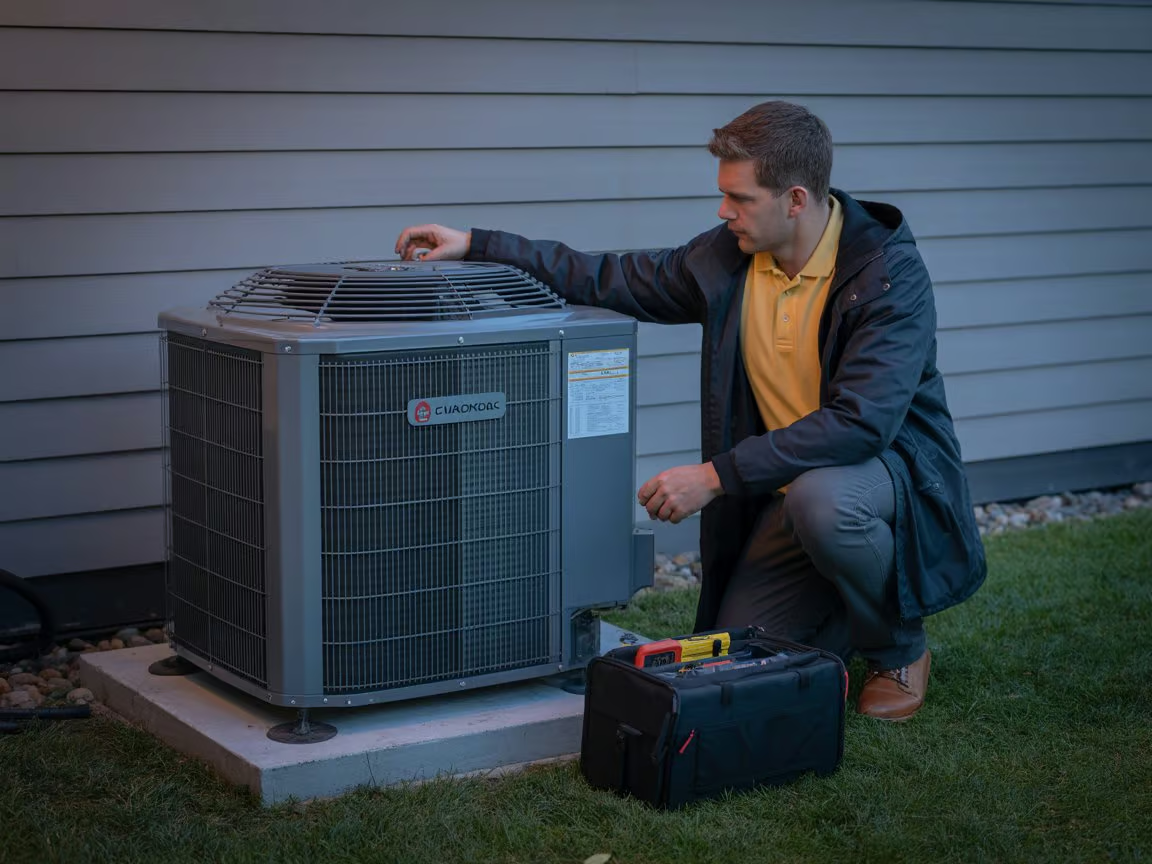
What the R-22 Phaseout Actually Means for Your System
The EPA made it official on January 1, 2020 — U.S. production and import of R-22 came to a full stop under the Clean Air Act’s requirements to phase out ozone-depleting substances. [1] Owning and operating an R-22 system isn’t illegal. The problem is supply. The only R-22 available today comes from reclaimed or recycled stockpiles, and that finite supply is getting smaller every year as more systems need repairs and recharges. Prices have gone up sharply as a result, repairs that were routine five years ago now carry a significantly higher price tag — and as stockpiles continue to deplete, sourcing R-22 at any price will only get harder.
The Real Cost of Repairing an R-22 System Today
Here’s what most homeowners don’t realize until they’re already in the situation: repairing a refrigerant leak on an R-22 system isn’t just one cost — it’s two.
First, there’s the labor and materials to fix the leak itself. Then there’s the refrigerant recharge to bring the system back up to operating levels. R-22 now runs significantly higher than the refrigerants used in newer systems — often several times the cost per pound of R-410A, the current standard replacement refrigerant. [2] Depending on how much refrigerant your system needs, that recharge alone can turn a manageable repair into a real budget conversation.
And even after a successful repair, your system still runs on a refrigerant with a shrinking supply and no future.
Not sure what refrigerant your system uses? Solutions Heating & Cooling can check your system and give you a straight answer — no obligation. Call our experts at (434) 771-0977.
Signs Your R-22 System May Be Reaching the End of Its Useful Life
Sometimes a system gives you plenty of warning before it gives out entirely. Here’s what to watch for:
- The system is 15 years old or older
- Refrigerant leaks have been repaired more than once
- Energy bills have increased without a clear explanation
- Rooms cool unevenly, or never quite reach the temperature you set
- The system struggles during Lynchburg’s peak summer heat
That last one is worth paying attention to specifically. July and August in Lynchburg regularly reach the upper 80s and into the 90s on the hottest stretches of summer, and a system that limps through a mild spring can fail entirely once that sustained heat sets in.
None of these signals mean your system is guaranteed to fail tomorrow. But if two or three of them apply, you’re looking at honest diagnostic indicators — not scare tactics. The question isn’t really if an aging R-22 system will need to be replaced. It’s whether you’d rather make that decision on your own timeline or be forced into it during a heat wave.
If several of these warning signs sound familiar, the next section covers exactly what your options look like.

Your Options When Your AC Runs on R-22
Once you know you’re running on R-22, you’ve got three paths forward.
Continue repairing. Viable only if the system is otherwise in good shape, leaks are minor, and you have a realistic replacement plan within the next year or two.
Retrofit with a compatible refrigerant. Some R-22 systems can be adapted to run on approved substitute refrigerants without a full replacement. Results vary depending on the age and condition of the equipment.
Replace the system entirely. New systems now use low-GWP refrigerants like R-454B and R-32 — the next generation of equipment following R-410A’s own phasedown under the EPA’s AIM Act. [3] Replacement also means improved efficiency and may qualify for available rebates or financing.
What a Replacement AC System Means for a Lynchburg Home
A new system does more than solve the R-22 problem — it changes the day-to-day experience of living in your home. Modern HVAC equipment carries significantly better SEER2 ratings than the systems most Lynchburg homeowners are still running, and that efficiency gap shows up on your monthly utility bill.
Lynchburg’s climate makes that efficiency a year-round consideration. Real cooling demand runs from June through September, and genuine heating demand carries through the winter — a system that performs well in both directions earns its cost back faster than most homeowners expect.
Is It Time to Replace Your R-22 System?
Replacing your AC isn’t a small decision, and the fact that you’ve taken the time to understand what you’re dealing with puts you in a much better position than most homeowners who wait until their system dies on the hottest day of the year.
Solutions Heating & Cooling has been serving Lynchburg-area homeowners since 2015. We understand what Virginia summers and winters actually demand from a home comfort system — and we can assess your current setup, walk you through your options, and get the right equipment installed without the runaround.
Ready to find out where you stand? Give us a call at (434) 771-0977.
One call is all it takes to get a straight answer.

R-22 Refrigerant FAQ: What You Need to Know Before Your Next Repair
Has R-22 refrigerant been discontinued by the government?
R-22 refrigerant has been officially discontinued — the U.S. banned domestic production and import as of January 1, 2020 under the Clean Air Act’s requirements to eliminate ozone-depleting substances. Your existing system isn’t illegal to run, but the refrigerant supply is shrinking fast. Have questions about how this affects your system? Call us at (434) 771-0977.
What’s the easiest way to find out if my air conditioner runs on R-22?
Finding out whether your AC uses R-22 starts with the label on your outdoor condenser unit — it lists the refrigerant type directly. Look for “R-22” or “HCFC-22” on that label, or check your owner’s manual. If your system was installed before 2010, it almost certainly uses R-22. A licensed technician can confirm it if the label is missing or unreadable.
How do I decide whether to fix my R-22 air conditioner or buy a new one?
We recommend weighing three factors: the overall condition of the system, how many refrigerant leaks it’s already had, and whether you have a realistic replacement plan in the near term. Continuing repairs makes sense only if the system is otherwise solid and leaks are minor. If you’re seeing multiple warning signs — rising energy bills, uneven cooling, a system over 15 years old — replacement is usually the smarter call.
Resources
- https://www.epa.gov/ods-phaseout
- https://www.trane.com/residential/en/resources/blog/ac-refrigerant-recharge-pricing/
- https://www.iiar.org/IIAR/IIAR/Government_and_Code/What_is_the_AIM_Act.aspx