

It’s a Tuesday morning in Halifax County. The kids need to get ready for school, and you’ve got work in an hour. You turn on the shower and get nothing but cold water. You head to the basement and find the pilot light out — again.
A water heater pilot light won’t stay lit for a reason. It’s your unit telling you something’s worth paying attention to. Some of the causes are things you can deal with yourself before ever picking up the phone. Others point to a worn-out part or an aging unit that’s getting close to the end. This article from your local water heater experts covers the most common cause — thermocouple failure — how to safely relight the pilot, and how to know when the problem is bigger than a quick fix.
What to do when your water heater pilot light won’t stay lit?
When a water heater pilot light won’t stay lit, work through these steps before calling a plumber.
- Check the gas supply valve — confirm it’s fully open
- Relight the pilot following your unit’s manufacturer instructions
- Hold the reset button for a full 30–60 seconds before releasing
- If the pilot dies when you release the button, the thermocouple is likely the problem
- If relighting fails repeatedly or you smell gas, call a licensed plumber
Why a Thermocouple Failure Kills Your Pilot Light
What a Thermocouple Actually Does
Most pilot light problems come down to one small part — the thermocouple. It’s a thin metal rod that sits directly in the pilot flame. Its job is simple: detect heat from the flame and send a signal to the gas valve telling it to stay open. As long as the pilot is burning, the thermocouple keeps that valve open and gas flowing.
When the thermocouple stops working, the gas valve closes automatically. That’s why the pilot dies the moment you release the reset button — the valve isn’t getting the signal it needs to stay open. It’s actually a built-in safety feature. The system is doing exactly what it’s supposed to do. It’s just doing it because something’s wrong with the thermocouple, not because there’s a problem with the gas valve itself.
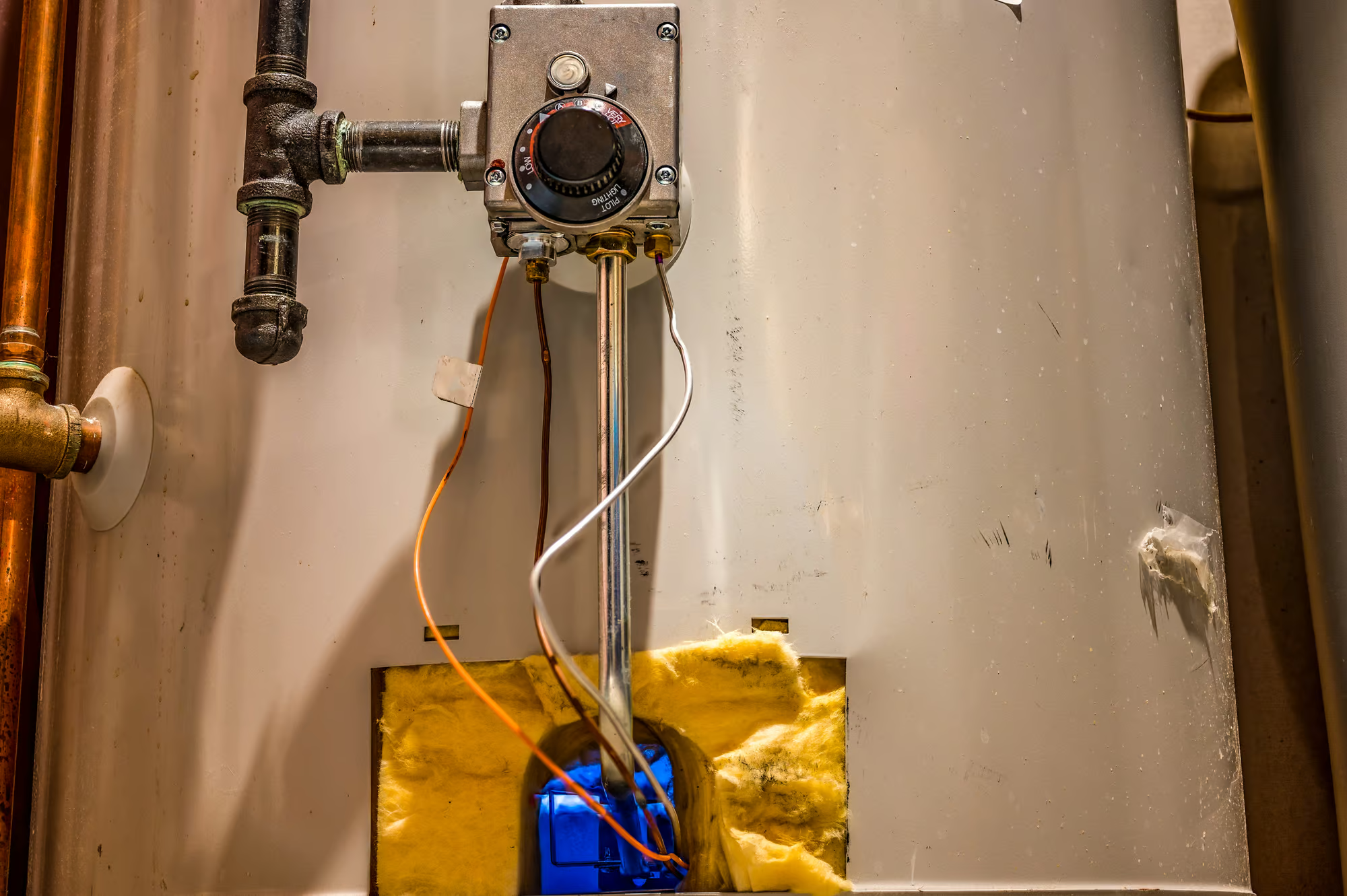
Signs Your Thermocouple Is Failing
Not every thermocouple failure is sudden. A lot of the time, you’ll notice the problem getting worse before it gets bad enough to leave you without hot water. Watch for these signs:
- The pilot lights right after you release the button, but won’t stay lit
- You’re having to hold the reset button longer and longer each time to keep the flame going
- The unit has been running for 8 years or more — thermocouples wear out over time
- There’s visible corrosion, carbon buildup, or damage on the tip of the thermocouple
The U.S. Department of Energy recommends regular water heater maintenance to catch small issues like this before they turn into bigger ones. [1]
If any of those signs sound familiar, the next step is trying to relight the pilot — and doing it the right way.
Step-by-Step Guide to Relighting a Water Heater Pilot
Relighting a pilot light is something most homeowners can handle on their own. [2] [3] Before you start, look for the manufacturer label on the side of your unit — a lot of water heaters print the relighting instructions right on the tank. If that label is missing or too faded to read, the steps below apply to most standard gas water heaters.
- Turn the gas control knob to the OFF position and wait at least 5 minutes to let any residual gas clear
- Set the knob to PILOT
- Press and hold the reset button while bringing a long lighter or igniter to the pilot opening
- Keep the reset button held down for 30–60 seconds after the flame catches
- Slowly release the button — if the flame holds, turn the knob to your desired temperature setting
- If the flame dies when you release, try once more — if it fails again, the thermocouple likely needs replacement
If you smell gas at any point during this process, stop immediately, leave the house, and call your gas provider.
Not comfortable relighting your pilot alone? Solutions Heating & Cooling is available for water heater service throughout Halifax County. Call (434) 404-4461.
When a Bad Pilot Light Points to a Bigger Water Heater Problem
A thermocouple replacement can fix a pilot light problem on an otherwise healthy unit. But on an older water heater, a pilot that won’t stay lit is sometimes the first visible sign that bigger issues are developing. Knowing the difference can save you an unnecessary repair bill — or help you avoid waking up to a flooded basement.
Signs the Water Heater Itself May Be Failing
Before putting money into a repair, take a look at the overall condition of the unit. These are signs the water heater itself may be on its way out:
- The unit is 10–15 years old or older
- Rust-colored water or sediment is coming from your hot water taps
- You’re hearing rumbling or popping sounds during heating cycles — that’s usually sediment buildup on the tank floor
- There’s visible corrosion or moisture around the base of the tank
- The cost of repairs is approaching 50% or more of what a replacement unit would run
Repair vs. Replace — A Simple Framework
If your water heater is under 8 years old and the thermocouple is the only issue, repair is almost always the right call. It’s a relatively inexpensive fix and the unit still has good years left in it.
If the unit is 10 years or older and showing more than one of the symptoms above, replacement is likely the smarter investment. Putting repair money into a unit that’s already declining usually just delays the inevitable.
Solutions Heating & Cooling has been serving Halifax County and Southside Virginia since 2015, and honest assessments are part of how they operate. If a repair makes sense, that’s what they’ll tell you. If it doesn’t, they’ll tell you that too — without pushing you toward anything you don’t need.

Don’t Wait for a Cold Morning to Find Out It’s More Than the Pilot Light
If the pilot light issue turns out to be a sign of a failing unit, catching it now beats dealing with a flooded basement or days without hot water. Solutions Heating & Cooling has been serving Halifax County and Southside Virginia since 2015 — honest assessments, no unnecessary upsells. Call (434) 404-4461 to schedule service.
Why Won’t My Water Heater Pilot Light Stay Lit? Your Questions Answered
What steps should I take when my water heater’s pilot light keeps going out?
When a water heater pilot light keeps going out, we recommend starting with a few basics before calling a plumber. Confirm the gas supply valve is fully open, then relight the pilot following your unit’s label instructions. Hold the reset button for a full 30–60 seconds. If the flame dies when you release it, the thermocouple is most likely the issue. Call us at (434) 404-4461 if you need help.
Why does the pilot flame die the moment I let go of the reset button?
When the pilot flame dies the moment you release the reset button, a failing thermocouple is almost always the reason. The thermocouple sits in the pilot flame and signals the gas valve to stay open. When it stops sending that signal, the valve closes automatically — cutting off the gas and killing the flame. It’s a built-in safety feature responding to a worn-out part.
What can I do to stop my water heater pilot light from going out repeatedly?
Stopping a water heater pilot light from going out repeatedly usually comes down to replacing the thermocouple. We recommend relighting the pilot first — holding the reset button for 30–60 seconds — to confirm that’s the issue. If the flame dies when you release the button more than once, the thermocouple needs to be replaced. On older units, repeated pilot failure can also signal broader water heater problems.
Resources
- https://www.energy.gov/energysaver/water-heating
- https://www.familyhandyman.com/project/how-to-fix-a-water-heater-pilot-light/
- https://www.hotwater.com/info-center/how-to-light-a-pilot-light.html