

Your AC is running constantly, but your Danville home still feels sticky and uncomfortable. You’ve noticed condensation on windows, that musty smell in certain rooms, and your energy bills keep climbing. When your air conditioner can’t control humidity properly, it’s not just about comfort—excess moisture damages your home, threatens your family’s health, and wastes money on cooling that doesn’t work.
This happens more often than you’d think in Southside Virginia’s humid climate. Several fixable issues prevent your AC from doing its job. Understanding what’s causing the problem helps you know whether you need a simple fix or professional help for your HVAC system.
Why is my house humid with AC on?
Your house stays humid with the AC on because:
- Oversized AC unit – Cycles off too quickly before removing moisture
- Dirty air filter – Blocks airflow over evaporator coils, preventing dehumidification
- Low refrigerant levels – Reduces cooling capacity and moisture removal
- Leaking ductwork – Pulls humid outdoor air into your system
- Faulty thermostat – Doesn’t run system long enough to dehumidify
Your air conditioner removes humidity by condensing moisture on cold evaporator coils. When any component prevents this process from working properly, humidity levels stay high despite constant cooling.
5 Common Reasons Your AC Isn’t Removing Humidity
Your AC Unit Is Too Large for Your Home
An oversized AC cools your home so fast it shuts off before pulling moisture from the air. This is called short-cycling, and it’s surprisingly common in older Danville homes where contractors didn’t calculate the proper system size. You end up with rooms that feel cold but clammy—the worst of both worlds. Fixing this requires a professional load calculation and potentially replacing your system with the right-sized unit. [1]
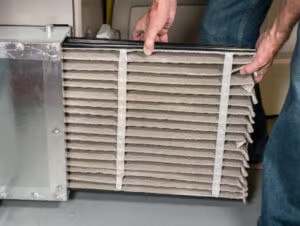
Clogged or Dirty Air Filters Restrict Airflow
When your filter gets packed with dust and debris, air can’t move freely over the evaporator coils where moisture removal happens. Less airflow means less dehumidification, plain and simple. Check your filter monthly—if it looks gray or clogged, swap it out. This is one of those quick DIY fixes that can restore your AC’s ability to pull humidity from your home almost immediately.
Low Refrigerant Levels Reduce Cooling Power
Low refrigerant means your evaporator coils don’t get cold enough to condense moisture out of the air. Watch for warning signs like ice forming on the refrigerant lines, hissing sounds near the outdoor unit, or rooms that just won’t cool down. Low refrigerant always indicates a leak somewhere in your system—refrigerant doesn’t just disappear on its own. You’ll need a professional to find the leak, fix it, and recharge your system to proper levels.
Leaking or Poorly Sealed Ductwork
Duct leaks are invisible troublemakers that pull humid outdoor air directly into your home, especially in crawlspaces and attics where temperatures can hit 130 degrees in summer. This is really common in older homes around Danville where duct systems weren’t sealed properly during installation. The result? Your AC works overtime trying to cool and dehumidify air that keeps getting contaminated with hot, humid outside air. This wastes energy, drives up utility costs, and makes proper dehumidification nearly impossible. [2]
Thermostat Settings or Location Create Problems
If your thermostat fan is set to “ON” instead of “AUTO,” it circulates air constantly without giving the evaporator coils time to drip condensed moisture into the drain pan. The moisture just evaporates right back into your home. Switch it to “AUTO” mode so the fan only runs during cooling cycles. Also check where your thermostat’s located—if it’s near a heat source like a lamp or sunny window, it gets false readings and shuts off your system before it properly dehumidifies your home. [3]

When to Call a Professional vs. DIY Fixes
What You Can Check Yourself
Air filter inspection and replacement: Pull out your filter and hold it up to a light. If you can’t see through it or it looks gray and clogged, replace it. Check this monthly during heavy use months, and swap filters every 1-3 months depending on how dirty they get.
Thermostat setting adjustments: Walk over to your thermostat right now and check if the fan is set to “ON.” Switch it to “AUTO” mode so it only runs during cooling cycles. This simple change stops moisture from evaporating back into your home.
Condensate drain line clearing: Look at your indoor unit’s drain pan. If you see standing water or visible clogs in the drain line, you can often clear these with a wet/dry vacuum or by flushing the line with a vinegar solution.
Supply and return vent obstructions: Walk through your home and make sure furniture, curtains, or storage boxes aren’t blocking vents. Blocked vents restrict airflow and prevent proper dehumidification.
These basic maintenance tasks take 15-30 minutes and might solve your humidity problems immediately without spending a dime.
Problems That Need Professional Help
Refrigerant leaks and recharging: Only EPA-certified technicians can legally handle refrigerant. They need specialized equipment to find leaks, repair them properly, and recharge your system to manufacturer specifications.
Duct sealing and repair: Professional duct sealing requires pressure testing to find all the leaks and technology like Aeroseal to seal them effectively. DIY tape and mastic only address visible problems—not the hidden leaks causing the biggest issues.
System sizing issues: Determining if your AC is oversized requires detailed load calculations that factor in your home’s square footage, insulation levels, window placement, and local climate. Getting this wrong means buying expensive equipment that still won’t solve your humidity problem.
Evaporator coil problems: Frozen or dirty coils need expert diagnosis to determine the root cause—low refrigerant, restricted airflow, or mechanical failure all look similar but require different fixes.
Complete system evaluation: A professional assessment identifies what’s actually causing your humidity problem instead of just treating symptoms. At Solutions Heating and Cooling, our technicians have served Danville homeowners since 2015 and know exactly what issues are common in Southside Virginia’s climate.
Attempting these repairs yourself risks damaging expensive equipment, voiding warranties, and creating safety hazards.

Don’t Let Humidity Problems Damage Your Home
Solutions Heating and Cooling takes a diagnostic approach to humidity problems. We don’t guess—we test your system, check refrigerant levels, inspect ductwork, and give you honest answers about what’s actually wrong. You’ll get upfront pricing with no surprise costs, and we’re available 24/7 when humidity problems turn into emergency situations during Danville’s hottest months.
Ready to solve your humidity problem? Call Solutions Heating and Cooling at (434) 425-8775 for a professional humidity assessment. We’ll identify the root cause, explain your options clearly, and give you honest recommendations that fit your budget. Serving Danville and Southside Virginia since 2015.
When Your AC Won’t Control Humidity: Common Questions Answered
What causes my air conditioner to keep running without lowering indoor moisture levels?
Your air conditioner runs but doesn’t remove humidity when something prevents moisture condensation on the evaporator coils. We find this happens most often with oversized units that short-cycle, clogged filters blocking airflow, low refrigerant reducing cooling power, leaking ductwork pulling in outdoor air, or thermostat settings that don’t allow proper dehumidification cycles.
What are the best ways to reduce indoor humidity using your air conditioning system?
We recommend starting with simple fixes: replace clogged air filters monthly, switch your thermostat fan from “ON” to “AUTO” mode, and clear any blocked vents. If humidity persists, you’ll need professional help to check refrigerant levels, seal duct leaks, or address system sizing issues that prevent proper moisture removal from your home.
How do humidity issues impact energy bills and home maintenance costs?
We see humidity problems waste money three ways: your AC works overtime trying to cool air contaminated with humid outdoor air, driving up utility costs; excess moisture damages your home over time; and inefficient cooling means you’re paying for comfort you’re not getting. Duct leaks especially make proper dehumidification nearly impossible while increasing energy consumption.
Resources
- https://www.nytimes.com/wirecutter/reviews/overpowered-air-conditioners/
- https://www.forbes.com/sites/brynncooksey/2026/01/26/did-you-do-your-homework-before-converting-to-a-heat-pump/?ctpv=searchpage
- https://www.carrier.com/residential/en/us/homeowner-resources/hvac-basics/what-temperature-should-i-set-my-thermostat.html