

You walk past your AC unit and notice a puddle forming on the floor. Is it a minor issue or a sign something is seriously wrong?
For most homeowners, an AC leaking water inside the house is an unsettling sight — and the uncertainty about what caused it makes it worse. The good news is that water leaks usually come down to a handful of well-understood causes, and knowing which one you’re dealing with makes all the difference.
In this article, we’ll cover why condensate drains clog, what frozen evaporator coils actually mean for your system, and how to recognize when a water leak is pointing to a bigger problem that needs professional attention.
Can I still run my AC if it’s leaking water?
Running your AC while it’s leaking water is not recommended. A water leak is usually a signal that something inside the system needs attention — and continuing to run it can make the underlying problem worse. Depending on the cause, you may be dealing with:
- A clogged condensate drain line
- Frozen evaporator coils that are thawing and dripping
- A refrigerant issue affecting how your system operates
Turning the system off and identifying the cause first is the safest approach before resuming normal operation.
Why Condensate Drains Clog and How It’s Fixed
What the Condensate Drain Actually Does
When your AC runs, it does two things at once — it cools the air and pulls moisture out of it. That moisture has to go somewhere. It collects on the evaporator coil, drips down into a drain pan, and exits the system through a condensate drain line that routes the water out of your home. Think of it like a slow, steady drip that runs quietly in the background every time your system is cooling. Most homeowners never think about it — until it stops working.
Why Clogs Happen
Over time, that drain line becomes a prime environment for algae, mold, dust, and debris to build up. The combination of moisture and warm air moving through a dark pipe is exactly the kind of condition where buildup happens fast. In Lynchburg, humid summers mean your system is pulling more moisture out of the air than systems in drier climates — which means there’s more water moving through that line, and more opportunity for buildup to take hold. Left long enough, that buildup restricts the flow of water until the drain pan overflows — and that’s when you find the puddle.
What a Technician Does to Fix It
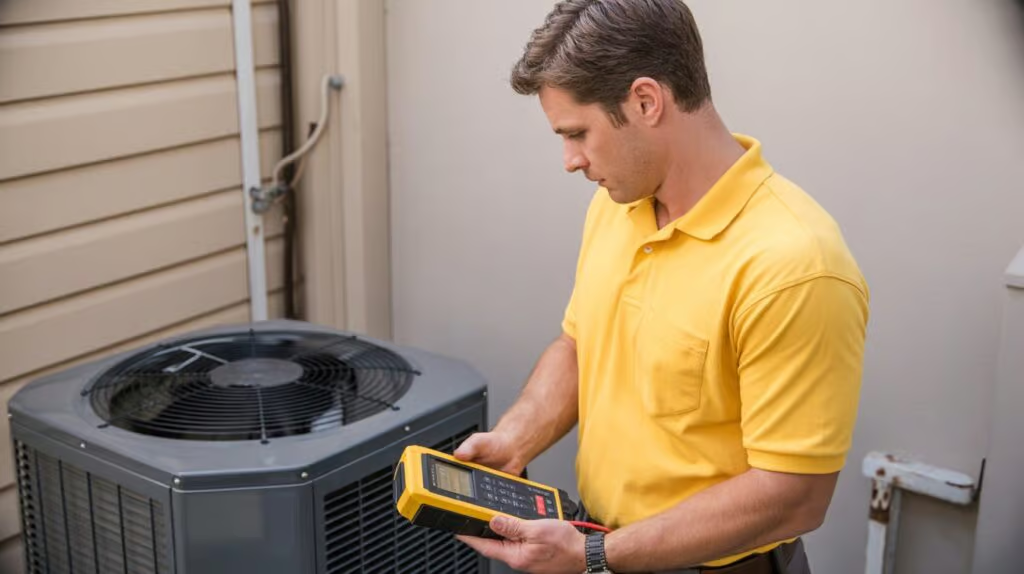
A clogged condensate drain is one of the more straightforward HVAC repairs when it’s caught early. A technician will clear the line, check the drain pan for standing water or damage, and make sure the system is draining properly before leaving.
It’s not a complicated fix — but it does need to be done right so the clog doesn’t come back a few weeks later. When you’re choosing who to call, look for technicians with NATE certification, the industry’s standard for proven real-world knowledge. [1]
Dealing with a clogged drain line in Lynchburg? Solutions Heating & Cooling can clear it and check the rest of your system while they’re there. Call (434) 771-0977.
Have a Question About Your Home?
Talk to a real person on our Lynchburg team. We'll give you a straight answer and an upfront price.
Frozen Evaporator Coils and What Causes Them
Why Evaporator Coils Freeze
Your evaporator coil needs two things to work properly — steady airflow and the right amount of refrigerant. When either one is off, the coil gets colder than it’s supposed to. At a certain point, the moisture in the air that normally drips off the coil as water starts freezing on contact instead. What you end up with is a block of ice forming on a component that’s supposed to be moving heat, not collecting it.
The two most common reasons this happens are a dirty air filter and low refrigerant. [2] A clogged filter chokes off the airflow the coil needs to stay at the right temperature. Low refrigerant throws off the pressure in the system, causing the coil to drop too cold even when airflow is fine. Both lead to the same outcome.
How a Frozen Coil Causes a Water Leak
Here’s where it connects back to that puddle on the floor. When the system shuts off — or when you shut it off after noticing something is wrong — the ice on the coil starts to thaw. And it doesn’t thaw slowly. You can end up with more water melting off that coil than the drain pan was ever designed to handle at once. It overflows, and the water ends up somewhere it shouldn’t be.
This is the part that surprises a lot of homeowners. They see water on the floor and assume it’s a plumbing issue or a drain problem. They don’t connect it to ice forming inside the air handler, because from the outside, there’s nothing to see. By the time the ice is gone, all the evidence has melted.

What to Do If You Suspect Frozen Coils
Turn the system off. Don’t switch it to fan-only mode and don’t try to run it through the problem — operating a system with frozen coils puts real stress on the compressor, and compressor damage is an expensive repair.
Let the system thaw completely before calling a technician. Once it has, check your air filter. If it’s visibly clogged, replace it. That may be all it takes if restricted airflow was the cause.
If the filter looks fine, or if the coils freeze again after you’ve replaced it, the issue is most likely refrigerant-related — and that’s not a homeowner repair under any circumstances. A technician needs to locate the leak, fix it, and recharge the system properly. [3]
When a Water Leak Points to a Bigger Problem
Signs the Leak Is More Than a Clogged Drain
A clogged drain line is usually a maintenance issue — inconvenient, but fixable. There are situations, though, where a water leak is telling you something more significant is going on. Here are a few signs worth paying attention to:
- Water staining on walls or ceilings near the air handler
- Visible mold growth around the unit or in the drain pan area
- Persistent leaking after the drain line has already been cleared
- Coils that keep freezing despite a clean filter
None of these are reasons to panic, but they are reasons to stop guessing and get a technician in to take a look. The sooner you know what you’re dealing with, the more options you have.
Refrigerant Leaks and What They Mean
If your system keeps freezing up and the filter isn’t the problem, there’s a good chance refrigerant is leaking somewhere in the system. Low refrigerant isn’t a maintenance issue you top off and move on from — it means there’s an actual leak that needs to be found and repaired before the system is recharged.
Refrigerant handling requires EPA certification. This isn’t a gray area or a job for a handy neighbor — it’s a federally regulated repair that has to be performed by a certified technician.
When Repair Gives Way to Replacement
This is the question a lot of homeowners are really asking when they find water on the floor — is this a temporary fix, or am I looking at something bigger?
If you’ve got an older system that’s losing refrigerant, showing compressor stress, or dealing with recurring drain issues, the honest answer is that repairs start adding up fast. At some point, putting more money into a system that keeps finding new ways to fail doesn’t make financial sense — and a good technician will tell you that straight, not talk you into another repair just to get you through the season.

Schedule AC Water Leak Repair in Lynchburg, VA
If your AC is leaking water and you’re not sure what you’re dealing with, the team at Solutions Heating & Cooling in Lynchburg is ready to help. A diagnostic visit can tell you exactly what’s going on — and what it will take to fix it. Call (434) 771-0977 to schedule your appointment.
AC Leaking Water Inside: Your Questions Answered
Is it safe to keep using my AC when it’s dripping water inside?
Running your AC while it’s leaking water is not recommended. A water leak signals that something inside the system needs attention, and continuing to run it can make the underlying problem worse. You may be dealing with a clogged condensate drain, frozen coils that are thawing, or a refrigerant issue. Turning the system off and identifying the cause first is the safest move.
How does a condensate drain work, and what makes it back up?
The condensate drain removes moisture your AC pulls from the air during cooling. That moisture collects on the evaporator coil, drips into a drain pan, and exits through a drain line routed out of your home. Over time, algae, mold, dust, and debris build up inside that line. When buildup restricts water flow enough, the drain pan overflows — and that’s when you find the puddle.
What causes evaporator coils to ice up?
Evaporator coils freeze when they don’t get steady airflow or the right amount of refrigerant. A clogged air filter chokes off the airflow the coil needs, while low refrigerant throws off system pressure and causes the coil to run too cold. Both lead to the same result — moisture freezes on the coil instead of dripping off as it should.
Resources
- https://www.energy.gov/cmei/buildings/north-american-technician-excellence
- https://www.consumerreports.org/appliances/air-filters/buying-guide/
- https://www.bobvila.com/articles/evaporator-coil-replacement-cost/