

Your AC is running — you can hear it — but your Lynchburg home feels like a sauna. Maybe you've checked the thermostat twice. Maybe you've stood in front of a vent waiting for cold air that never comes. By the time you finish reading this, you'll know exactly what's causing your AC to blow warm air — and what it takes to get your home comfortable again today.
Getting to the bottom of it starts with knowing what to look for. Solutions Heating & Cooling's technicians have diagnosed air conditioning repair issues across Southside Virginia long enough to know that most non-cooling calls trace back to the same handful of problems — and that once you know what they are, you're already ahead of most homeowners dealing with the same thing.
Why Is My AC Running But Not Cooling My House?
If your AC is running but not cooling, the most common causes are:
- Low or leaking refrigerant — the system can't transfer heat without the right charge
- A dirty evaporator or condenser coil — restricts airflow and heat exchange
- A clogged air filter — blocks airflow before it ever reaches the coil
- A failing capacitor or compressor — the system runs but can't actually cool
- Thermostat or electrical issues — incorrect settings or faulty wiring sending mixed signals
Most of these problems can be diagnosed and repaired the same day by a licensed HVAC technician.
📞 Not sure what's wrong? Solutions Heating & Cooling offers same-day diagnostics in Lynchburg. Call (434) 771-0977.
Top Reasons Your AC Blows Warm Air
Running and cooling are two completely different functions. A system can operate mechanically while failing to condition the air — and that's exactly what's happening when your vents are blowing warm. The most common culprits are:
- A clogged air filter restricting airflow to the system
- A thermostat set incorrectly — or malfunctioning and sending the wrong signals
- A tripped breaker on the outdoor unit — the air handler inside keeps running, but the condenser outside has shut down and no heat is being removed from your home
- A frozen evaporator coil — ice buildup blocks airflow and shuts down the cooling cycle
- A failing compressor or capacitor — the mechanical heart of your system is struggling
Homes in Boonsboro, Forest, and Peakland tend to run larger square footage, and that puts real demand on equipment — especially when Lynchburg's summer heat indexes climb into the upper 90s and beyond.
When to Call vs. When to DIY
There are a couple of basic checks most homeowners can do before picking up the phone. Replacing a dirty air filter is the most common one — if you can't see light through it, swap it out. Checking that your thermostat is set to "cool" and not "fan only" is another quick win. Beyond that, a technician may walk you through a few additional checks depending on your specific setup.
Everything else on this list needs a licensed, NATE-certified technician. Frozen coils, electrical issues, compressor or capacitor problems — these aren't areas where a DIY attempt saves money. Two of those causes — refrigerant loss and coil buildup — are worth a closer look because they're the ones most likely to be misdiagnosed.

Have a Question About Your Home?
Talk to a real person on our Lynchburg team. We'll give you a straight answer and an upfront price.
How Refrigerant Leaks Kill Cooling Performance
Refrigerant absorbs heat from the air inside your home and carries it to the outdoor unit, where the condenser releases it outside. Here's the misconception that trips most homeowners up: refrigerant doesn't get used up like gasoline. It circulates in a closed loop. If levels are low, there's a leak somewhere in the system. Adding more refrigerant without finding and fixing that leak is a temporary patch — the problem will be back before the end of the season.
Some signs you might notice before a technician confirms it:
- AC runs constantly but never reaches the temperature you've set
- Ice forming on the refrigerant line or the indoor coil
- A hissing or bubbling sound near the unit
- Electric bills that are higher than normal without a clear reason
Solutions Heating & Cooling technicians hold all legally required licenses and certifications to handle refrigerants in Virginia — so you're getting a qualified diagnosis, not a guess.
What Refrigerant Repair Actually Involves
Refrigerant repair isn't just topping off the system. It involves leak detection — either with an electronic detector or UV dye — followed by the actual repair, then recharging to the manufacturer's specified level.
If you have an older home in Lynchburg and your system runs on R-22, that's a conversation worth having sooner rather than later. The EPA banned R-22 production and import in 2020, supplies are limited, and costs have climbed. [1] For systems that are 10–15 years old or older, industry guidance generally points toward replacement as the smarter long-term path when a refrigerant leak is involved. A technician can walk you through the numbers on your specific system.
Even if refrigerant isn't the issue, there's another common culprit that's been building up inside your system all season.
When a Dirty Coil Is the Real Problem
Your AC has two coils, and both can quietly kill cooling performance without triggering any obvious alarm. [2]
The evaporator coil sits inside your air handler and absorbs heat from the air passing over it. When it gets coated in dust and debris — especially when filters aren't changed regularly — it becomes insulated from the air it's supposed to condition. In some cases it freezes over entirely, blocking airflow and compounding the problem fast.
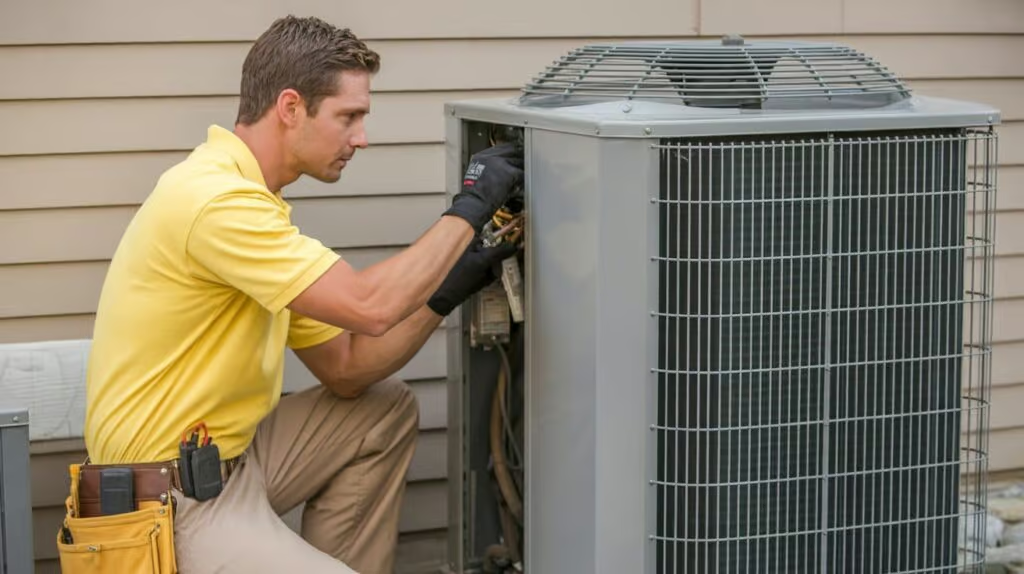
The condenser coil is outside, and it has a different set of enemies. Lynchburg's pollen seasons are no joke, and summer storms push grass clippings and debris straight into the fins of your outdoor unit. When those fins get clogged, heat can't escape, the unit overworks, and your home stops cooling the way it should.
A common instinct is to grab the garden hose and rinse the outdoor unit. That's actually one of the worst things you can do — it bends the delicate aluminum fins and permanently compromises airflow until a technician straightens them. Both coils need professional attention.
The good news is that dirty coils are almost always preventable. Professional coil cleaning as part of seasonal maintenance catches buildup before it becomes an emergency repair call in the middle of July. Solutions Heating & Cooling technicians inspect both coils on every diagnostic visit.
How Often Should Coils Be Cleaned?
The U.S. Department of Energy recommends cleaning AC coils at least once a year as part of routine maintenance. In practice:
- Evaporator coil: Annually for most homes — more frequently if you have pets, run the system heavily, or have had gaps in filter maintenance
- Condenser coil: At least annually in Central Virginia, where pollen counts and summer storms make that baseline a minimum, not a suggestion
🔧 Quick Maintenance Tip: The single best thing you can do between professional visits is stay on top of filter changes. A clean filter protects the evaporator coil, keeps airflow strong, and reduces how hard your system works all season.
Why Lynchburg Homeowners Call Solutions Heating & Cooling First
Solutions Heating & Cooling has served Southside Virginia since 2015 — and the 5-star rating over nearly 1000 Google reviews reflects what a decade of consistent, qualified work looks like. Every technician holds all legally required licenses and certifications for HVAC work in Virginia, including NATE certification — the industry's most recognized independent credential for heating and cooling professionals. [3]

Don't Wait Out the Heat — Call Solutions Heating & Cooling Today
If your Lynchburg AC is running but not cooling, it's not going to sort itself out — not in Central Virginia's summer heat. The right next step isn't a guess. It's a same-day diagnostic from a technician who can tell you exactly what's wrong and what it takes to fix it.
Call (434) 771-0977 to schedule your diagnostic today. If a repair or replacement turns out to be a larger investment than you want to handle in one visit, financing is available through Payzer and Spectrum to help you move forward without putting your family's comfort on hold.
Solutions Heating & Cooling — Lynchburg 403 Fifth St, Unit 105, Lynchburg, VA 24504 (434) 771-0977
Frequently Asked Questions About AC Not Cooling in Lynchburg
Why does my air conditioner keep running without actually cooling the house?
An air conditioner that runs without cooling usually points to one of a few common problems: low or leaking refrigerant, a dirty evaporator or condenser coil, a clogged air filter, a failing capacitor or compressor, or a thermostat or wiring issue. Most of these can be diagnosed and repaired the same day by a licensed HVAC technician.
Which AC problems can homeowners handle themselves and which ones need a professional?
Homeowners can check and replace a dirty air filter and confirm the thermostat is set to "cool" rather than "fan only." Everything beyond that — frozen coils, electrical problems, compressor or capacitor issues, and refrigerant loss — needs a licensed, NATE-certified technician. DIY attempts on those problems rarely save money and can make things worse.
What exactly is a refrigerant leak and what symptoms should I watch for?
A refrigerant leak means the closed loop your system uses to absorb and release heat has a breach somewhere. Watch for the AC running constantly without hitting your set temperature, ice buildup on the line or indoor coil, hissing or bubbling sounds near the equipment, and electric bills creeping up without explanation. A technician can confirm it with electronic detection or UV dye.
Resources
- https://www.familyhandyman.com/article/why-freon-is-being-phased-out/
- https://permatron.com/filter-screen/the-hidden-cost-of-a-dirty-condenser-coil
- https://natex.org/about-us/frequently-asked-questions