
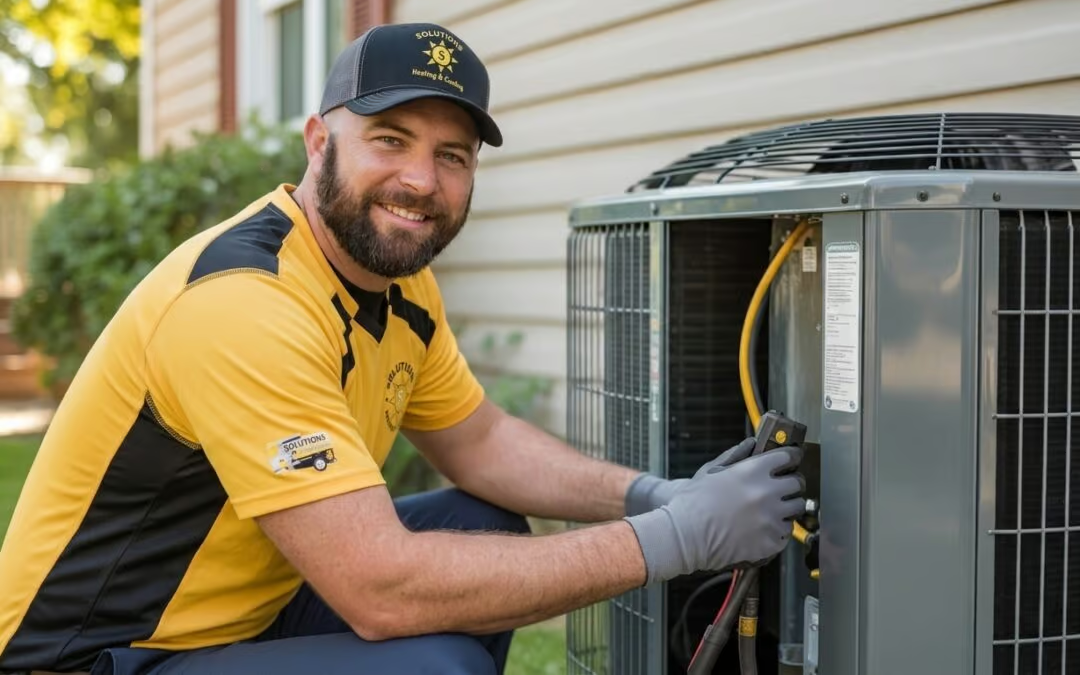
Southside Virginia summers don’t ease in slow. One week it’s mild, the next you’re running the AC nonstop just to keep the house bearable, and that’s exactly when an aging system decides to quit on you. If your unit’s already a decade or two old, that sudden jump in demand is usually when the breakdowns happen, and it’s never on the mild day. A few simple checks now can catch small problems before they turn into a no-cool emergency. Here’s what to look at before the next heat wave hits Halifax.
How do I prepare my AC for a heat wave?
To prepare your AC for a heat wave, homeowners should:
- Change or check the air filter for dirt buildup
- Clear leaves and debris from around the outdoor unit
- Test the system on a mild day, not the first hot one
- Listen for unusual noises or weak airflow
- Check that the thermostat responds correctly when you change the settings
- Schedule a professional tune-up if the system is 10 or more years old
These steps catch small issues before extreme heat forces the system to work harder, which is when older equipment is most likely to fail.
Signs Your AC Is Struggling Before the Heat Wave Hits
Weak Airflow or Uneven Cooling Room to Room
If one room in your house feels like a sauna while another stays comfortable, that’s not just bad luck. It usually means air isn’t moving the way it should, and by the time a real heat wave hits, that imbalance gets a lot worse. A system that’s already struggling to push air evenly on a mild day isn’t going to keep up when it’s working overtime.
Strange Noises, Short Cycling, or the System Running Constantly
Pay attention to what your AC sounds like. Banging, rattling, or a high-pitched squeal aren’t normal, and they don’t fix themselves. Same goes for short cycling, where the system turns on and off in quick bursts instead of running a full cooling cycle. And if your unit seems to run nonstop without ever catching up to the thermostat setting, that’s a sign it’s already working harder than it should have to. These are the kinds of problems that feel manageable in June and turn into a no-cool emergency in July.

Simple Prep Steps You Can Do This Week
Filter, Airflow, and Outdoor Unit Clearance
A dirty air filter is one of the simplest things to fix and one of the most common reasons a system struggles in extreme heat. Check yours, and if it’s covered in dust and buildup, swap it out. While you’re at it, walk outside and look at your unit. Leaves, grass clippings, and debris pile up around outdoor units more than people realize, and that buildup blocks the airflow the system needs to work properly. The EPA lists clearing debris and washing down cooling coils as part of a standard pre-season checkup, and FEMA recommends this kind of early prep as one of the simplest ways to avoid getting caught off guard once the heat sets in. [1] [2]
Testing the System Before You Need It
Don’t wait for the first 95 degree day to find out your AC has a problem. Turn it on now, on a normal mild day, and pay attention. Does cool air come out within a few minutes? Does it reach every room? Does the thermostat actually control what the system does? Testing now, when it’s not an emergency, gives you time to call for service before you’re stuck waiting in a heat wave with everyone else in Halifax who waited too.

When It’s Time to Call a Professional
Aging Systems (10+ Years) and Rising Energy Bills
If your AC is already ten years old or more, prep work alone won’t cut it. Older systems lose efficiency over time, and if you’ve noticed your energy bills creeping up even though you haven’t changed how you use the thing, that’s usually the system telling you it’s working harder to do the same job it used to do easily. Combine that with any of the warning signs already covered, weak airflow, strange noises, constant running, and it’s worth having a professional look before the heat wave forces the issue.
What a Pre-Heat-Wave Tune-Up Actually Checks
A tune-up isn’t just someone glancing at your unit and calling it good. Here’s what it typically covers:
- Refrigerant levels, to confirm the system isn’t low
- Electrical connections, checked for wear or corrosion
- Condenser coils, cleaned if they’re dirty or blocked
- Thermostat calibration, confirmed against actual room temperature
- Drain lines, checked for clogs that can cause water damage
- Overall system performance, compared against what’s normal for its age and size
Solutions Heating & Cooling has been serving Halifax homeowners for over a decade, and our technicians know what these older Southside Virginia systems tend to run into before a heat wave hits. If your AC needs a closer look, call us at (434) 404-4461 and we’ll get it checked before the temperature climbs any higher.
Why Rural Virginia Homes Face Extra Strain
Older Housing Stock and Undersized or Outdated Systems
Extreme heat causes more deaths each year than any other weather hazard in Virginia, which is exactly why a struggling AC isn’t just an inconvenience out here. [3] A lot of homes in and around Halifax were built before energy efficiency standards changed the way HVAC systems get sized and installed. That means plenty of houses out here are running equipment that was undersized to begin with, or that’s simply aged past the point of keeping up with a modern Virginia summer. Add in older insulation and duct work that hasn’t been updated in decades, and you’ve got a system fighting an uphill battle before the heat wave even starts.
One Coordinated Visit Instead of Guessing at the Problem
Rather than guessing whether the problem is the unit itself, the ductwork, or something else entirely, one visit from a technician who knows what to look for saves you the back and forth. With over a thousand positive Google reviews from homeowners across Southside Virginia, we’ve seen what these older systems need, and we’d rather catch it in one visit than have you calling around trying to piece it together yourself.
Southside Virginia summers don’t give you much warning before the heat sets in, and a few minutes spent checking your AC now beats finding out it’s failed on the hottest day of the year. If anything in your system gave you pause while reading this, whether it’s an odd noise, weak airflow, or a unit that’s simply gotten old, give Solutions Heating & Cooling a call at (434) 404-4461. We’ll get it looked at before the next heat wave puts it to the test.
Solutions Heating & Cooling 5037 Halifax Road Suite 14, Halifax, VA 24558
FAQ: Getting Your Halifax AC Ready Before the Next Heat Wave
How do I know if my AC is ready for a heat wave?
Knowing if your AC is ready for a heat wave comes down to a few checks: a clean filter, a clear outdoor unit, and a test run on a mild day. If it cools every room within minutes and responds correctly to the thermostat, it’s ready.
What are signs my AC might fail during extreme heat?
Signs your AC might fail during extreme heat include weak airflow, uneven cooling between rooms, banging or squealing noises, short cycling, or a system that runs constantly without ever catching up to the thermostat. Any of these on a mild day usually gets worse once real heat hits.
What does a pre-summer AC tune-up include?
A pre-summer AC tune-up includes checking refrigerant levels, inspecting electrical connections for wear, cleaning condenser coils, calibrating the thermostat against actual room temperature, clearing drain lines, and comparing overall performance to what’s normal for the system’s age and size. Call (434) 404-4461 to schedule one.
Resources
- https://www.epa.gov/natural-disasters/extreme-heat
- https://www.fema.gov/blog/be-summerready-your-guide-staying-safe-and-cool-during-extreme-heat
- http://vdem.virginia.gov/prepare/disaster-threats/extreme-heat/