
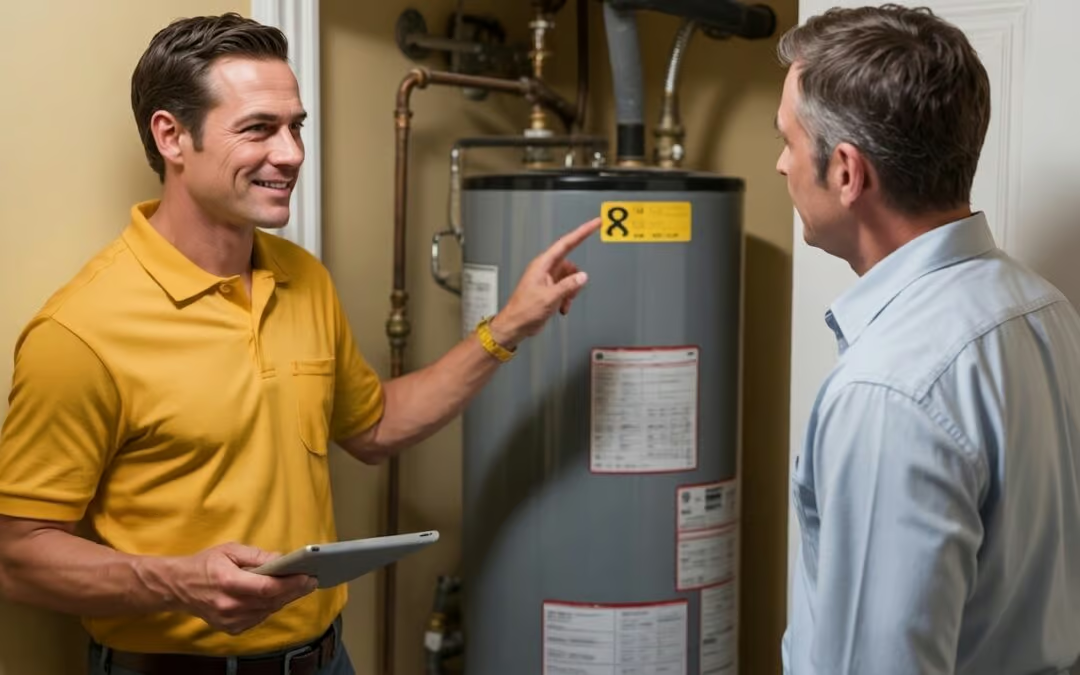
Your water heater has been quietly doing its job for years. Then one day you walk into the utility room and find a puddle forming at the base. Is it serious, or is it something you can put off until next week?
If your home runs on well water — which a lot of Halifax County households do — there’s no backup when something goes wrong with your plumbing. That raises the stakes. This article covers the three things you need to know: what causes a water heater leaking from the bottom, what happens if you ignore it, and what to do before a tech arrives at your door.
What to Do When You Notice a Leak at the Base
If your water heater is leaking from the bottom, don’t panic — but act quickly. Here’s what to do first:
- Turn off the power supply to the unit (electric: flip the breaker; gas: turn the dial to “pilot”)
- Shut off the cold water inlet valve above the unit
- Identify where the leak is coming from (drain valve, pressure relief valve, or tank base)
- Place towels or a bucket to contain standing water
- Do not attempt to repair a leaking tank yourself
- Call a licensed plumber to assess whether repair or replacement is needed
What Causes a Water Heater to Leak at the Base
Not all bottom leaks have the same cause. Where the water is actually coming from makes a big difference — it’s the first step in figuring out whether you’re looking at a simple repair or a full replacement.
The Drain Valve
The drain valve sits near the base of the tank. It’s the port used to flush out sediment buildup over the years. Over time, the valve can loosen on its own or develop a faulty seal, and even a small drip from that point can look like a bigger problem than it is.
The Pressure Relief Valve (T&P Valve)
Every water heater has a temperature and pressure relief valve — the T&P valve — designed to release pressure if the tank gets too hot or builds up too much pressure inside. If that valve is discharging water down through the drain line to the base of the unit, it may be signaling a more serious pressure problem inside the tank.
There’s an important distinction here: a T&P valve that’s dripping slightly is a different situation than one that’s actively discharging. [1] The first might indicate a worn valve. The second warrants a call today. The Department of Energy’s water heater safety guidance covers how these valves are supposed to function and why they matter. [2]
Internal Tank Corrosion
When the lining inside the tank fails, water breaches the outer shell and pools at the base. There’s no patch for that — it’s a replacement situation, not a repair. For homes with hard well water, this tends to happen faster. Sediment settles at the bottom of the tank over years of use, accelerates internal corrosion, and shortens the life of the unit. It’s one of the reasons annual flushing and water softener systems matter more out here than they do in areas served by treated municipal water.

Is a Leaking Water Heater Dangerous to Leave Alone?
This is the question most homeowners are actually asking when they find a puddle at the base. Is this a “watch it for a few days” situation, or a “call someone today” situation? Here’s a straight answer.
Property Damage Risk
A slow leak doesn’t stay slow. Water works its way into flooring, subflooring, and drywall over days — and by the time you notice the damage, it’s already spread further than what’s visible on the surface. For homes with a basement, which describes a good portion of Halifax County properties, standing water creates both structural risk and the conditions for mold growth. The EPA’s guide on mold and moisture makes clear that wet materials need to dry out within 24 to 48 hours to prevent mold from taking hold. [3] A leaking water heater in an enclosed utility space doesn’t give you that window.
Health and Safety Concerns
Standing water in an enclosed utility space creates air quality problems — mold spores don’t stay contained to one room. For gas water heaters, a unit with compromised components can carry additional risks — combustion issues and carbon monoxide exposure are concerns worth taking seriously.
The “It’s Just a Small Leak” Problem
Bottom leaks don’t self-resolve. Under normal operating pressure, a small leak at the base gets worse — not better. And a unit that’s already showing signs of a base leak is very likely in the final stretch of its service life.
When to call immediately: Active pooling water at the base, a unit 10 years old or older that is also showing symptoms, or any gas unit with visible rust or corrosion are all situations that shouldn’t wait.
If your water heater anxiety is well-founded — and after reading this section, it probably is — the good news is that knowing what you’re dealing with puts you ahead of most people who wait until it fails completely.
Not sure how serious your leak is? Solutions Heating & Cooling serves all of Southside Virginia — call (434) 404-4461 for a same-day assessment.

Steps to Take Before the Repair Tech Arrives
You’ve identified the leak. You understand the risk. Here’s what to do before our team arrives — and yes, we serve rural Southside Virginia addresses, including areas other companies won’t reach.
Shut Down the Unit Safely
Cut power to the unit first — flip the breaker for an electric water heater, or turn a gas unit down to “pilot.” Then shut off the cold water inlet valve above the tank. These two steps stop the heat source and prevent new water from feeding into a compromised unit. They take less than two minutes, and they make the job safer for everyone.
Document What You’re Seeing
Grab your phone and take a few photos before anything else — the area where water is pooling, any rust or discoloration on the tank, and the unit’s age label. That label is on the serial number sticker on the side of the tank and tells you the manufacture date. A unit that’s 10 to 15 years old showing a base leak is a strong signal that replacement is the conversation to have, and having that information ready before you call cuts down on diagnostic time.
Know What Information to Have Ready
When you call, it helps to have these on hand:
- Unit age (from the serial number sticker)
- Fuel type (electric or gas)
- Household size
- Whether your home is on well water
That last one matters more than most people realize. Well water in Halifax County tends to carry higher mineral content, and that affects both the diagnosis and the recommendation.

Ready to Stop the Leak? We Serve All of Southside Virginia.
A water heater leaking from the bottom isn’t a problem that gets better on its own. Our team has been serving Halifax County and all of Southside Virginia for over a decade — including rural addresses that other companies won’t reach. If your unit is showing signs of a base leak, give us a call today at (434) 404-4461 for an honest assessment of whether repair or replacement is the right move for your home.
Solutions Heating & Cooling 5037 Halifax Road Suite 14, Halifax, VA 24558
Water Heater Leaking From the Bottom: Your Questions Answered
Why is water pooling underneath my water heater?
Water pooling under a water heater typically comes from one of three sources: a loose or faulty drain valve near the base, a T&P (temperature and pressure relief) valve that’s discharging down the drain line, or internal tank corrosion that’s caused the lining to fail. Identifying which one is leaking is the first step in knowing whether you’re looking at a repair or a full replacement. Call us at (434) 404-4461.
Does well water accelerate water heater damage and leaks?
Yes — well water in areas like Halifax County tends to carry higher mineral content than treated municipal water, and that matters for water heater longevity. Minerals settle as sediment at the bottom of the tank, accelerate internal corrosion, and shorten the unit’s service life. It’s one of the reasons annual flushing and water softener systems are especially worth considering for homes on well water.
How do you handle a hot water heater that’s leaking from the bottom?
Handling a water heater leaking from the bottom starts with two safety steps: cut power to the unit and shut off the cold water inlet valve above the tank. Then document what you’re seeing — photos of the leak area, any rust or discoloration, and the unit’s age from the serial number sticker. Have that information ready when you call a licensed plumber so they can give you a faster, more accurate assessment.
Resources
- https://www.nachi.org/tpr-valves-discharge-piping.htm
- https://www.energy.gov/energysaver/storage-water-heaters
- https://www.epa.gov/mold/brief-guide-mold-moisture-and-your-home#tab-2