
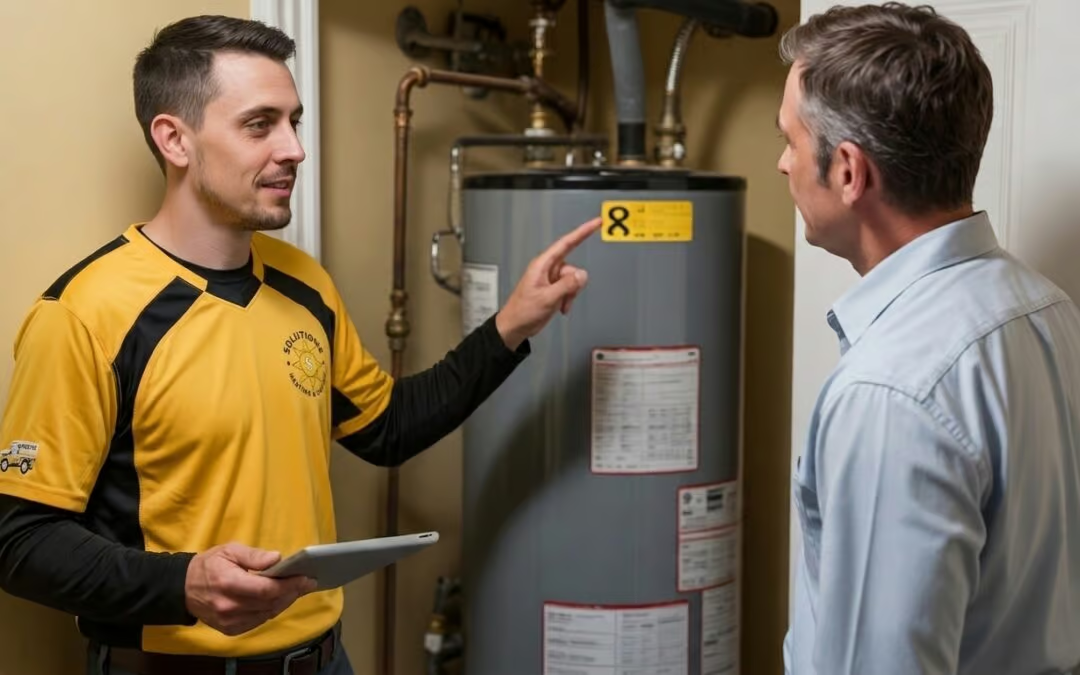
If your water heater is failing years before it should, well water is probably the reason, not bad luck. Sediment, minerals, and hardness that come standard with well water in Halifax County put a kind of strain on a tank that city water just doesn’t. Well water is the norm out here, not the exception, and it changes how these systems age.
This article looks at why that happens and what it means for your water heater’s lifespan. More importantly, it points at what you can actually do about it, because there’s a real fix here, not just something to worry about.
How long do hot water heaters last with well water?
A standard tank water heater lasts 8 to 12 years, and tankless units can reach 15 to 20 years with proper care. On well water, that range shrinks. Sediment and mineral buildup happen faster than with city water, pushing a well-water tank toward the shorter end, or below it.
Why Well Water Is Harder on Water Heaters Than City Water
Well water skips the treatment step city water gets, so it carries whatever minerals and sediment were already in the ground, calcium, magnesium, iron, sometimes fine sand, straight into the water heater tank. [1] And a water heater is a holding tank, not a pipe, so every heating cycle gives that sediment another chance to settle at the bottom.
Sediment and mineral buildup in the tank
That sediment layer sits between the burner and the water in a gas unit, or buries the lower heating element in an electric one. Either way, the unit works harder than it should, and that’s what shortens its life. This is usually the answer to “does well water ruin a water heater?” It’s not one dramatic event, it’s slow accumulation until the unit fails outright.
Hard water’s effect on the heating element
Hard well water carries a lot of dissolved calcium and magnesium, and heat pulls those minerals out of solution onto the heating element and tank walls. That’s scale, and it acts like insulation on the part that’s supposed to be transferring heat, forcing the unit to run longer and hotter for the same result. More wear, more energy use, shorter life.
What Shortens (or Extends) a Water Heater’s Lifespan on Well Water
Some well water homes get ten solid years out of a water heater, some are already on their second replacement. The difference comes down to a few factors.
Water hardness and mineral content
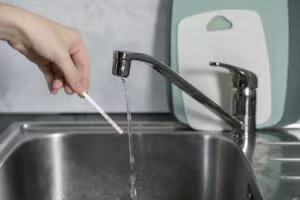
Hardness varies property to property, even within the same county. [2] Harder water means faster scale buildup, so a home with especially hard well water wears out a water heater faster than one with moderate hardness, same age and brand. A water test is the only real way to know where a property falls.
Tank maintenance and flushing frequency
This one’s in a homeowner’s control. Flushing clears sediment before it builds into a real problem. Skip it for years and the tank just keeps working harder to compensate. Well water homes need more frequent flushing than city water homes, since there’s more sediment coming in to begin with.
Water heater type: tank vs. tankless on well water
A standard tank lasts 8 to 12 years, a tankless unit 15 to 20, per A.O. Smith, since tankless units don’t store water and avoid the sediment buildup that shortens tank life. [3] That gap widens on well water. Tankless units aren’t immune, mineral scale can still build in the heat exchanger, but the failure mechanism is different, and the unit tends to hold up longer.
Warning Signs Your Water Heater Is Struggling With Well Water
A water heater on well water usually gives some warning before it fails outright. Here’s what to watch for:
- Rumbling, popping, or knocking sounds, especially when heating up, usually sediment shifting at the bottom
- Less hot water than before, or it runs out faster, sediment is taking up tank space
- Rusty or cloudy water from the hot tap, can mean corrosion inside the tank
- Water taking longer to heat, or needing a higher thermostat setting for the same result
- Rising energy bills with no change in usage, a struggling unit works harder
- Pooling or dampness at the base, can mean a corroded tank starting to leak
No single sign means the unit’s done for, but a couple together are worth a look before it becomes a flooded utility closet. If this sounds familiar, call Solutions Heating & Cooling at (434) 404-4461 before it becomes an emergency.
Protecting Your Water Heater: Softeners, Flushing, and Maintenance
None of this means a well water home is stuck watching its water heater wear out early. There’s real, practical stuff that makes a difference, and most of it isn’t complicated.
Water softener installation as a preventive fix
A water softener addresses the root of the problem instead of just the symptom. It pulls the calcium and magnesium out of the water before it ever reaches the water heater, which means there’s a lot less mineral content left to turn into scale in the first place. For a well water home, that’s often the single biggest thing that can be done to extend a water heater’s life, along with protecting every other appliance in the house that hot or hard water touches.
Recommended flushing schedule for well water homes
Even with a softener in place, flushing the tank once a year is still worth doing. For a well water home, that’s often the single biggest thing that can be done to extend a water heater’s life.
Solutions Heating & Cooling has been part of this community for over a decade. The plumbing side, including well water systems specifically, has grown alongside it, and it takes someone who’s actually worked on wells, not just city plumbing, to give an honest answer about whether a water heater needs a softener, a flush, or a full replacement.
If it’s been a while since yours was flushed, or you’re not sure how your well water is treating it, call Solutions Heating & Cooling at (434) 404-4461. We’ll take a look at your water heater and your well water system together, so you get a straight answer on what it actually needs.
Solutions Heating & Cooling 5037 Halifax Road Suite 14, Halifax, VA 24558

Well Water & Water Heaters: Your Questions Answered
How can you tell your water heater is being affected by well water?
A water heater struggling with well water usually gives some warning signs first. Watch for rumbling or popping sounds, less hot water than usual, rusty or cloudy water, longer heating times, rising energy bills, or dampness at the tank’s base.
What’s the right flushing schedule for a water heater on a well system?
A water heater on well water should be flushed once a year, even with a softener installed. Well water homes need more frequent flushing than city water homes since there’s more sediment coming in to begin with.
Can installing a water softener extend a water heater’s lifespan?
A water softener can extend a water heater’s lifespan by pulling calcium and magnesium out of the water before it reaches the tank. For a well water home, that’s often the single biggest thing you can do to protect it.
Resources
- https://www.epa.gov/sdwa/secondary-drinking-water-standards-guidance-nuisance-chemicals
- https://www.vdh.virginia.gov/environmental-health/onsite-sewage-water-services-updated/organizations/private-well-water-information/
- https://www.hotwater.com/info-center/how-long-do-water-heaters-last.html