

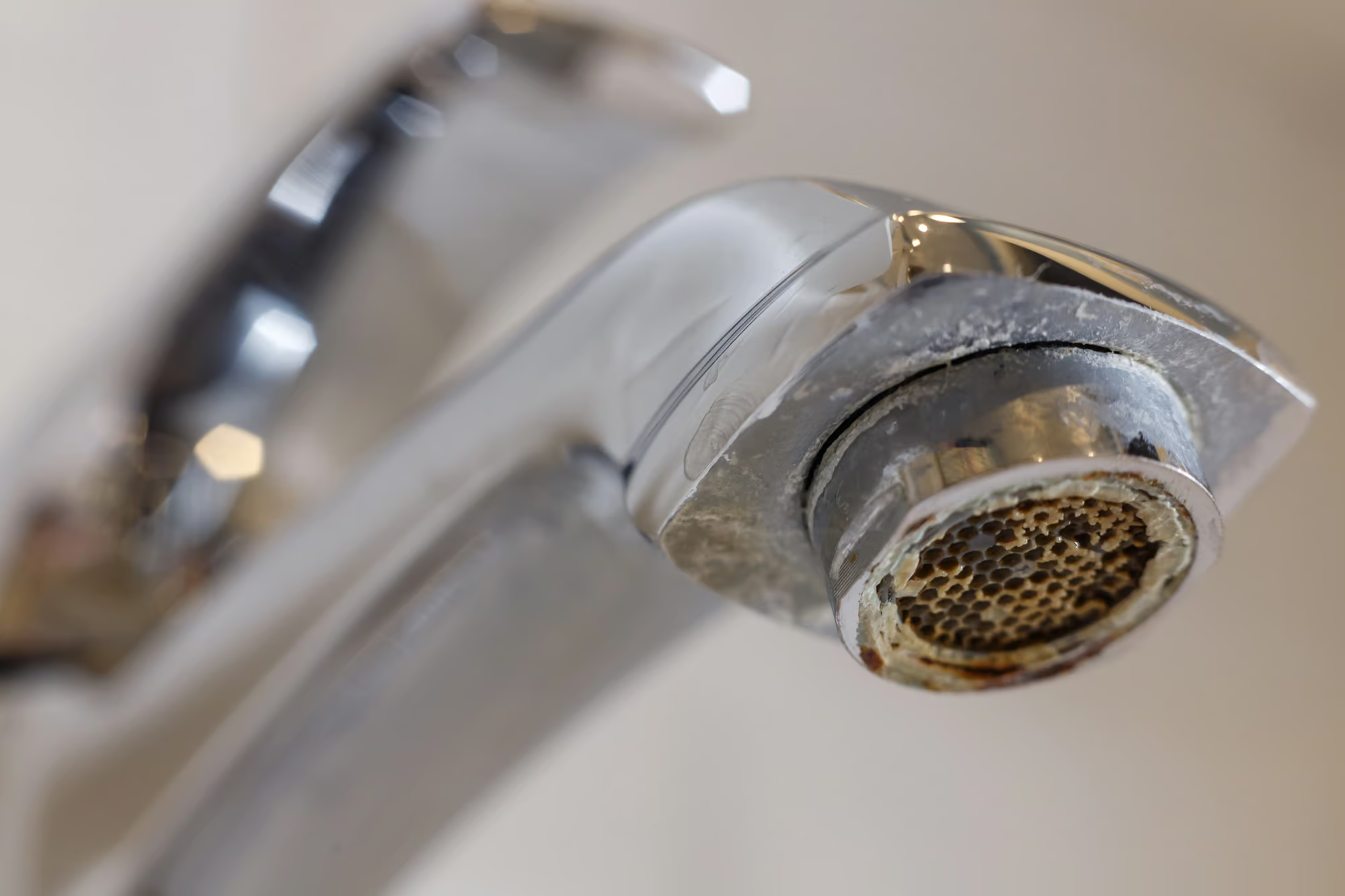
If you’re on a private well in Halifax or anywhere across Southside Virginia, you’ve probably seen the signs. White crusty buildup caked around your faucets. Rust-colored stains in the toilet bowl that won’t scrub off. Soap that barely lathers no matter how much you use. A water heater that seems to be running harder than it used to.
None of that is just cosmetic. Hard well water is actively shortening the life of your plumbing, your appliances, and your water heater — quietly costing you money every single day. This guide will walk you through what’s actually in your water, how to test it properly, and what water softener installation looks like from start to finish. No pressure, no jargon — just plain answers.
Do You Need a Water Softener?
You likely need hard water solutions if you’re dealing with several of these signs:
- White or yellowish scale buildup on faucets, showerheads, and fixtures
- Soap and shampoo that won’t lather properly
- Stiff, scratchy laundry even after washing
- Spots and film on dishes and glassware after running the dishwasher
- A water heater that runs longer or seems to be losing efficiency
- Shortened lifespan on appliances like washing machines and dishwashers
- Dry, itchy skin or hair after showering
If two or more of those sound familiar, well water testing will confirm your hardness levels and tell you exactly what to do next.
What Makes Well Water “Hard” — and Why Halifax Homeowners See It More
Hard water contains elevated levels of dissolved minerals — mainly calcium and magnesium — that get picked up as groundwater moves through rock and soil on its way to your well. [1] There’s no municipal treatment plant filtering any of that out. What’s in the ground goes straight into your pipes.
That’s especially relevant here in Halifax and across Southside Virginia. The region’s geology makes hard well water the norm, not the exception. If you’re on a private well, there’s a good chance you’re dealing with it whether you’ve identified it yet or not.
Hardness is measured in grains per gallon, or GPG. Mild hardness is manageable. Once you get into moderate or high hardness territory — which is common for rural well water in this area — that’s when you start seeing the damage most Halifax homeowners are already living with.
The Real Cost of Ignoring Hard Water in Your Home
Hard water isn’t a cosmetic problem. It’s a slow drain on your wallet, and most homeowners don’t connect the dots until something breaks.
Here’s where the damage actually shows up:
- Scale builds up inside your water heater, washing machine, dishwasher, and ice maker
- Pipes and fixtures develop buildup that restricts water flow over time
- Soap and cleaning products work less effectively — so you use more and spend more
- Skin and hair lose natural moisture, leaving you dry and irritated after every shower
The appliances you already own are wearing out faster than they should. That’s real money leaving your home quietly, every day. [2]
Hard Water and Your Water Heater — A Costly Combination
If your water heater is already 15 or 20 years old, hard well water is making a bad situation worse. Sediment settles at the bottom of the tank and forms an insulating layer between the heating element and the water it’s trying to heat. The unit works harder, runs longer, and fails sooner.
Concerned about your water heater’s condition? Solutions Heating & Cooling offers same-visit water heater evaluations alongside well water testing. Call us at (434) 404-4461 to set something up.
How Well Water Testing Works — and Why It Comes First
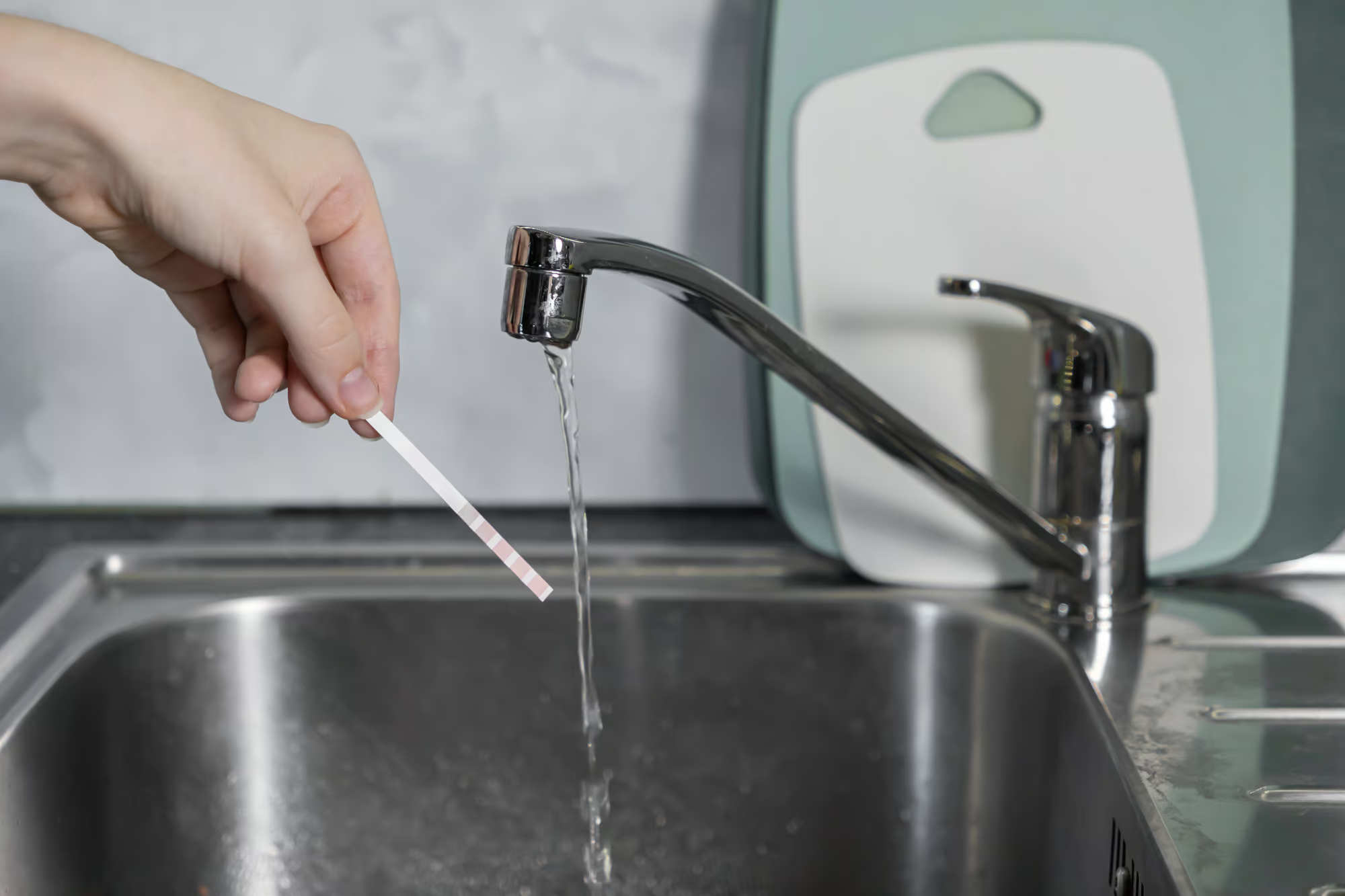
Before you buy any equipment or schedule any installation, you need to know what’s actually in your water. Testing isn’t an upsell — it’s the only way to make sure you’re treating the right problem with the right solution.
A basic hardness test measures your GPG level and confirms whether a standard softener will do the job. But on a private well in Southside Virginia, a full panel is worth doing. It also checks for iron, pH, bacteria, and nitrates — things that matter for your family’s health that a softener alone won’t address.
Testing takes the guesswork out of equipment selection. The EPA’s private well guidance is a good resource for understanding what a full panel should cover. [3] Solutions Heating & Cooling has been serving Halifax and Southside Virginia homeowners for over a decade — we know the hardness levels, iron content, and contaminants common to well water in this region, and we use your actual test results to recommend the right equipment.
What Water Softener Installation Actually Involves
If you’ve never had a water softener before, it’s easy to assume the installation is a big production. It’s really not.
A water softener works through ion exchange. As water passes through a resin tank, sodium ions swap places with the calcium and magnesium ions that cause hardness. What comes out the other side won’t scale up your pipes, fixtures, or water heater.
Installation typically involves placing the unit near your home’s water entry point, connecting it to the main line, and setting up a brine tank the system uses to regenerate periodically. Most installations are completed in a single visit. Ongoing maintenance is straightforward — you refill the brine tank with salt, and that’s about it.
Sizing matters. A softener that’s too small won’t solve the problem; one that’s oversized wastes salt and water. Solutions Heating & Cooling sizes every system to your actual test results, and our licensed technicians know rural well systems — not just city water setups.

Softener Options for Well Water — What Works in Southside Virginia Homes
Not every water softener is built for well water, and that distinction matters.
Salt-based ion exchange softeners are the most effective solution for calcium and magnesium hardness. They treat water at the point of entry, so every fixture, appliance, and water heater in your home benefits.
If your test results show high iron content, you may need an iron filter alongside your softener — or an integrated system that handles both. Testing tells you which combination actually fits your water.

Start With a Water Test — We’ll Handle the Rest
If two or more signs from the top of this article sound familiar, the right move is to schedule a well water test. That one step tells you exactly what you’re dealing with.
Solutions Heating & Cooling handles testing, equipment selection, and installation as a single coordinated service — no handoffs, no gaps.
Call us today at (434) 404-4461 to schedule your well water evaluation.
Your Hard Water Questions, Answered
What are the most common warning signs that you have hard water?
Hard water leaves behind several recognizable signs throughout your home. We typically look for white or yellowish scale on faucets and showerheads, soap that won’t lather well, stiff laundry after washing, spots on dishes and glassware, a water heater that seems to be losing efficiency, shortened appliance lifespan, and dry or itchy skin and hair after showering. Two or more of these is a clear signal to test your water.
What does GPG mean and how is it used to measure the hardness of water?
GPG stands for grains per gallon, and it’s how we measure the concentration of dissolved minerals — mainly calcium and magnesium — in your water supply. Mild hardness is manageable, but moderate to high GPG levels, which are common for rural well water in this region, are where you start seeing real damage to your pipes, fixtures, and appliances. A water test gives you your exact number.
Is well water testing required before choosing and installing a softener system?
Well water testing is the essential first step before any equipment decision. Without knowing your actual GPG hardness level, iron content, pH, and other factors, there’s no reliable way to size or select the right system for your home. We use your test results to recommend the correct equipment — a softener that’s too small won’t solve the problem, and one that’s too large wastes salt and water. Call us at (434) 404-4461 to schedule your evaluation.
Resources
- http://usgs.gov/water-science-school/science/hardness-water
- https://wqa.org/learn-about-water/perceptible-issues/scale-deposits/
- https://www.epa.gov/privatewells