
Your well pump is out of sight, so most homeowners don’t think about it until something goes wrong. By then, you’re already in emergency mode.
Knowing your pump’s age and condition now is the difference between a planned replacement and a Sunday with no water in the house. How long a well pump lasts depends on pump type, water quality, and daily demand — and in Halifax County, where hard well water is common, those factors carry real weight.
We, your local Halifax well pump experts, average lifespan by pump type, what shortens or extends it, and the warning signs to watch for.
How Long Does a Well Pump Last?
Most well pumps last somewhere between 8 and 15 years, depending on the type of pump and the conditions it operates in. [1]
- Submersible well pumps: 8–15 years on average; up to 20+ years with premium equipment and good water quality
- Jet pumps (shallow well): 7–10 years on average
- Jet pumps (deep well): 8–12 years on average
Local water quality and usage patterns affect where your pump falls within those ranges — and in Halifax County, hard well water tends to push pumps toward the shorter end.
Average Lifespan by Pump Type and Installation
The lifespan ranges above assume a few things are working in your favor — correct pump sizing, a clean installation, and reasonably good water quality. When those conditions are met, pumps tend to reach the top of their range. When they’re not, they often don’t.
Submersible Well Pumps
Submersible pumps are installed deep inside the well itself, submerged in water. That location actually works in their favor — they run cooler, they’re protected from surface conditions, and they don’t have to work as hard to move water up. With a proper installation and decent water quality, a submersible pump can reach the top of its range — or push past it with premium equipment.
Jet Pumps: Shallow and Deep Well
Jet pumps sit above ground, typically in a utility room or pump house. They’re easier to access for maintenance, but that above-ground exposure makes them more vulnerable to temperature swings, dust, and general wear. Shallow well jet pumps tend to have the shortest lifespan of the three types. Deep well jet pumps sit in the middle of the range.
In Halifax County and across Southside Virginia, most rural properties run submersible pumps due to well depth — but the installation quality still matters. A pump that’s undersized for your household demand or incorrectly installed won’t reach its expected lifespan, regardless of type.
Those lifespan ranges are a starting point. What actually determines where your pump lands is what we’ll cover next.
Have a Question About Your Home?
Talk to a real person on our Halifax team. We'll give you a straight answer and an upfront price.
Factors That Shorten or Extend Pump Life
A well pump that’s properly matched to your home and running in good conditions can last for decades. The same pump in the wrong conditions might give you half that. Here’s what actually moves the needle.
Water Quality and Sediment
Hard water is tough on pump components. The minerals wear down moving parts faster than clean water would, and sediment buildup adds to that strain over time. In Halifax County, well water tends to run hard — that’s just the nature of the local geology. [2] If you’ve never had your water tested, that’s worth knowing before your pump gives you a reason to.
Pressure Tank Condition
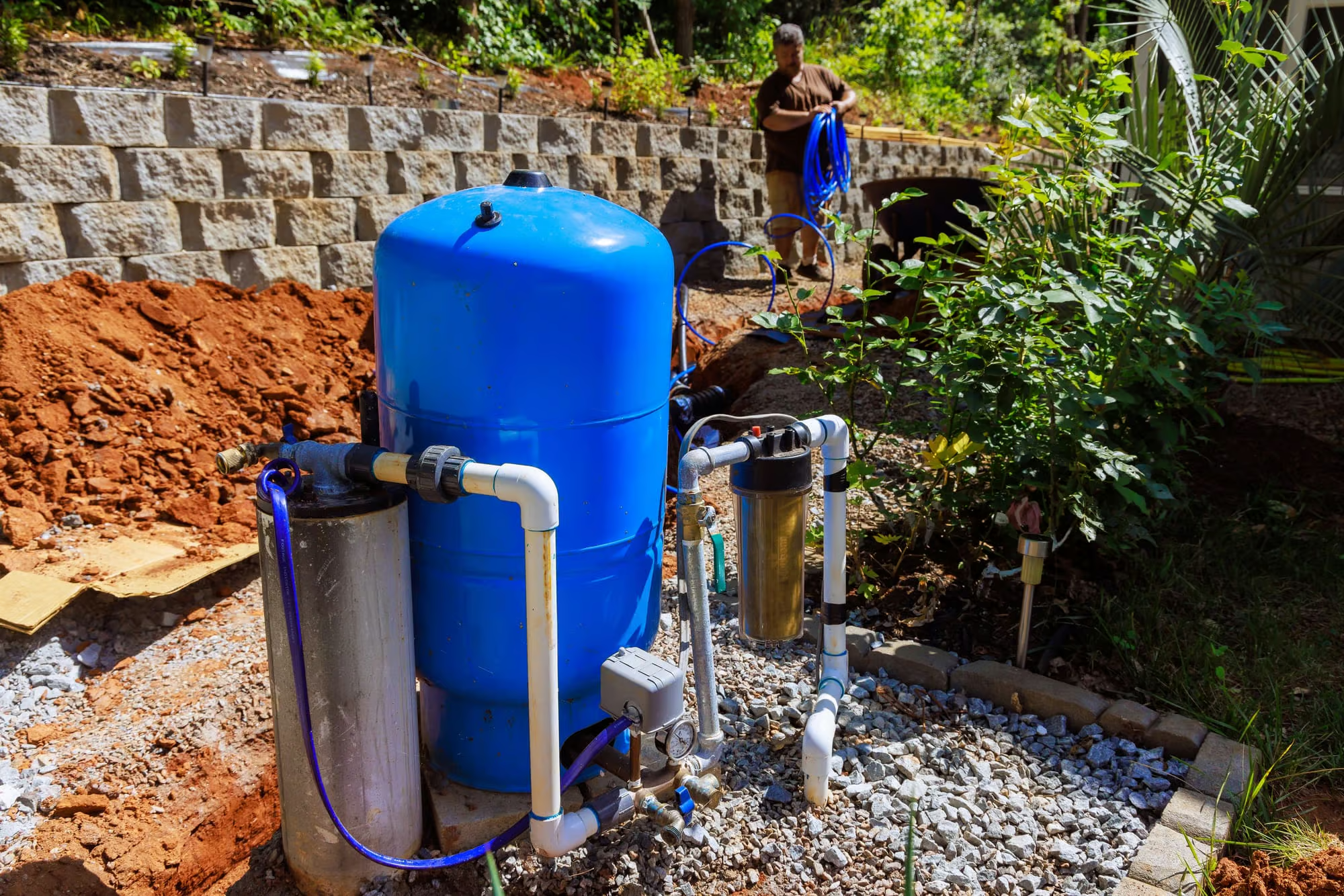
Your pressure tank and your well pump work as a team. When the pressure tank starts failing, the pump picks up the slack by cycling on and off more frequently than it should — a problem called short-cycling. That constant start-stop puts serious strain on the pump motor and burns through its lifespan fast.
Pump Sizing and Installation
An undersized pump works harder than it was built to. An oversized pump short-cycles for a different reason — it builds pressure too quickly and shuts off before completing a full run cycle. Either way, poor sizing shortens the life of the pump. A correctly sized and installed pump is one of the best investments you can make in long-term reliability.
Electrical Supply and Power Surges
This one gets overlooked. Inconsistent voltage and power surges are a common cause of premature pump motor failure — and rural properties in Southside Virginia aren’t immune to power fluctuations. A surge protector designed for well pump systems is cheap insurance compared to an early replacement.
Usage Demand
The more people in the house, the harder the pump works every day. A pump sized for a two-person household running at full capacity for a family of five is going to wear out sooner than the specs suggest.
If your pump is dealing with hard water, an aging pressure tank, or anything else on this list, it’s worth a conversation before it becomes an emergency. Give us a call at (434) 404-4461 — we know Halifax County well water, and we can tell you exactly where your system stands.
Signs You’re Approaching Replacement Time
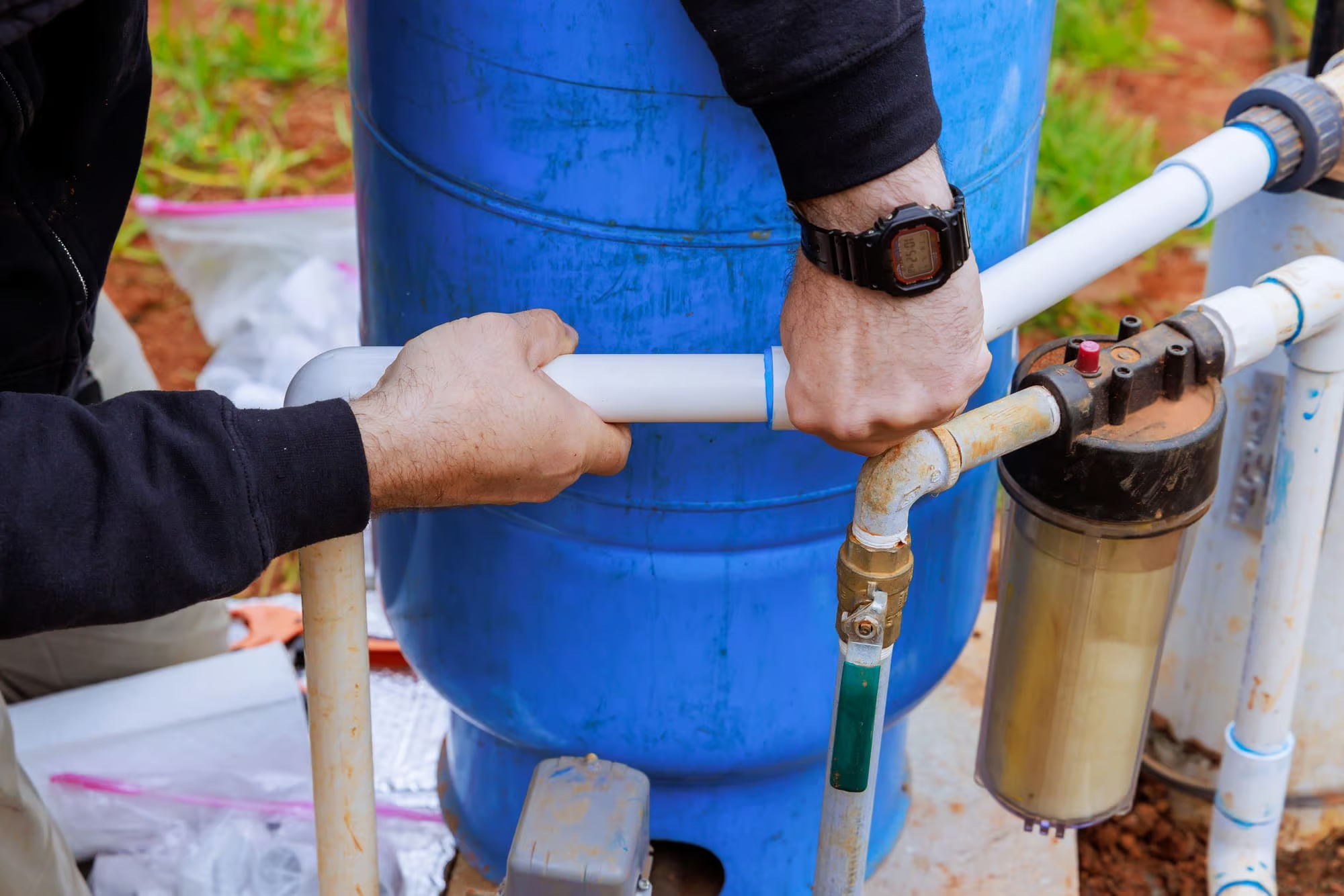
Your pump will usually give you signals before it quits completely. Knowing what to look for means you can act on your timeline instead of the pump’s.
Pressure and Flow Changes
Low water pressure that can’t be explained by anything else is one of the most common early signs. If your shower pressure has been gradually dropping or your faucets aren’t performing like they used to, the pump is worth looking at.
How Your Pump Sounds and Cycles
If you can hear your pump cycling on and off more frequently than normal — or running constantly — that’s a red flag. Short-cycling in particular points to either a failing pressure tank or a struggling pump motor. A struggling pump motor also draws more power than a healthy one — so an unexplained jump in your electric bill with no other cause is worth adding to your list of signals.
Water Quality Shifts
If your water has been clear for years and suddenly starts running discolored or carrying sediment, that can indicate the pump is pulling from lower in the well or that internal components are beginning to break down.
When Age Alone Is Enough Reason
If your pump is pushing the upper end of its expected lifespan and hasn’t shown any symptoms yet, that’s not necessarily a reason to relax. A pump that’s 20+ years old with no recent inspection is an unknown — and unknowns on well water are risky. Proactive replacement on your schedule is almost always less disruptive than an emergency call.
Quick Warning Sign Checklist
- Declining water pressure with no clear cause
- Pump running constantly or short-cycling
- Sputtering or spitting from faucets (air in the lines)
- Discolored or sediment-heavy water after years of clear output
- Unexplained spike in your electric bill
- Pump age within or beyond its expected lifespan range
One note: several of these signs overlap with pressure tank failure rather than pump failure. A professional inspection is the only reliable way to confirm which component is the source. [3]

Don’t Wait for a Dry Faucet to Find Out
Well pump lifespan varies — but knowing where your system stands doesn’t have to be a guessing game. If your pump is aging, showing any of the signs covered above, or you just don’t know the last time it was inspected, that’s enough reason to get eyes on it.
Solutions Heating & Cooling has been serving Halifax County and Southside Virginia for over a decade. Give us a call at (434) 404-4461 and we can tell you exactly where your system stands — before it turns into an emergency.
Well Pump Lifespan: Your Questions Answered
What is the average lifespan of a well pump?
Most well pumps last between 8 and 15 years, depending on the pump type and the conditions it operates in. Submersible pumps can reach 20+ years with premium equipment and good water quality, while shallow well jet pumps tend to top out around 10 years. Local water quality and daily demand play a big role in where your pump lands within that range.
What factors cause a well pump to wear out or fail?
Several things shorten well pump life: hard water and sediment buildup, a failing pressure tank causing short-cycling, incorrect pump sizing, power surges, and high daily water demand. In Halifax County, hard well water is especially common and tends to push pumps toward the shorter end of their expected lifespan.
Why does a well pump keep turning on and off?
A well pump that keeps cycling on and off — called short-cycling — usually points to a failing pressure tank or a struggling pump motor. When the pressure tank isn’t holding pressure properly, the pump has to compensate by running in frequent, short bursts. That constant start-stop puts serious strain on the motor. Call us at (434) 404-4461 — we can diagnose it fast.
Resources
- https://wellpumpauthority.com/well-pump-lifespan-and-durability
- https://www.pubs.ext.vt.edu/442/442-664/442-664.html
- https://www.wellwater.bse.vt.edu/