

Hard well water does more damage than most people realize. It builds up inside your pipes, shortens the life of your appliances, and leaves your fixtures looking worn out years before they should be. If you’re on a private well in Halifax County or anywhere across Southside Virginia, you already know the signs — the chalky film on your faucets, the spots on your dishes, the water heater that seems to work harder than it should.
A properly installed water softener addresses the problem at the source. But water softener installation for well water isn’t the same process as treating city water — and if you skip a few key steps, you can end up with a system that fails faster than it should. This article breaks down what the process actually involves, why it matters, and what to look for when you’re ready to move forward.
How Water Softener Installation Works for Well Water Homes
Water softener installation for well water typically involves these steps:
- Water testing — Identify hardness level, iron content, and other minerals present in your well water
- System selection — Choose a softener sized and configured for your specific water chemistry
- Location assessment — Determine the best placement point in your plumbing, typically after the pressure tank
- Installation — Connect the softener to the main water supply line and drainage
- Programming — Set regeneration cycles based on household water usage and hardness level
- Post-install testing — Confirm water quality meets target softness levels
Why Well Water Requires a Different Treatment Approach
When you turn on a city tap, that water has already been treated before it reaches your home. Well water hasn’t. It pulls directly from underground aquifers and picks up minerals — primarily calcium and magnesium — as it moves through rock and soil. [1] Hardness levels vary from property to property and can shift seasonally, especially after heavy rain. There’s no baseline you can count on without testing your specific well.
Hardness is also often just the beginning. Well water in Southside Virginia frequently carries iron, manganese, sediment, and sometimes hydrogen sulfide — contaminants a standard water softener isn’t built to handle on its own. That’s why a proper well water treatment plan starts with a water test, not a product selection. System sizing and configuration have to match your specific water chemistry, not a generic household average.
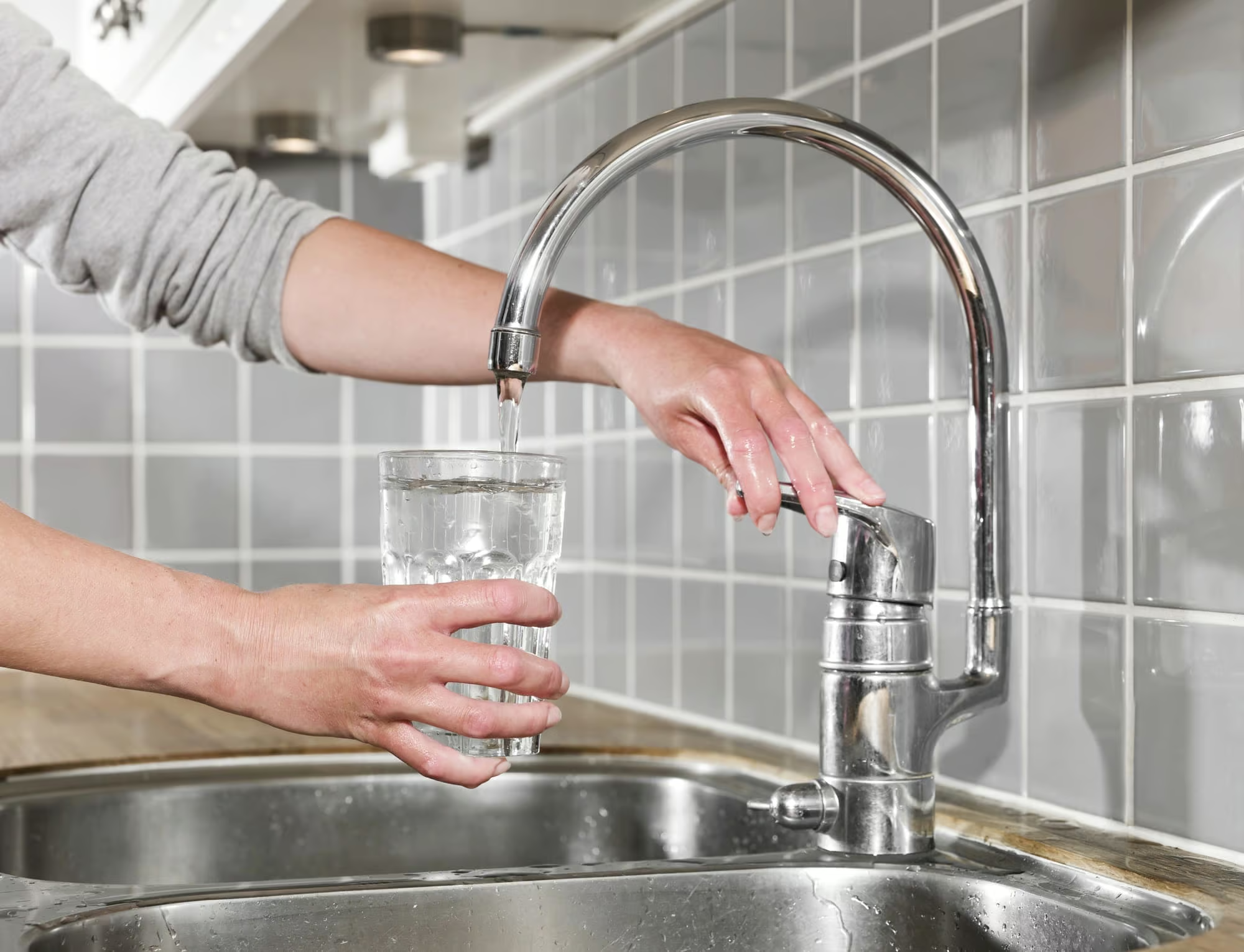
Solutions Heating & Cooling has spent over a decade serving rural Southside Virginia homeowners. Well-dependent properties are familiar territory for their plumbing team — and that regional experience matters when your water supply comes entirely from the ground beneath your property.
If iron or sediment are present — and in this region, they often are — that changes what your softener needs to do and how the system has to be set up.
How Iron and Sediment Affect Softener Performance
Standard water softeners work through ion exchange — calcium and magnesium ions in your water are swapped out for sodium ions as water passes through the resin bed. It’s an effective process for hardness minerals. It’s not designed for iron or sediment.
Iron in well water comes in two forms. Ferrous iron is dissolved and invisible — your water looks clear, but the iron is there. Ferric iron is oxidized and visible as rust particles. Each requires a different treatment approach, and neither belongs in a softener resin bed without pre-treatment first.
When iron enters the resin bed without being addressed upstream, it coats the resin over time and eventually ruins it. That shortens your system’s lifespan and degrades performance — meaning you paid for a softener that stopped working the way it should long before it should have. Sediment creates a similar problem, clogging components and causing premature mechanical failure.
You may already recognize the signs in your home:
- Orange or brown staining on sinks, tubs, or toilets
- A metallic taste in your water
- Rust-colored rings in the toilet bowl
- Appliances wearing out faster than expected
The fix isn’t a more expensive softener. It’s proper pre-treatment — a sediment filter, an iron filter, or both — installed upstream of the softener so each component is only handling what it was designed to handle.
Knowing what’s in your water is step one. Once you have that picture, pairing the right pre-treatment with the right softener is what a complete well water system actually looks like.
Seeing those warning signs in your home? Solutions Heating & Cooling can test your well water and help you figure out exactly what you’re dealing with. Call (434) 404-4461 to get started.
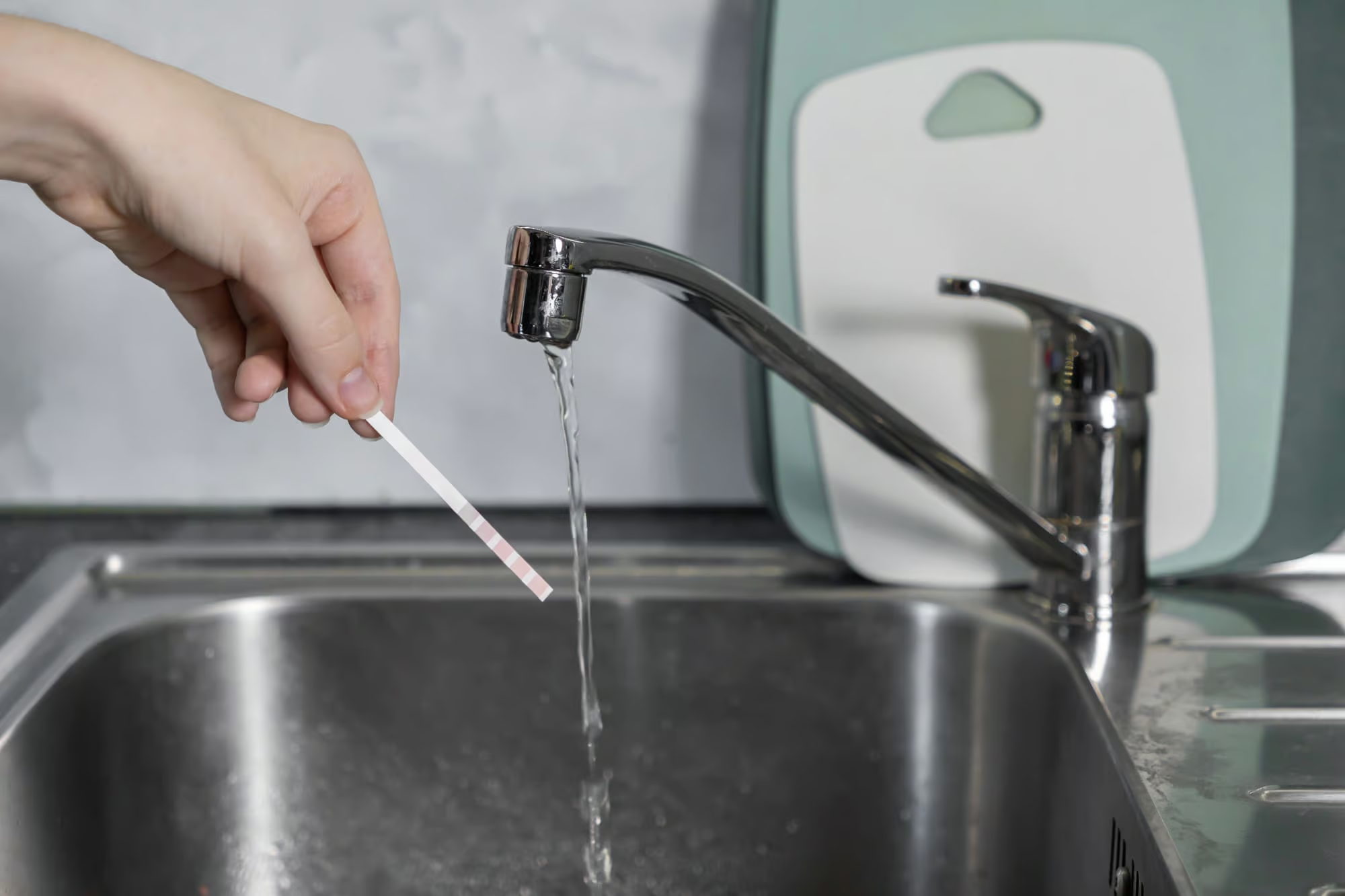
What a Water Test Reveals Before Installation
Before any equipment gets selected, a professional water test tells you what you’re actually working with. It identifies hardness level measured in grains per gallon, iron concentration, pH, manganese, and other contaminants that affect how your treatment system needs to be configured. [2]
Those results determine whether pre-treatment is needed before softener installation — and what kind. Skipping this step means you’re guessing at a system that has to perform in your specific water conditions. A test removes the guesswork and protects you from buying equipment that won’t hold up.
Pairing a Softener With a Whole-Home Well Water Filter
A water softener and a whole-home well water filter aren’t the same thing — and they’re not interchangeable. They serve different functions and work best when they’re installed together.
The filter handles sediment, iron, and other particulates. [3] The softener addresses hardness minerals. Each one protects the other’s performance, which is why the installation order matters:
- Sediment pre-filter → iron filter (if needed) → water softener → distribution through home
When the system is set up correctly, you get extended resin life in your softener, cleaner water at every tap, better protection for your water heater and appliances, and a noticeable reduction in fixture staining. Each component is doing its job without being asked to do someone else’s.
For well water homeowners in Southside Virginia — particularly those on older properties — the full system often makes more sense than a softener alone. What your specific property needs depends on what’s in your water, which is why a site assessment is always the starting point.

Ready to Find Out What’s Really in Your Well Water?
Every well is different. The right water softener system for your Halifax County home starts with knowing exactly what’s in your water. Solutions Heating & Cooling tests well water and installs complete treatment systems for homeowners across Southside Virginia — and with nearly 1,000 five-star Google reviews, you can count on the work being done right. Call (434) 404-4461) to schedule a water test or to get started today.
Well Water Softener Questions, Answered
Which water softener works best when you’re on a private well?
The best water softener for a private well is the one sized and configured to match your specific water chemistry — not a one-size-fits-all product. We start with a water test to identify hardness levels, iron content, and other minerals before recommending any system. What’s in your water determines what the system needs to do, and getting that right is what makes the difference.
Does every home on a private well actually need a water softener?
Not every well water home automatically needs a water softener — it depends on what’s actually in your water. Hardness levels vary from property to property and can shift seasonally, so there’s no universal answer. We test your specific well water first to identify hardness levels and other minerals before recommending any treatment. That test is always the right starting point. Call (434) 404-4461 to schedule yours.
Could hard well water be shortening the life of my appliances and fixtures?
Hard well water is one of the most common reasons appliances wear out earlier than they should. It builds up inside your pipes and water heater, forces equipment to work harder, and leaves chalky film on faucets and spots on fixtures. If you’re already seeing orange or brown staining, rust rings in the toilet bowl, or a metallic taste in your water, those are signs the damage is already happening.
Resources
- https://www.usgs.gov/faqs/do-you-have-information-about-water-hardness-united-states
- https://www.vdh.virginia.gov/environmental-health/private-well-program/
- https://wqa.org/news/how-to-treat-iron-in-water/