
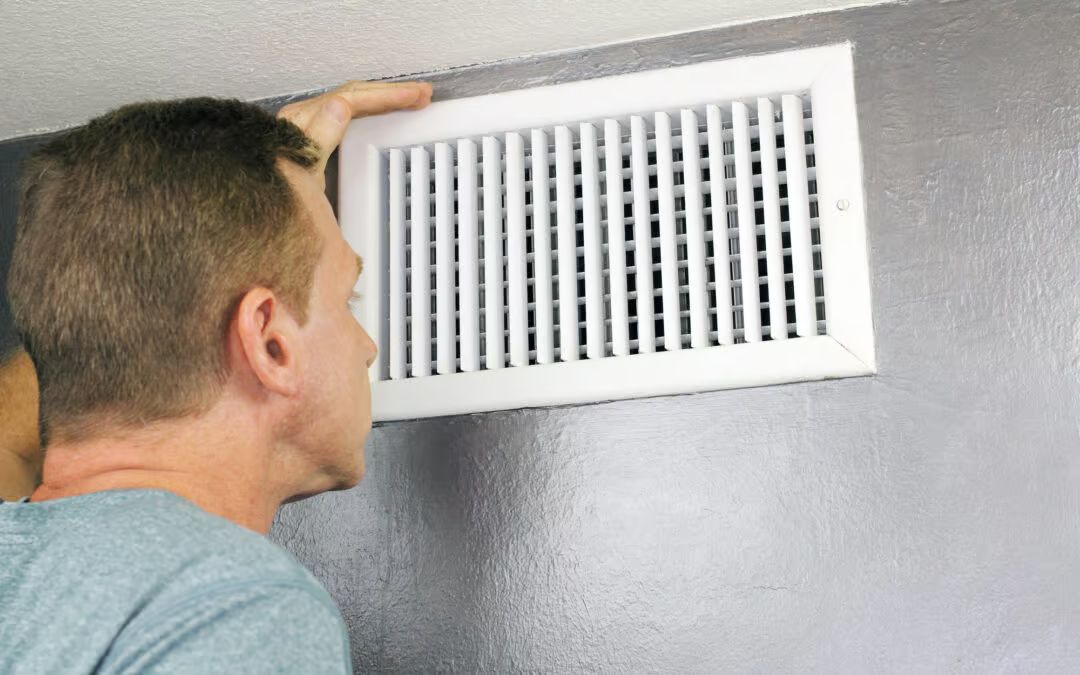
Central Virginia runs one of the longest pollen windows in the country. Oak, ash, and maple kick things off in late winter. Grass pollen takes over by early summer. Ragweed closes out the season well into October — and with every wave, microscopic pollen particles find their way into the one place most people never think to check: the ductwork running through every room of their home.
You close the windows. You might even kick off your shoes at the door. But none of that stops what’s already been pulled into your return vents and pushed through your air handler every time your system runs. By fall, a full season’s worth of pollen has built up inside — and most of it is still there.
Can Pollen Affect You Inside Your House?
Yes — and for Central Virginia homeowners, indoor exposure can be just as significant as outdoor. Once pollen enters your home, your HVAC system pulls it into the return vents, pushes it through the ductwork, and redistributes it into every room. Without proper filtration, it doesn’t leave.
- Pollen enters through open doors, windows, clothing, and pets
- Return vents pull airborne pollen directly into the duct system
- Accumulated pollen recirculates every time the system runs
- Central Virginia’s extended pollen window means buildup compounds across seasons
- Standard filters may not capture fine pollen particles before they reach the ducts
Why Central Virginia Has One of the Longest Pollen Windows in the Region
Lynchburg sits in a river valley at the foot of the Blue Ridge foothills, surrounded by some of the densest hardwood canopy in Virginia. That geography matters. The valley position traps and concentrates airborne particulate, and the tree coverage means pollen production that starts earlier and runs longer than in more open parts of the state.The Asthma and Allergy Foundation of America tracks seasonal allergy burden across the top 100 U.S. cities, and Virginia markets consistently rank among the more challenging regions in the country. [1] Central Virginia’s pollen season doesn’t follow a clean calendar — it layers, with one wave overlapping the next before the previous one has fully cleared.

Spring — Oak, Ash, and Maple Lead the First Wave
From late February through May, oak, ash, and maple are the dominant pollen producers across the Lynchburg and broader Central Virginia region. Tree pollen is some of the finest particulate produced all season — small enough to slip past undersized or aging filters and coat the evaporator coil (the component inside your air handler that cools the air) before settling into the ductwork. Most homeowners don’t notice it happening because there are no visible signs until the buildup is significant.
Summer — Grass Pollen and the Filter Fatigue Problem
By June, tree pollen subsides and grass pollen — Bermuda, timothy, and fescue — takes over. According to Wyndly’s Virginia allergy data, grass pollen is one of the most persistent warm-season allergens across the state. [2] This is also when a real problem develops inside your system. A filter that captured a full spring pollen load is often already compromised by the time summer arrives. That’s filter fatigue: a MERV-rated filter that hasn’t been swapped out is running at a fraction of its original capacity, and the second wave moves through a weakened defense. It’s also the time of year when your system runs hardest, pushing more air volume through the ductwork than any other season.
Fall — Ragweed and the Accumulation Reality
Ragweed takes over in September and carries into October. By this point, a ductwork system that hasn’t been serviced has absorbed three consecutive pollen waves. The system isn’t just moving air anymore — it’s moving a season’s worth of built-up particulate through every room of your home. For a lot of Lynchburg homeowners, this is the moment the problem stops feeling seasonal and starts feeling permanent.
What’s Building Up in Your Ducts Right Now
- Spring: Oak, ash, and maple tree pollen
- Summer: Grass pollen on a compromised filter
- Fall: Ragweed completing a full season of accumulation
How Pollen Actually Moves Through Your Home’s Duct System
Once pollen is inside your home, your HVAC system becomes the mechanism that spreads it. Outside air and indoor airborne particles get pulled through the return vents, drawn into the air handler, and passed across the evaporator coil. From there, the air moves through the ductwork and out through the supply registers — the smaller vents that push conditioned air into each room. Every time your system cycles, that circuit runs again.
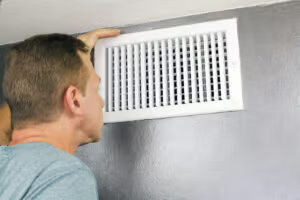
Leaky or unsealed ductwork makes the problem worse. Gaps in the duct system — common in older Lynchburg homes where duct sealing has never been addressed — create additional entry points that bypass the air handler entirely, pulling pollen directly from attic and crawlspace air into the supply stream before it ever reaches a filter.
Have questions about what might be moving through your ducts? Our team at Solutions Heating & Cooling is here to help. Give us a call at (434) 771-0977 — we’re happy to talk through what we’re seeing this season and what makes sense for your home.
What Lynchburg Homeowners Can Do About Pollen in Their Ductwork
Duct Cleaning: Addressing What’s Already Built Up
Filters and sealing prevent future pollen from moving through your system — but they don’t address what’s already accumulated across previous seasons. If your ductwork hasn’t been professionally cleaned in several years, you may be recirculating buildup from multiple pollen cycles every time your system runs. Our air duct cleaning service is designed specifically for this — clearing the accumulated debris that filtration alone can’t reach.
Filter Selection and Replacement Timing
The EPA and ASHRAE both point to MERV 13 as the benchmark for residential allergen filtration — or as high as your system can accommodate. For most Lynchburg homes, that lands somewhere in the MERV 11–13 range depending on system age and airflow capacity. (MPR and FPR ratings you’ll see on store shelves are proprietary equivalents — MERV is the independent benchmark.)
The rating only matters if the filter is current — standard guidance calls for replacement every 60–90 days, but during peak pollen season that interval should be shorter. A filter carrying a full spring pollen load won’t perform at rating by the time summer grass pollen arrives.
Duct Sealing and Why Gaps Matter More During Pollen Season
Gaps and leaks in ductwork let pollen infiltrate from unconditioned spaces — attics, crawlspaces, wall cavities — completely bypassing your filtration. In many Lynchburg homes, duct sealing has never been addressed — and attic and crawlspace infiltration is a common secondary entry point for pollen in this region’s older construction. Unlike filter swaps, this isn’t a DIY fix. A professional inspection is the only reliable way to identify where the leaks are and how significant they are.

Whole-Home Air Purification as a Seasonal Defense
Filtration handles a lot, but it doesn’t catch everything — especially ultrafine particles that pass through even a high-rated filter. Whole-home air purification systems integrate directly into your HVAC and work alongside your existing filtration rather than replacing it. For households dealing with persistent indoor allergy symptoms despite regular filter changes, it’s worth asking about as a next step.
Questions About Pollen and Your Ductwork? Ask the Experts.
Central Virginia’s pollen season is long, and most of it ends up somewhere inside your home. If you’ve noticed allergy symptoms that don’t improve indoors, or your ductwork hasn’t been inspected in several years, give us a call at (434) 771-0977 — we’re glad to talk through what we’re seeing this season.
Solutions Heating & Cooling 403 Fifth St, Unit 105, Lynchburg, VA 24504

Pollen and Your Ductwork: Common Questions from Central Virginia Homeowners
Is indoor air quality affected by outdoor pollen levels?
Indoor air quality absolutely takes a hit from outdoor pollen. Once pollen enters through open doors, windows, clothing, or pets, your HVAC system pulls it into the return vents and pushes it through the ductwork into every room. Without proper filtration, it never leaves — and in Central Virginia, that buildup compounds across an unusually long season.
What makes the pollen season in Central Virginia last so long?
Central Virginia’s pollen season lasts longer than most of the country because of its geography and tree coverage. Lynchburg sits in a river valley surrounded by dense hardwood canopy, which traps and concentrates airborne particles. The season layers — oak, ash, and maple in spring, grass through summer, ragweed into October — with one wave overlapping the next.
How does pollen end up circulating through my home’s air system?
Pollen circulates through your home every time your HVAC runs. Return vents pull airborne particles into the air handler, where they pass across the evaporator coil and move through the ductwork out into each room. Gaps or leaks in older ductwork make it worse — those openings pull pollen directly from attic and crawlspace air, bypassing your filter entirely.
Resources
- https://aafa.org/asthma-allergy-research/allergy-capitals/
- https://wyndly.com/blogs/locations/virginia