
The EPA recommends keeping indoor humidity below 60% to prevent mold growth. [1] Lynchburg’s summers routinely push past that number — and your air ducts are often the first place it shows up. Central Virginia’s climate creates conditions that most homeowners don’t think about until something goes wrong.
How Humidity Affects Your Air Ducts
When indoor humidity rises above recommended levels, air ducts become a breeding ground for mold, mildew, and dust mites. In humid climates like Lynchburg, Virginia, this happens faster and more frequently than in drier regions. Here’s what excess moisture does inside your ductwork:
- Creates condensation on duct surfaces, encouraging mold and mildew growth
- Raises dust mite populations, which thrive above 50% relative humidity, according to the American Lung Association
- Causes musty odors to circulate through your home every time the system runs
- Accelerates deterioration of duct insulation and seals
- Reduces air quality and system efficiency over time
What Makes Lynchburg’s Climate Different From Drier Regions
Lynchburg’s Humidity Profile
Lynchburg sits in a humid subtropical climate zone — the same broad category as much of the Deep South. That means long, muggy summers where relative humidity regularly climbs into the low-to-mid 70s. According to National Weather Service climate data for the region, average humidity in June and July hovers around 71–73%. That’s well above the EPA’s 60% threshold, and it stays there for months.
Why Ductwork Is Especially Vulnerable
Your air ducts don’t run through the comfortable, conditioned parts of your home. They run through attics, crawl spaces, and wall cavities — spaces where temperatures swing hard between seasons. When warm, humid air meets the cooler surface of a duct, moisture forms. That condensation doesn’t dry out quickly in a climate like Lynchburg’s. That’s the condition mold and dust mites need to grow.
The Real Risks of Neglected Ducts in a Humid Climate
Mold Inside Your Ductwork
Once indoor humidity crosses that 60% mark the EPA flags, duct surfaces become a viable host — and mold doesn’t announce itself. It colonizes insulation lining and joints long before you’d ever see it. By the time you notice anything, spores have likely been circulating through your home for a while.
EPA Humidity Threshold The EPA recommends keeping indoor humidity below 60% to prevent mold growth. Lynchburg’s average summer humidity runs 71–73% — above that threshold for months at a time.
Dust Mites and Indoor Allergens
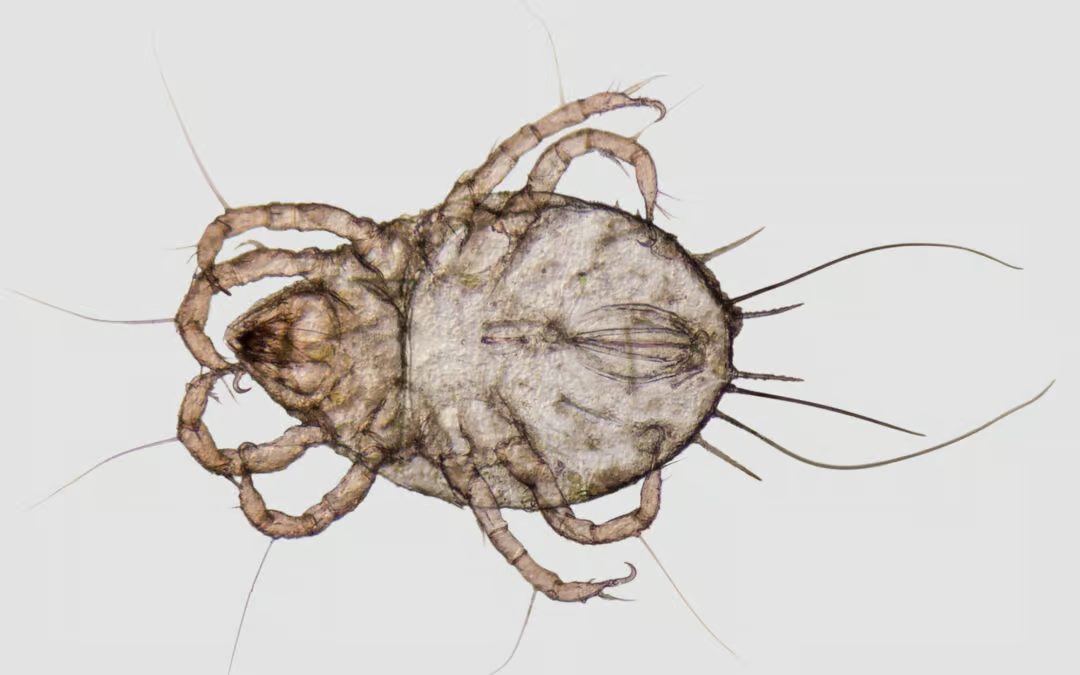
Dust mites thrive above 50% relative humidity, according to the American Lung Association. [2] In Lynchburg, that threshold gets crossed well before the peak of summer. What makes ductwork particularly problematic is that it doesn’t just house dust mite allergens — it distributes them. Every time your system runs, those allergens move through every room. For families with kids, older homeowners, or anyone managing asthma or allergies, that’s not a minor inconvenience. It’s a daily health exposure.
System Efficiency and Longevity
Moisture-related buildup puts real strain on your HVAC system. Restricted airflow means the system works harder to move the same amount of air — and a system that works harder runs longer, cycles more frequently, and wears out faster. If your energy bills have been creeping up without a clear explanation, or if you’ve been seeing more repair calls than usual, what’s happening inside your ductwork could be part of the answer.
Warning Signs Lynchburg Homeowners Should Watch For
What to Check Right Now
Run through this list before your next HVAC cycle:
- Musty or stale odors when the system turns on
- Visible dust buildup around supply and return vents
- Worsening allergy or asthma symptoms indoors
- Inconsistent airflow between rooms
- Rising energy bills without a clear cause
- Condensation or moisture around vent covers
Some of these show up if you know what to look for. Others — like inconsistent airflow or gradual bill increases — tend to get written off as normal until they’re not. If you’ve recently moved into a home and don’t know the duct maintenance history, that list is worth going through carefully.

Musty odors are one of the more telling signs. That smell isn’t just unpleasant — it’s often mold or mildew that’s already taken hold somewhere in the system. Visible dust around vents suggests buildup that’s moved past the filter and into the ductwork itself. And moisture around vent covers is a direct signal that condensation is forming — exactly the condition that accelerates everything else on that list.
Noticing any of these warning signs in your Lynchburg home?
Give us a call at (434) 771-0977 — we can help you figure out what’s going on.
How Often Should Lynchburg Homeowners Schedule Duct Maintenance
The National Air Duct Cleaners Association recommends getting your air ducts inspected at least once a year and cleaned as needed — because frequency isn’t one-size-fits-all. [3] Factors like pets, smokers in the home, allergy or asthma sufferers, and recent renovations all affect how quickly your ducts accumulate the kind of buildup that needs professional attention.
In a humid climate like Lynchburg’s, moisture adds another variable to that equation. A home that might go several years between cleanings in a drier region may need more frequent attention here — not because of anything the homeowner did wrong, but because the climate creates conditions that accelerate buildup year after year.
An inspection is the only way to know where your system actually stands. What’s inside your ductwork isn’t visible from a vent cover.

What to Do Next
We’ve been serving Central and Southside Virginia homeowners since 2015 — and our Lynchburg team knows this climate well. If something in this article raised a question about your home’s ductwork, give us a call at (434) 771-0977. We’re happy to talk through what you’re seeing.
Why Lynchburg Homeowners Ask Us About Humidity and Duct Health
What does high humidity do to your home’s ductwork?
High humidity creates serious problems inside your ductwork. When moisture levels rise, condensation forms on duct surfaces — encouraging mold, mildew, and dust mite growth. Over time, this degrades duct insulation and seals, pushes allergens into every room, and forces your system to work harder than it should, driving up energy costs and shortening equipment life.
Is Lynchburg’s weather particularly hard on home ductwork?
Lynchburg’s weather is genuinely harder on ductwork than many homeowners realize. We sit in a humid subtropical climate zone where summer humidity regularly runs 71–73% — well above the EPA’s 60% threshold for mold risk. Ducts running through attics, crawl spaces, and wall cavities are especially exposed, since those uncontrolled spaces create the temperature swings that turn moisture into condensation.
How frequently should Lynchburg homeowners schedule air duct inspections?
Scheduling air duct inspections at least once a year is what the National Air Duct Cleaners Association recommends — but in Lynchburg, the climate can push that need higher. Pets, smokers, allergy sufferers, and recent renovations all affect buildup rates. Because Lynchburg’s humidity accelerates moisture-related problems, your ducts may need attention more often than a home in a drier region would.
Resources
- https://www.epa.gov/mold/mold-course-chapter-2
- https://www.lung.org/clean-air/indoor-air/indoor-air-pollutants/dust-mites
- https://breathingclean.com/blog/considering-air-duct-cleaning-weve-got-answers-top-five-faqs-homeowners-right-here