
When was the last time you thought about what’s moving through your home’s ductwork? For most Lynchburg homeowners, the answer is never — until an energy bill spikes, allergies flare up, or an HVAC technician mentions it during a service call.
Duct cleaning sounds straightforward, but the method used makes a real difference in what gets removed — and that difference is worth understanding before you book anyone.
What Is the Difference Between Negative Pressure and Brush-Only Duct Cleaning?
Negative pressure duct cleaning uses a powerful vacuum to create suction throughout the entire duct network while agitation tools dislodge debris — pulling contaminants out completely. Brush-only cleaning uses rotating brushes to loosen buildup, but removal depends on whatever vacuum equipment accompanies them, which often means dislodged particles stay in the system or recirculate.
- Containment: Negative pressure captures debris at the source; brush-only does not
- Reach: Negative pressure cleans the full duct network; brush-only is limited to accessible sections
- Removal: Negative pressure extracts contaminants; brush-only may redistribute them
- Equipment: Negative pressure requires high-powered units; brush-only requires minimal equipment
How Each Method Actually Works
Most homeowners have never seen either method in action — and that’s completely normal. Duct cleaning isn’t something you watch happen. Here’s what’s actually going on inside your walls when each method is used.
What Negative Pressure Systems Do
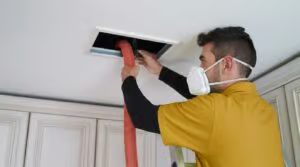
Negative pressure air duct cleaning uses a high-powered vacuum unit — typically truck-mounted or a large portable commercial unit — to create sustained suction across the entire duct system at once. While that suction is active, technicians use agitation tools to dislodge debris from duct walls. The vacuum pulls that material through the system and into a contained collection unit outside the home. The debris isn’t just loosened — it’s extracted. That distinction is where the real difference between these two methods lives.
What Brush-Only Methods Do
Brush-only cleaning uses rotating brush attachments to scrub buildup from duct walls. Some operators pair this with a standard shop vacuum at the nearest register. It’s a real method with legitimate applications, and the brushes are genuinely effective at breaking up buildup. How thoroughly debris actually gets removed depends entirely on what vacuum equipment, if any, is being used alongside those brushes.
Why the Removal Step Is the Real Difference
Dislodging debris and removing debris are two different things — and the method used determines which one actually happens.
Think about the difference between sweeping dust off a shelf and vacuuming it up. Sweeping moves the dust. Some lands on the floor, some becomes airborne, and some settles right back where it started. Vacuuming removes it. That same mechanical reality applies to your ductwork.
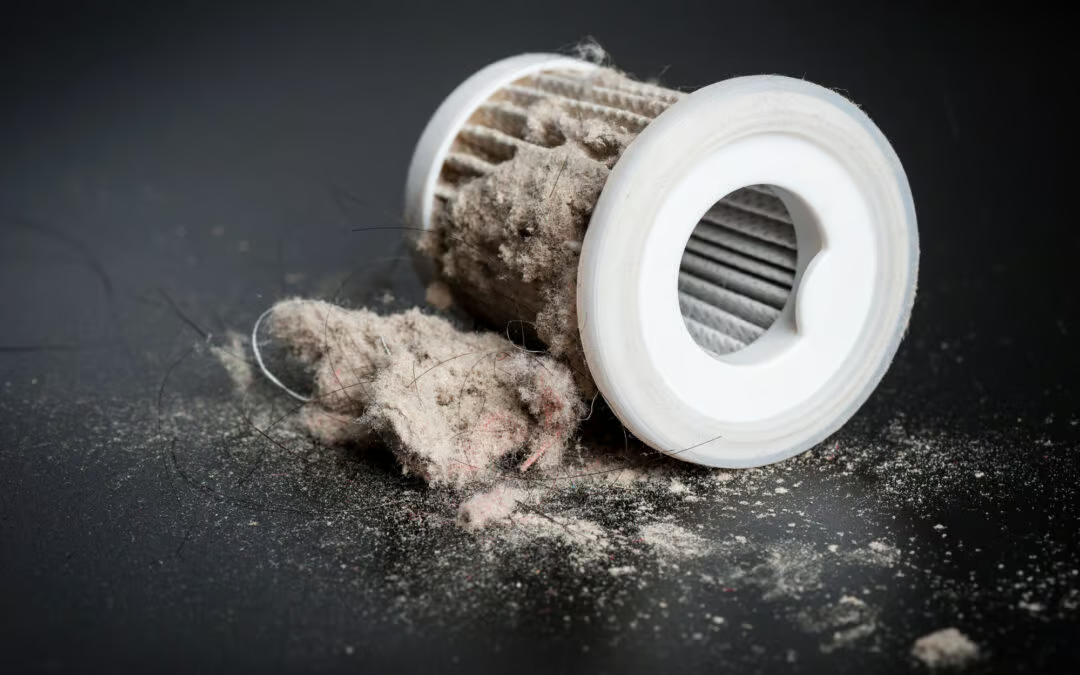
When brushes loosen buildup without a high-powered vacuum actively pulling it out, that debris has to go somewhere. It may resettle in duct bends, get pushed further into the system, or become airborne the next time your HVAC kicks on. The cleaning happened — the removal may not have.
Negative pressure air duct cleaning completes both steps in a single process. The suction is active while the agitation is happening, so debris moves directly into a contained collection unit rather than back into your home. If you’re weighing duct cleaning options for your Lynchburg home, that’s the question worth asking upfront: what happens to the debris after it’s loosened?
What Stays Behind With Brush-Only Cleaning
Knowing what can remain in your ductwork after a brush-only cleaning helps you ask better questions before you schedule anything. There are three categories worth understanding.
Debris that resettles. Duct systems have bends, low-flow zones, and sections where air moves slowly. Debris loosened by brushes tends to migrate toward those spots and settle back down after the job is done.
Biological particulates. Fine dust, allergens, and similar particles are light enough that brushing alone won’t clear them. The American Lung Association notes that indoor particulate matter — which includes dust, mold spores, and other fine particles — can affect lung health when recirculated. [1] True extraction via sustained suction is what addresses this category most thoroughly.
Particles that go airborne. When your HVAC system runs after a brush-only cleaning, anything loosened but not removed has a good chance of recirculating through your home. For anyone managing allergies or respiratory sensitivities, that’s worth factoring in.

Does Negative Pressure Air Duct Cleaning Work?
Yes. Negative pressure cleaning is the method the industry points to for thorough source removal — meaning it addresses both the dislodging and the extraction of debris in one process. It works because it removes what it dislodges, which is the part brush-only methods can’t consistently claim.
What Is the Most Effective Duct Cleaning Method?
Source removal via negative pressure is broadly considered the most thorough approach because it completes both steps of the cleaning process. According to NADCA’s guidance on proper cleaning methods, the entire HVAC system should be placed under continuous negative pressure during cleaning so that fine particles are captured as they become airborne rather than released back into the living space. [2]
Solutions Heating & Cooling has been serving Lynchburg and Southside Virginia since 2015 — if you have questions about what the right approach looks like for your home, call (434) 771-0977. We’re happy to talk it through.
What to Know Before You Schedule Duct Cleaning
The method matters, but so does knowing what to look for before you book. Here’s what’s reasonable to understand going into any duct cleaning appointment, regardless of who you call:
- Equipment quality drives results. A truck-mounted or high-powered portable vacuum produces meaningfully different results than a shop vacuum. Ask what the company uses before you commit.
- The whole system should be under negative pressure. Not just the section nearest the access point — the full duct network. Limited scope means limited results.
- Time is a signal. A thorough job takes time. If a company is in and out quickly, ask what was actually covered.
- Ask for a process walkthrough upfront. Any reputable company should be able to explain their method and equipment clearly before the job starts.
- Results are hard to verify after the fact. Ductwork isn’t visible once the job is done. Understanding the process before it happens is the only reliable check you have.

Ready to Talk Through Your Options?
Understanding the difference between duct cleaning methods is the first step toward making a confident decision for your home. If you’re weighing your options or just want to talk through what makes sense for your specific system, the team at Solutions Heating & Cooling is here to help. We’ve served Lynchburg and Southside Virginia for over a decade and have earned over a thousand positive Google reviews along the way. Give us a call at (434) 771-0977 — we’re happy to answer your questions.
Solutions Heating & Cooling 403 Fifth St, Unit 105, Lynchburg, VA 24504
What Lynchburg Homeowners Ask About Duct Cleaning
How does negative pressure duct cleaning compare to brush-only methods?
Negative pressure duct cleaning creates sustained suction across the entire duct network while agitation tools dislodge debris — pulling contaminants into a contained collection unit outside the home. Brush-only methods loosen buildup with rotating brushes, but removal depends on whatever vacuum is paired with them. The difference comes down to whether debris is extracted or simply moved around.
Which duct cleaning method removes the most debris?
Source removal via negative pressure is broadly considered the most thorough approach. According to NADCA, the entire HVAC system should be placed under continuous negative pressure during cleaning so fine particles are captured as they become airborne. That process addresses both dislodging and extraction — something brush-only methods can’t consistently claim. Call us at (434) 771-0977 to learn more.
What are the risks of a poor-quality duct cleaning job?
A poor-quality duct cleaning can leave your system in worse shape than before the appointment. Loosened debris that isn’t properly extracted can resettle in bends and low-flow zones, become airborne when your system runs, or spread allergens and fine particulates throughout your home. For anyone with allergies or respiratory sensitivities, that’s a meaningful concern — not just an inconvenience.
Resources
- https://www.lung.org/clean-air/indoor-air/indoor-air-pollutants/particulate-matter
- https://nadca.com/homeowners/proper-cleaning-methods