

Your well pump doesn't send warning letters. One day it's working, the next you turn on the faucet and nothing comes out. For rural Halifax homeowners, that's not just an inconvenience — it means no drinking water, no showers, and no toilet until the problem gets fixed.
Knowing the early warning signs, what replacement actually costs, and how long the process takes puts you back in control before a slow failure becomes a full emergency. This guide by your trusted local well pump experts covers all three so you're never caught off guard.
Signs Your Well Pump Is Failing
A failing well pump rarely quits all at once. Most send warning signals for weeks before complete failure. Here's what to watch for:
- No water from the faucet — pump has stopped moving water entirely
- Low or inconsistent water pressure — drops suddenly or fluctuates throughout the day
- Air spurting from faucets — often indicates a failing pump or pressure tank
- Constantly cycling pressure tank — turns on and off more frequently than normal
- High electric bill — a struggling pump draws more power to maintain pressure
- Clicking or grinding noises — mechanical wear in the pump or pressure tank
- Muddy or discolored water — sediment in the lines can mean the pump is failing
How Long Do Well Pumps Last?
Most well pumps typically last 10–15 years, depending on conditions. Hard well water, heavy sediment, and frequent power outages can all shorten that window considerably. [1]
Many Halifax homeowners don't actually know how old their pump is. If that's you, check your home inspection report or look for a manufacturer label on the pressure tank — that'll usually tell you what you need to know.
Submersible vs. Jet Pumps
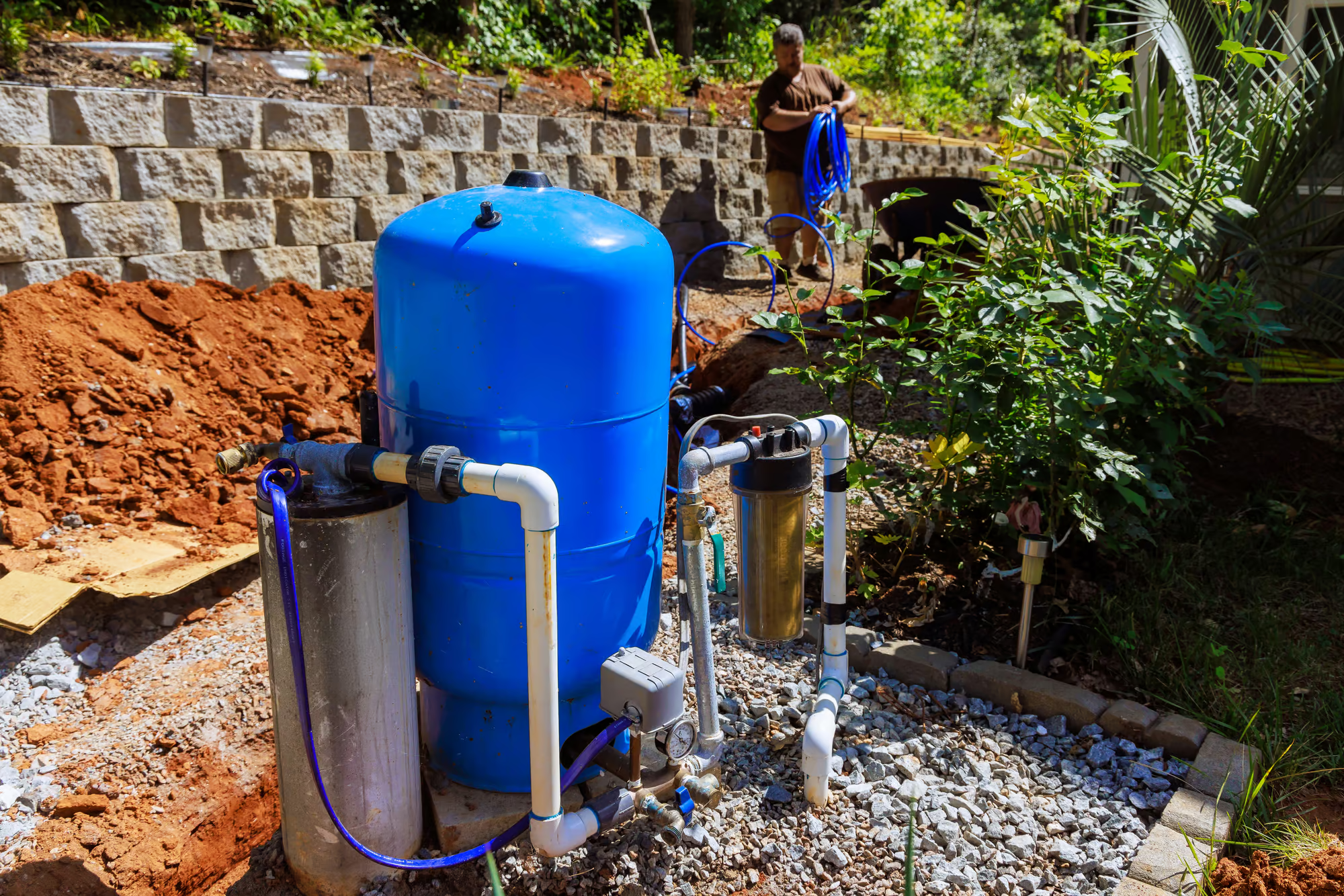
There are two main types of well pumps. A jet pump sits above ground and pulls water up from the well. A submersible pump sits down inside the well casing and pushes water up to the surface. [2]
Submersible pumps are standard in most Southside Virginia homes. They're more efficient and handle deeper wells better — but when they fail, replacing one means pulling the pump up from inside the well. That's part of why replacement costs what it does.
What Shortens a Well Pump's Lifespan
Several things can age a pump faster than average:
- Hard well water — mineral buildup coats internal components over time
- Frequent power outages — voltage fluctuations from rural storms put stress on the motor
- Incorrectly sized pump — a pump working harder than it should wear out faster
- Sediment-heavy water — grit moving through the pump causes premature wear
- Failing pressure tank — forces the pump to cycle constantly, running up the hours fast
Not sure how old your well pump is? A quick service call can tell you exactly where you stand before a slow problem becomes a no-water emergency.

Repair vs. Replacement: How to Decide
The honest answer is — repair first, replace only when the numbers stop making sense.
When Repair Makes Sense
- Pump is under 10 years old
- Single component failure — pressure switch, capacitor, or wiring issue
- No history of repeated breakdowns
When Replacement Is the Smarter Call
- Pump is 10+ years old
- Repair bills are starting to stack up
- Motor failure or physical damage to the pump housing
- Water quality has suddenly declined — sediment, discoloration, or pressure swings
- Replacement is a real expense. But a pump that keeps breaking down will cost you more in the long run than one that gets replaced at the right time. [3]
Not sure whether your pump needs repair or replacement? Call (434) 404-4461 for an honest assessment.
Well Pump Replacement Cost: What to Expect in Southside Virginia
The first question most Halifax homeowners ask is simple: what is this going to cost me?
The honest answer is that replacement costs vary depending on several factors. Prices typically fall within a range — but getting an accurate number means looking at your specific situation.
Factors That Affect the Final Price
- Pump type and horsepower — submersible pumps cost more than jet pumps to replace
- Well depth — deeper wells mean more labor pulling the old pump and setting the new one
- Pressure tank condition — if it needs replacement at the same time, that adds to the total
- Electrical work required — older homes sometimes need wiring or breaker upgrades alongside pump replacement
Why Bundling With Other Replacements Can Save You Money
Here's something worth knowing. Your well pump and water heater are often the same age — bought with the house, installed around the same time, and wearing out together.
Solutions Heating & Cooling has been serving Southside Virginia since 2015. When our technicians are already on site, it makes sense to look at everything at once. If you're facing multiple aging systems, ask about handling them together — coordinating work in fewer visits can be a real advantage over scheduling separate contractors for each problem.
Well Pump Replacement Timeline: From First Call to Running Water
This process moves faster than most people expect. Here's what it typically looks like from start to finish:
- Initial call and diagnosis — a technician comes out, confirms the problem, and gives you a clear answer on repair vs. replacement
- Parts sourcing — common pump models are often available same-day or next-day, so you're not waiting a week for parts to arrive
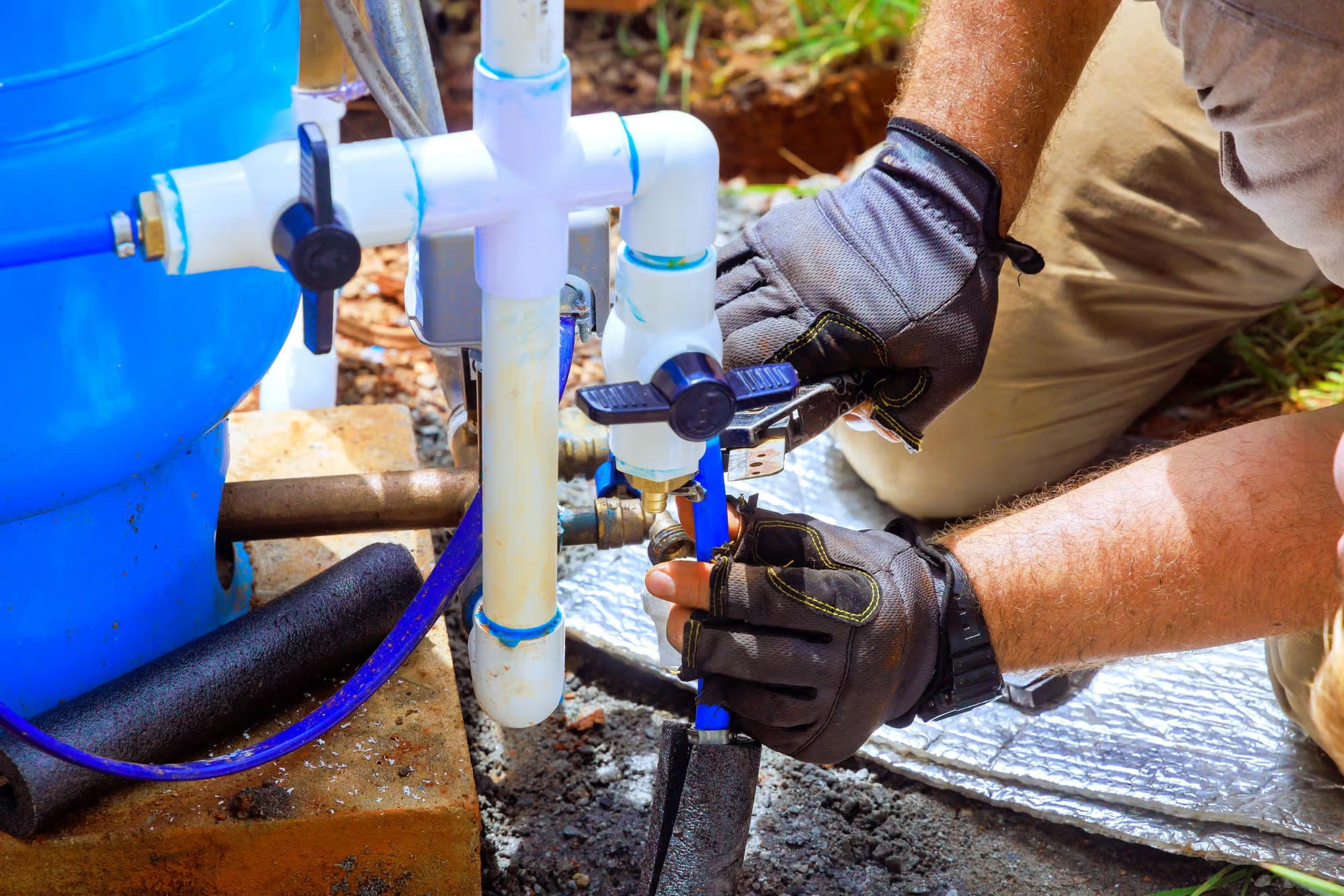
- Pump pull and installation — the old submersible pump is pulled from the well and the new one is set and wired
- Pressure tank inspection — while the pump is out, the pressure tank gets checked so nothing gets missed
- System test and water quality check — before the technician leaves, the system is run and verified
Most Halifax homeowners are back to running water within 24–48 hours of that first call, depending on parts availability and scheduling.
Our technicians are local, licensed, and handle HVAC, plumbing, and electrical — so if something else gets flagged during a well pump call, you're not stuck scheduling three separate companies to sort it out.
Don't Wait for a Dry Faucet to Find Out You Have a Problem
Well pump problems don't wait for a convenient time. They fail in the middle of winter, over a holiday weekend, or right when you've got a house full of people. And when you're on well water, there's no municipal backup — no water means no water.
The good news is you don't have to figure this out alone. Solutions Heating & Cooling has been serving Halifax and Southside Virginia since 2015. Our technicians are local, and when you call (434) 404-4461 a real person picks up. We'll give you an honest look at whether repair or replacement makes sense — and we won't push you toward the more expensive option if it isn't warranted.

What warning signs indicate a well pump is starting to fail?
Well pump failure usually comes with warning signs well before the water stops. We commonly see low or inconsistent water pressure, air sputtering from faucets, a pressure tank that cycles on and off constantly, a sudden spike in your electric bill, clicking or grinding noises, and muddy or discolored water. Any one of these is worth a call before you're dealing with a dry faucet. Call us at (434) 404-4461.
How many years does a well pump typically last?
Most well pumps last somewhere between 10 and 15 years, though that window can shrink depending on your water quality and conditions. Hard water, heavy sediment, and frequent power outages all put extra wear on the pump. If you're not sure how old yours is, check your home inspection report or look for a manufacturer label on the pressure tank.
How does a submersible well pump differ from a jet pump?
A jet pump sits above ground and pulls water up from the well, while a submersible pump is installed down inside the well casing and pushes water up to the surface. Submersible pumps are the standard in most Southside Virginia homes — they handle deeper wells more efficiently, but replacing one requires pulling the pump up from inside the well, which factors into the cost.
Well Pump Repair & Replacement: What Halifax Homeowners Ask Most
Resources
- https://www.watersystemscouncil.org/water-well-support/wellcare-info-sheets/
- https://www.epa.gov/privatewells/learn-about-private-water-wells
- https://www.familyhandyman.com/article/well-water-system/